Samsung SDI’s operating loss narrowed in the fourth quarter last year, primarily driven by rapidly growing demand in the US for non-Chinese battery cells used in energy storage systems.
According to the company’s earnings call on Monday, its operating loss nearly halved from the previous quarter to 299.2 billion won ($205 million) in the October-December 2025 period, marking its fifth consecutive quarterly loss. Revenue rose 26.4 percent to 3.9 trillion won. On a year-on-year basis, the operating loss widened by about 16.6 percent, while revenue increased 2.7 percent.
For the full year, Samsung SDI turned to an operating loss of 1.7 trillion won, while revenue fell 19.8 percent to 13.3 trillion won.
Despite weaker electric vehicle demand, the battery segment posted a smaller loss of 338.5 billion won in the fourth quarter and posted higher revenue quarter-on-quarter, supported by record ESS battery sales and increased benefits from the US Advanced Manufacturing Production Credit.
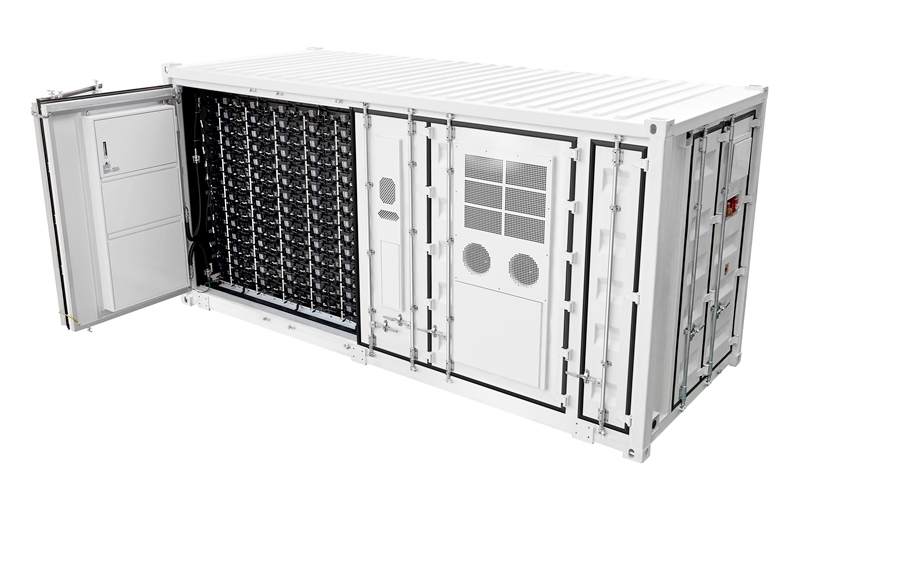
Kim Yoon-tae, executive vice president of finance at Samsung SDI, said the company has strengthened its ESS battery business in the US by capitalizing on its position as the only non-Chinese prismatic battery supplier in the region. Key products include the premium nickel-cobalt-aluminum-based Samsung Battery Box 1.7 and the lithium iron phosphate-based SBB 2.0.
Chief Financial Officer Oh Jae-kyun noted that Samsung SDI expects to return to profitability by the end of 2026, highlighting a projected 50 percent increase in ESS battery sales. The battery maker plans to expand US production capacity by rolling out SBB 2.0 this year at its Indiana joint venture plant with Stellantis.
Samsung SDI plans to boost the capacity of its cylindrical cells for battery box unit — a short-term backup product for ESS — by 20 percent at its Malaysia plant from the previous year, with its new tabless, high-power output products. Among its cylindrical battery lineup, these products are expected to account for about 10 percent of sales this year. These batteries will also cater to professional electronic devices as well as hybrid vehicles.
For its next-generation all-solid-state batteries, Samsung SDI will push forward its planned mass production timeline by 2027 for a wide range of applications spanning EVs, robotics, urban air mobility and high-altitude platform station.
“Although OEMs are scaling down their electrification plan, demand is rising for ASSBs in high-power robots, powered by physical AI. We’re in talks with multiple robotics firms,” said Park Jong-sun, head of Automotive & ESS Battery Strategic Marketing Office. “The company will also invest in expanding ASSB production line capacity within this year.”
hyejin2@heraldcorp.com

![[Surive&Thrive] Tips for getting around Seoul by subway (2)](https://wimg.heraldcorp.com/news/cms/2026/10/08/news-p.v1.20261006.1e7dee51d7f64cdba1a20b897d88cee6_T1.jpg?type=h&h=800)