Sejong is widening its global role by combining Hangeul-based cultural diplomacy with policies that cultivate Korean-language talent networks.
Here we look at two pillars of this: a cultural route that corresponds to the Global Culture Gateway badge and a second route focused on developing international talent ecosystems for the Global Talent Hub.
Together, these strands form what city officials describe as Sejong's shift from a domestic administrative capital to a city shaping international cultural and educational flows.
Global Culture Gateway: Hangeul as a cultural engine and diplomatic tool
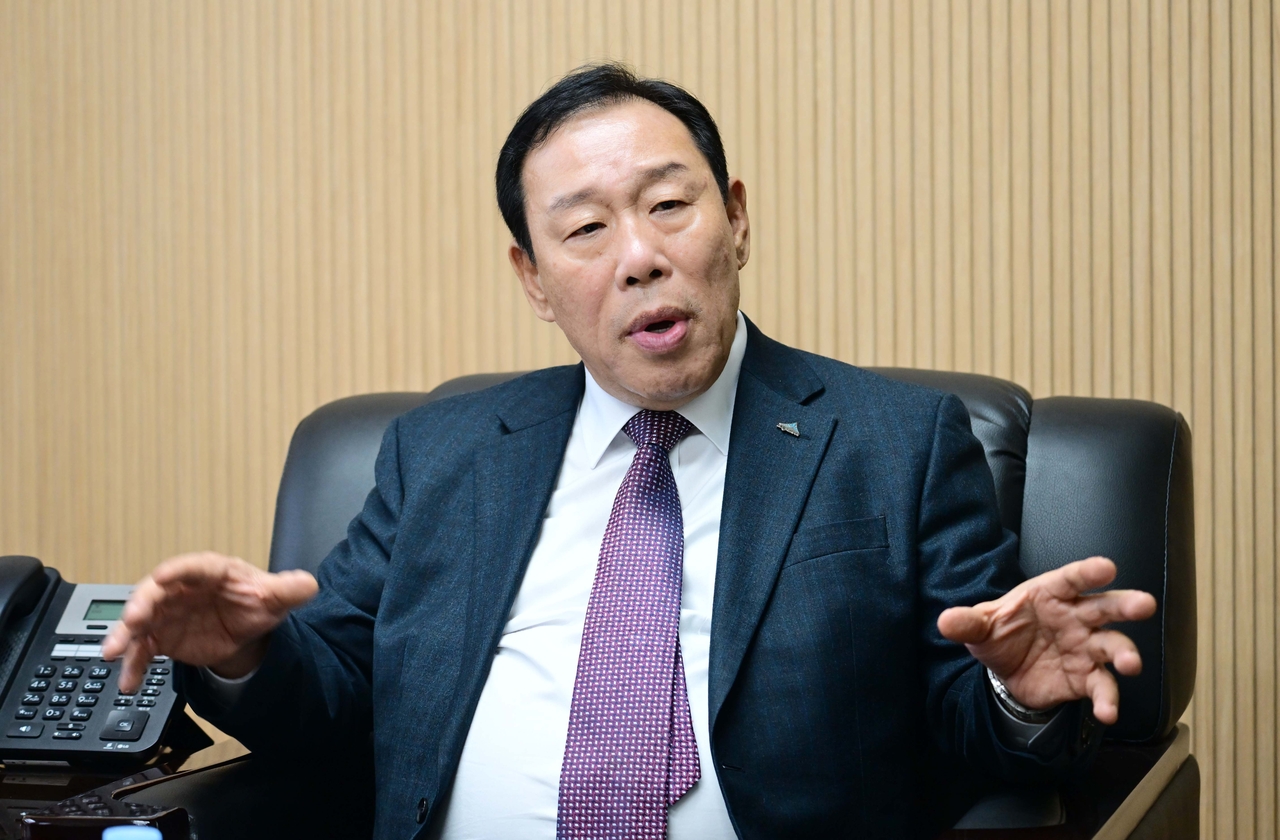
More than a decade ago, Mayor Choi Min-ho began incorporating Hangeul into Sejong's identity while overseeing development of Korea's administrative capital.
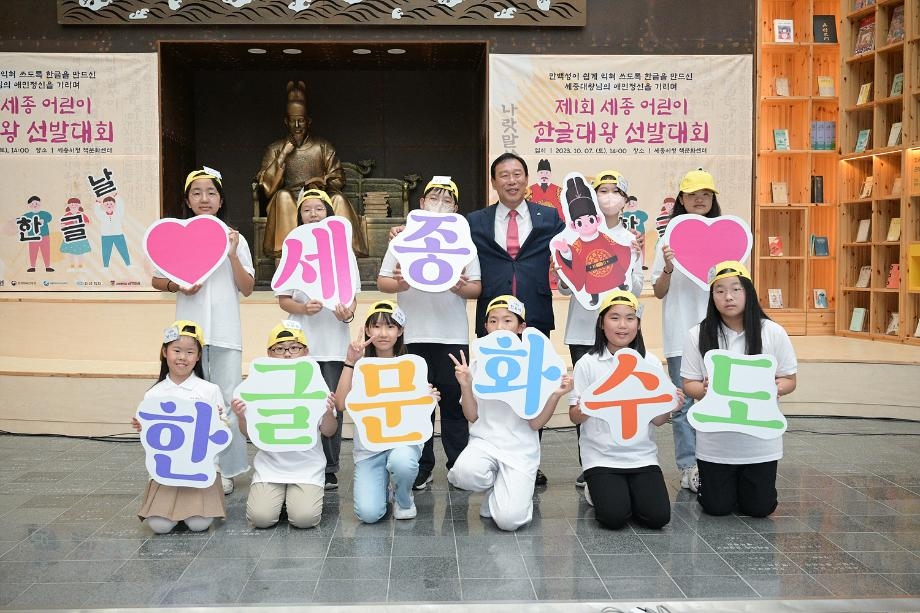
His early decision to promote "pure" Korean place names — ones not based on Chinese characters — in official development zones has expanded into a multiyear strategy to globalize Hangeul and use it as the basis for the city's cultural diplomacy.
"Sejong is named after one of the greatest kings in Korean history, King Sejong the Great, and has embraced his greatest invention, Hangeul, as the city's identity," Choi said. "I will do my best to help Sejong emerge as a key base for spreading the Korean Wave and for experiencing Korean culture."
Choi's argument is that Korean culture, which now spans pop music, drama, fashion, beauty and food, cannot sustain global momentum without the Korean language itself being given increased visibility.
Sejong's Hangeul-first branding reflects his belief that language infrastructure is a prerequisite for long-term global reach.
Based on that idea, the city is developing a structural approach to Hangeul as a cultural asset rather than relying only on event-based visibility.

A major component of this strategy is the planned 300 billion won ($207 million) Hangeul culture complex. The facility is envisioned as a new cultural anchor for Sejong, combining language policy offices, Korean language learning centers, arts programs and immersive experience installations.
City officials describe it as a future "platform institution" similar to large-scale cultural complexes in European or Southeast Asian cities that serve as both symbolic and functional nodes in cultural diplomacy.
The city also plans to open a Hangeul-themed art gallery that will house the Hangeul International Biennale starting in 2027.
The biennale will expand the idea of Hangeul from script and typography to design, visual language, communication studies and contemporary arts.
For Sejong, the project is intended to create recurring international circulation rather than one-off festivals, a model that places the city more firmly on global cultural calendars.
Early indicators show rising visibility. The Sejong Hangeul Festival drew 310,000 visits last year, a 50 percent increase compared to the previous two years.
The Hangeul International Pre-Biennale attracted 53,000 visitors over 42 days, far surpassing projections.
According to the Korea Tourism Data Lab, international device-based visit counts to Sejong rose 34 percent in 2025 to 476,000, a rate of increase that outpaced many midsized Korean cities with established tourism infrastructure.
These numbers are significant because Sejong lacks traditional sightseeing attractions such as beaches, palaces and major commercial districts.
Instead, the city's strategy is to differentiate itself through culture linked to national identity. Among Korean cities, Sejong is the only one that can leverage the historical connection to King Sejong and the Korean alphabet in a structural and ongoing manner.
Sejong has also begun to embed Hangeul into its intercity diplomacy.
The city maintains partnerships with Sofia in Bulgaria and Luang Prabang in Laos, where it supports Korean language education programs and cultural exchanges. It also operates telephone-based Korean language education programs with Split in Croatia and Belfast in the United Kingdom.
The Ministry of Foreign Affairs selected the program in 2024 as an exemplary case of local-level public diplomacy because it provides low-cost, scalable cultural outreach.
Choi has emphasized that growing numbers of foreign participants view Korean language skills as a path to educational or career opportunities rather than simply cultural interest.
That shift supports Sejong's idea that Hangeul can serve both cultural and socioeconomic objectives, expanding the city's global relevance.

Global Talent Hub: Building education and talent pipelines anchored in Korean-language infrastructure
Running parallel to its Hangeul culture strategy, Sejong is constructing a second policy track centered on international talent development. This route aligns with the Global Talent Hub badge, which assesses whether a city can attract global talent, help them integrate and provide pathways for long-term settlement.
For Sejong, Korean-language infrastructure is the entry point. Choi argues that language access determines whether students, researchers and workers can choose Korea over competing destinations.
"Surging overseas interest in Korean cultural content is shifting from simple curiosity to deeper interest in the country itself," Choi said following a 2024 trip to the United States. "We now face an urgent task of building infrastructure so that those who wish to study in Korea can learn and experience the Korean language."
To extend this infrastructure internationally, Choi has led delegations to Minnesota and Los Angeles to discuss Korean language textbook development and student exchange programs.
In 2025, he traveled to Osaka in Japan and Hanoi in Vietnam to expand cultural cooperation through education hubs and overseas Korean cultural centers.
Choi argues that the country's global language education network has struggled to keep pace with rising demand and that local governments can play more active roles.
"Beyond national-level support, local governments can play a meaningful role in developing educational materials and training teachers," he said.
This marks a shift from the traditional model where overseas Korean language programs were largely coordinated through national agencies.
The city is also developing Korean-language support for foreign residents. Free classes, local-language textbooks and multicultural community programs are designed to support long-term settlement.
Choi has described this as part of Sejong's responsibility as the administrative capital, where diverse civil servants, expatriates and foreign professionals increasingly interact.
In December, Sejong opened a new technology education center for foreign nationals in partnership with Korea Polytechnics. It is the first center in Korea specifically designed to integrate vocational training with Korean language and cultural education.
It offers support related to visas, job placement, workplace skills and settlement procedures.
"Completing the center's programs will signal that international talent is fully prepared — technically, linguistically and culturally — while helping Korea develop as a globally inclusive, multicultural nation," Choi said. "The center and Sejong's Hangeul culture project will serve as key attractions for foreign industrial talent, drawing them to the city."
This talent pathway is reinforced by the presence of university campuses in Sejong, including Korea University, Hongik University and the Korea University of Media Arts. These schools have expanded their international student bodies in recent years.
Total international enrollment rose from 679 in 2022 to 783 in 2025, with degree-program enrollment increasing more than 10 percent from 2024 to 2025.
To coordinate policy across institutions, Sejong formed a task force in March with experts, university leaders and local industry representatives.
Its goal is to improve foreign student recruitment, expand housing and strengthen support for campus-to-work transitions.
"While many domestic universities face challenges, attracting foreign students through international exchange plays an important role," Choi said. "Through this council, we hope to hold substantive discussions to bring more global talent to Sejong."

A two-track model under the Global Thinkers program
Taken together, Sejong's cultural and talent strategies aim to create a distinctive model of global engagement.
Unlike larger cities that rely on economic scale or historic tourism assets, Sejong is arguing for a form of global relevance rooted in cultural identity and language-based mobility.
The two Global Thinkers badges reflect complementary functions.
The Global Culture Gateway badge recognizes the city's effort to transform Hangeul into a cultural and diplomatic platform, while the Global Talent Hub badge evaluates how Sejong is building international human capital through education, training and settlement programs.
For Choi, the goal is long-term functionality. "We are not trying to be bigger than other cities," he said. "We are focusing on building a city that functions globally."
As a city certified under the Global Thinkers program, Sejong offers a model in which language, culture and education operate together to broaden its global reach.
The Korea Herald, in collaboration with Herald Business, examines the present and future of local governments in a new series titled "Global Thinkers: Leadership Excellence," an assessment and certification program evaluating the international competitiveness of local governments.
Participating municipalities are recognized with badges representing five core elements used to gauge excellence: attracting investment, incubating talent, fostering tourism, improving living standards and strengthening connections with other global cities. — Ed.
forestjs@heraldcorp.com