Measure focuses on long-term supply amid near-term shortage concerns
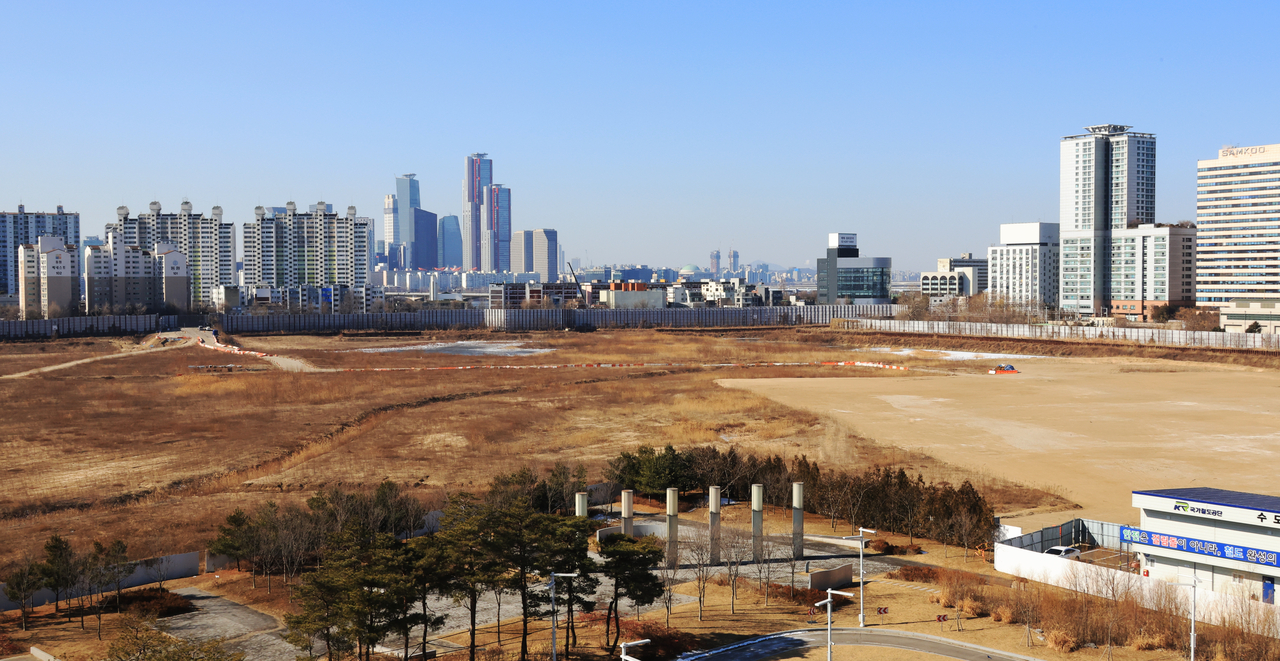
South Korea on Thursday unveiled a plan to add about 60,000 new homes in Seoul and the broader capital area, seeking to cool an overheated housing market by expanding supply in prime locations.
Under the roadmap, the government will supply 60,000 housing units targeted at young people and newlyweds across Seoul, Gyeonggi Province and Incheon, covering a total area of 4.87 million square meters. The scale is equivalent to roughly twice the number of homes in Pangyo, a major Gyeonggi satellite city with about 29,000 units, and spans an area around 1.7 times the size of Yeouido.
By region, Seoul will account for 32,000 units, or 53.3 percent of the total, followed by Gyeonggi Province with 28,000 units, or 46.5 percent. Incheon will receive about 100 units.
Yongsan-gu, one of Seoul’s most strategically located districts, will see 13,501 units supplied. Within the Yongsan International Business District, planned housing will be expanded to 10,000 units, up from the 6,000 units previously proposed by the Seoul Metropolitan Government, after revisions such as increasing the floor area ratio.
To secure large, developable sites, the government plans to maximize the use of existing land both inside and outside Seoul. Taereung Country Club, a military-operated golf course in northern Seoul, will be redeveloped to provide about 6,800 homes. A horse racetrack in Gwacheon, south of Seoul, along with a nearby Defense Counterintelligence Command facility, will also be repurposed, adding roughly 9,800 units.
The plan builds on a broader housing supply initiative announced Sept. 7, which aims to deliver 1.35 million homes in Seoul and the capital region by 2030.
The Land Ministry said that for sites requiring relocation of existing facilities, relevant ministries will coordinate closely to finalize relocation decisions and begin preparatory work by 2027.
Still, doubts remain over the plan’s ability to ease near-term supply pressures, as construction under the scheme is scheduled to start between 2027 and 2030.
silverstar@heraldcorp.com