Strong earnings support aggressive investment in next-generation HBM
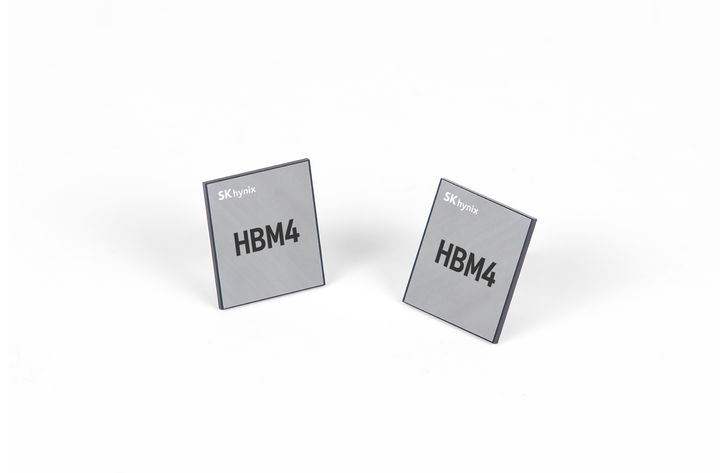
SK hynix expressed confidence Thursday in capturing an overwhelming share of the HBM4 market, replicating its dominance in earlier generations of high bandwidth memory that has been all-important to artificial intelligence, after posting record profit in 2025.
During an earnings call, the chipmaker also said it will ramp up capital expenditure this year to meet explosive growth in AI memory demand.
"For HBM4, customers and infrastructure partners show strong preference and expectations for our products, prioritizing our products over others," Kim Ki-tae, vice president and head of HBM sales and marketing at SK hynix said during the earnings call.
"We aim to extend this to HBM4 to take up overwhelming market share just as we did with HBM3 and HBM3E."
The company said preparations for HBM4 are underway as planned and on the timeline agreed with customers. It added it is currently mass-producing volumes requested by customers.
"SK hynix's HBM4 represents a major technical achievement that will enable customers' requirements based on the existing 1b nanometer process. Using our proprietary advanced packaging technology MR-MUF, we plan to secure yields comparable to the 12-high HBM3E products," Kim added.
On Wednesday, the chipmaker reported a record profit for 2025. The company said its annual sales posted 97.1 trillion won ($70.4 billion) with an operating profit of 47.2 trillion won, both all-time highs. The chipmaker attributed the record performance to surging demand in AI memory products.
Memory is expected to remain in a supply shortage driven by expanding AI infrastructure investments. SK hynix said it expects inventory shortages to intensify in the second half of this year, as surging market demand more than offsets recent spike in memory prices.
The company noted that inventory fell sharply in the fourth quarter of last year, with stockpiles continuing to decline across products including NAND, particularly for server and enterprise solid-state drives.
This year, the company projected DRAM demand will grow more than 20 percent, with NAND flash demand rising in the high-teen percentage range.
To resolve the supply-demand imbalance with the AI industry's explosive growth, the chipmaker said it will add new capacity for the 1b nm process for HBM chips at its M15X fab, which completed production last year. For conventional DRAM and NAND, the company said it is accelerating tech migration to 1c nm and 321-layer production.
Capital expenditures will increase significantly from 2025 to fund the capacity expansion, SK hynix said. The company expects such spending to remain around the mid-30 percent range of revenue.
The chipmaker said it will establish an AI-focused company in the US to tap into rapid technology shifts and identify partners with core capabilities for AI solution commercialization, positioning itself as a "full-stack AI memory creator."
It also pledged to continue evaluating additional shareholder return measures based on performance and cash flow, while maintaining its current policy framework. Announcing its earnings Wednesday, the company also introduced an aggressive shareholder return program worth about 14.3 trillion won.
On US President Donald Trump's threat to impose 100 percent tariffs on companies that do not build memory production facilities in the US, SK hynix struck a cautious note.
"Building fabs overseas involves numerous factors both inside and outside the company to consider," Song Hyun-jong, president and head of the corporate center said on the earnings call. "So for now, we will monitor discussions between the governments and communicate the company's direction at a later date."
herim@heraldcorp.com