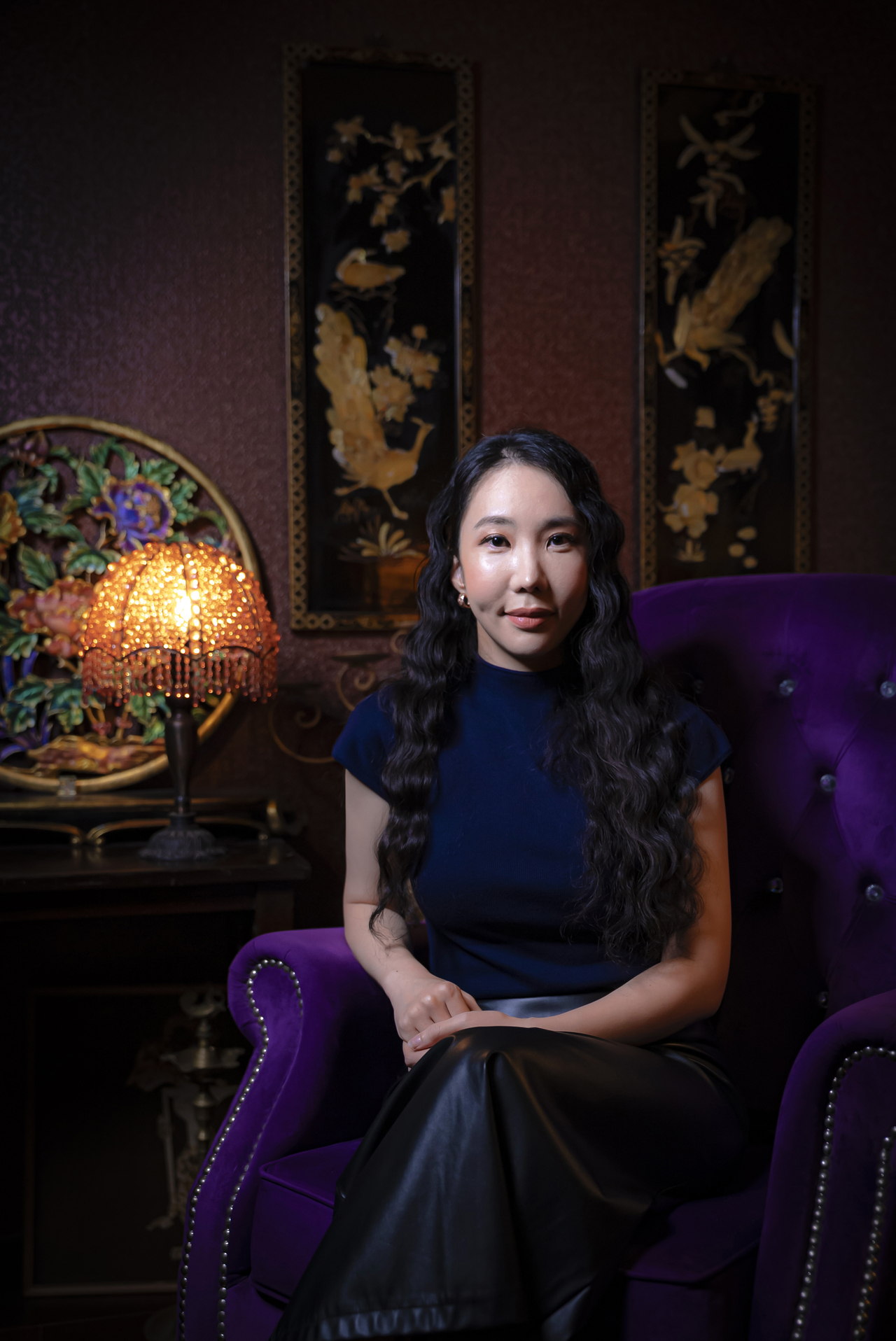
With more than 1.2 million subscribers and over 139 million views, Megan Lee has emerged as one of the few creators offering a fully English-language platform devoted to Asian true crime and cultural storytelling — a corner of global media that long went unfilled.
When Lee launched Dark Asia with Megan in 2023, she wasn’t just opening a YouTube channel, she told The Korea Herald. She was carving out space for a genre she felt was missing entirely.
“I wanted to claim an underserved territory in global content: Asian true-crime stories told for English-speaking audiences,” she said.
In less than two years, her combined channels have drawn a rapidly expanding international following. While her core viewership is based in the United States, audiences in Malaysia, the Philippines, India and Singapore have been growing at striking speed.
“Viewers outside Asia often tell me they’re shocked these cases aren’t widely known,” Lee said. “What I love most is seeing Asians and non-Asians learning about these stories together in the comments. It feels like I’m bringing two worlds closer.”
What differentiates Lee in the saturated Western true-crime space is her blend of investigative storytelling centered exclusively on Asian narratives, paired with cultural insight rarely offered in mainstream true-crime media.
Bridging the gap
Lee says her work goes far beyond recounting crimes.
“Each video is an exercise in cultural translation. I take cases from countries across Asia and make them comprehensible to viewers who may know nothing about the societies where they occurred,” she said.
“Western audiences often perceive Asia as a monolithic bloc rather than a patchwork of distinct nations, each shaped by its own history, belief systems and social codes. A case from Japan operates under entirely different cultural logic than one from Indonesia or Korea,” she explained.
Lee’s job is to unpack those differences by explaining how factors such as family hierarchy, collective shame, religious norms or extreme academic pressure can create conditions that outsiders might otherwise find baffling.
“I don’t just tell people what happened,” Lee said. “I try to show them why it happened — what social forces, cultural expectations or systemic failures contributed to the outcome. Without that context, these stories are just shocking headlines. With it, they become something people can actually learn from.”
This requires extensive research into each country’s social landscape, from how mental health is stigmatized and how gender roles constrain women’s options to how issues such as abuse or family dysfunction remain taboo in public discourse.
Many of these problems stay hidden precisely because societies discourage open discussion — a silence Lee believes prevents progress.
Her videos aim to break that silence for two audiences at once.
For viewers outside Asia, she provides the cultural scaffolding needed to understand cases on their own terms rather than through Western assumptions. For Asian viewers scattered across different countries, she creates opportunities to recognize shared regional challenges they might not see while focused on their own national news cycles.
“Viewers often tell me that watching a case from Korea or Japan helped them see parallels in their own country,” Lee said. “The specific details differ, but the underlying pressures — on women, on young people, on families — often rhyme across borders.”

Strategic pivot
Lee’s move to digital wasn’t a leap of faith but a calculated decision shaped by years of producing video content for major media outlets’ YouTube channels.
“I experienced both traditional media and digital media,” she explained. “I realized that global audiences were now on platforms like YouTube. If my goal was to bring Asian stories to the world, that was the best place to do it.”
Before going independent, Lee honed her skills at respected Korean media institutions, including Arirang TV and The Korea Times, where she served as chief video producer and shaped documentary-style storytelling and long-form visual narratives for digital audiences.
These experiences, she says, gave her a rare edge: the editorial rigor of investigative journalism combined with an intuitive understanding of how digital audiences consume content.
Her journalism background also established her credibility. As part of The Korea Times’ video team, she led an award-winning cross-border investigation into digital sex crimes across Asia, working with outlets including the South China Morning Post, Tempo Magazine and the Philippine Center for Investigative Journalism.
The project’s flagship documentary, “The Nth Room Case: The Making of a Monster,” earned the Video Storytelling Award at the Korea Digital Journalism Awards.
“That project showed me how powerful storytelling can be when journalists across Asia work together,” Lee said. “It reinforced my commitment to covering stories that cross borders and affect real people.”
Lee’s vision extends well beyond YouTube.
She is actively developing her growing intellectual property into podcasts, documentary productions, books and serialized storytelling projects. Her goal is to build a lasting global platform that elevates Asian voices across multiple media formats.
“My goal is simple,” she said. “To make sure Asia’s stories are seen, understood and respected around the world.”
jychoi@heraldcorp.com