Remarks by US President Donald Trump criticizing delays in South Korea’s legislative process and warning of renewed tariff hikes sparked debate in Seoul on Tuesday over whether a line has been crossed by directly pressuring Korea’s legislature.
Observers warn the move departs from diplomatic norms and risks straining alliance trust.
Heo Yoon, professor of international trade at the Graduate School of International Studies at Sogang University, said Trump’s comments amounted to an abrupt and unconventional intervention in Korea’s domestic legislative process.
“Unilaterally attempting to overturn agreements that took a long time to negotiate through a social media post is not only a breach of trust between states, but also extremely difficult to understand diplomatically,” Heo said.
“At a time when the US urgently needs cooperation from its allies to contain China, pressuring South Korea — a key ally in Northeast Asia — can be seen as a serious provocation,” he added.
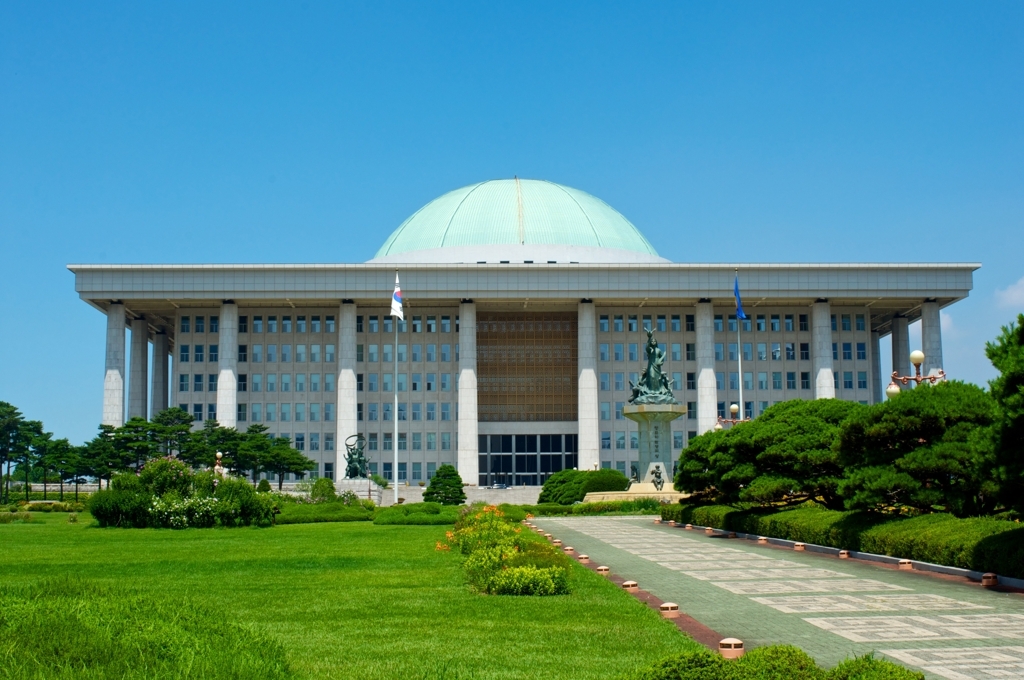
In a social media post, Trump directly referred to the National Assembly, questioning why the Korean Legislature has not yet approved the agreement. He added he planned to raise tariffs "Because the Korean Legislature hasn't enacted our Historic Trade Agreement."
Trump’s remarks appear to refer to a bill known as the "Special Act on the Management of Korea-US Strategic Investment." It was introduced by the ruling Democratic Party of Korea on Nov. 26 last year to implement Seoul’s pledge to invest US$350 billion in US strategic industries.
The bill seeks to establish a Korea-US strategic investment fund, create a public corporation to manage investments, and set legal and institutional safeguards for executing the investment plan.
The legislation stems from a bilateral agreement under which South Korea agreed to invest US$350 billion — including US$200 billion to be deployed in annual installments capped at US$20 billion — in exchange for Washington lowering reciprocal and auto tariffs on Korean products to 15 percent.
Heo noted that legislation related to South Korea’s investment commitments to the United States must, by nature, pass through domestic legal procedures, calling Trump’s invocation of tariff hikes over such delays highly unusual.
“Using tariff pressure over a partner country’s internal legislative process is rare even by diplomatic standards,” Heo said. “This appears to be transactional pressure aimed at pushing Korea to pass the bill quickly and accelerate investment in the US.”
He added that Trump’s remarks appeared more rhetorical than immediately actionable, as no concrete implementation timeline was specified.
“Given the lack of detail on timing, it seems more likely the statement was intended to express dissatisfaction and serve as a negotiating lever rather than signal an imminent policy move,” Heo said.
Heo also urged the Korean government to determine whether Trump’s comments reflected coordinated US trade policy or an impulsive message.
“It is important to clarify whether this came after discussions with US trade officials or was a spontaneous statement,” he said. “As Washington still sees Seoul as an important investment partner and market, the Korean government needs to accurately assess Trump’s intentions and manage his dissatisfaction through careful engagement.”
Following the bill’s submission to the National Assembly here on Nov. 26, the US lowered auto tariffs on Korean products to 15 percent on Dec. 4 through publication in the US Federal Register. However, the bill remains pending at the Assembly’s Strategy and Finance Committee amid disagreements between the ruling and opposition parties.
The main opposition People Power Party has maintained that the investment commitments underlying the legislation amount to an international agreement and therefore require prior parliamentary ratification. Citing concerns over legal certainty and constitutional procedure, the party has called for a ratification process before any special legislation is enacted, prolonging debate between the ruling and opposition camps.
Reactions from the National Assembly
Political reactions quickly followed Trump’s comments, deepening partisan divisions over how the bill should proceed.
The ruling Democratic Party said it plans to begin formal deliberation of the bill in February, arguing that delays were procedural rather than political.
“December and January functioned as a statutory cooling-off period,” said Rep. Jung Tae-ho, the ruling party’s floor coordinator on the Strategy and Finance Committee at the ruling party-government consultation meeting. “Under normal procedures, deliberation will begin in February.”
Jung added that the Seoul government has requested the bill’s passage by next month and urged the opposition to cooperate. “Rather than engaging in unproductive debate, we hope the opposition will actively participate in resolving the tariff issue,” he said.
The Democratic Party has rejected opposition claims that the agreement requires parliamentary ratification, arguing that doing so would bind only South Korea.
“If we ratify while the US implements the deal through executive orders, Korea alone would be placed under stronger legal constraints,” said Democratic Party floor spokesperson Rep. Kim Hyun-jung. “Strategically, there is no reason to do that.”
The People Power Party, however, blamed the Lee Jae Myung administration for failing to secure ratification and exposing Korea to US pressure.
“All responsibility lies with the president and the government, which ignored ratification despite signing a major trade agreement,” Rep. Song Eon-seog, the party’s floor leader, said at a morning intra-party meeting.
“The unstable structure of the agreement allowed President Trump to threaten tariff retaliation at his discretion.”
People Power Party Rep. Park Soo-young, the opposition floor coordinator on the Strategy and Finance Committee, suggested Trump’s remarks reflected broader distrust toward the current administration.
“While Trump publicly cited legislative delay, there may be other underlying factors,” Park wrote on Facebook, pointing to recent high-level contacts between Washington and Seoul.
As debate intensifies, observers say the episode raises broader questions about alliance management, the limits of foreign pressure on domestic legislatures, and how Seoul should navigate transactional diplomacy amid growing geopolitical and economic uncertainty.
The presidential office said Tuesday that it had not received any official notification or detailed explanation from the US government regarding Trump’s remarks, while the Strategy and Finance Committee said it had not faced any working-level objections from Washington over the pace of legislative review.
mkjung@heraldcorp.com