Assembly schedule packed with year-end tax matters, budget minister nomination, lawmaker says

Five bills regarding South Korea's massive $350 billion investment commitment in projects in the United States have been submitted to the National Assembly, but all remain in the early stages.
The slow progress appears to have prompted US President Donald Trump to post to social media on Monday, warning of a US tariff hike to 25 percent on South Korean goods.
However, according to a lawmaker on the Strategy and Finance Committee, the bills are being processed in accordance with usual procedures.
Rep. Jung Tae-ho of the Democratic Party of Korea, one of the two executive secretaries of the Strategy and Finance Committee, said in a note to reporters Tuesday that the legislation was undergoing the "normal process," adding that the committee's schedule had been full the past few months.
"(The committee) could not afford to review bills because it had to examine the tax code revision in December and hold a confirmation hearing (for the nominee to lead the newly established Ministry of Planning and Budget) in January," Jung said.
The two-term liberal lawmaker added that parliament was not notified of any working-level complaints from Washington about delays in the legislative process, and no bilateral agreement had set a deadline for the bill's passage.
Rep. Lim Lee-ja of the People Power Party, who chairs the committee, echoed that view later Tuesday during her meeting with Finance Minister Koo Yun-cheol.
After a 20-day consideration period since the first bill was proposed in November, there were a series of filibusters through December and a confirmation hearing for the budget minister nominee in January, and no formal request to swiftly proceed with legislation has been presented by either the Democratic Party or the government, Lim said.
"I cannot understand (Trump's notion) that the parliament failed (to live up to the US deal)," she said.
According to multiple sources Tuesday, five bills have been referred to the Strategy and Finance Committee and the Trade, Industry, Energy, SMEs and Startups Committee.
All of the special bills — tentatively dubbed the "Special Act on Managing Korea-US Strategic Investments" — cover the framework, procedures and scope of South Korea's strategic investment in the US, primarily by establishing a body to manage the investment fund.
Ruling Democratic Party of Korea Reps. Ahn Do-geol, Hong Kee-won and Jin Sung-joon, the then-Democratic Party whip Rep. Kim Byung-kee and conservative lawmaker Rep. Park Sung-hoon each proposed one of the five bills.
In accordance with the bilateral agreement for the US to carry out a retroactive tariff cut in return for South Korea's bill proposal to the National Assembly before the end of November, most South Korean goods exported to the US were subject to a 15 percent tariff rate.
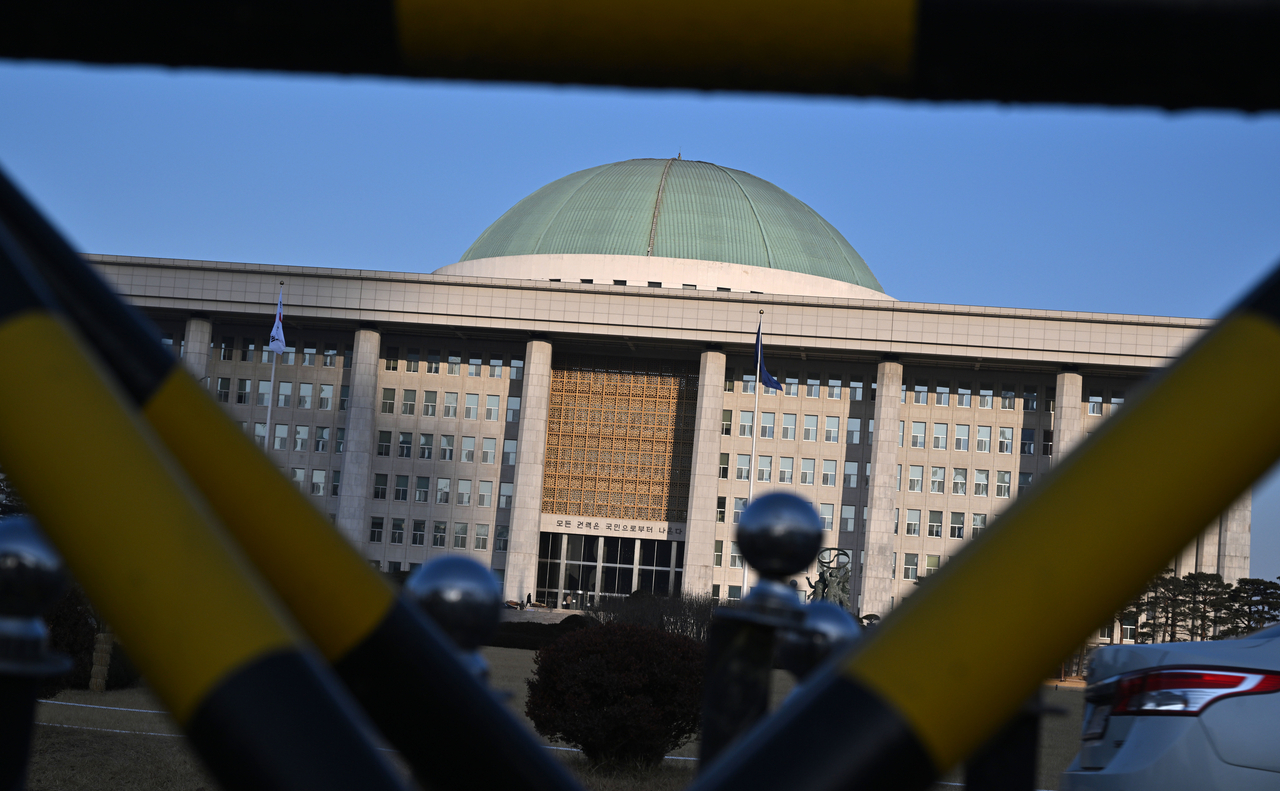
If the review process begins, the Strategy and Finance Committee will discuss how to merge the five bills referred to the committee into a single bill before sending it to the Legislation and Judiciary Committee. As the bill enacts a new law rather than revises existing law, it would also be reviewed by the National Assembly Secretariat and in a public hearing.
Once passed by the Legislation and Judiciary Committee, the bill would be put to a vote in a plenary session of the National Assembly. Its passage would require a majority of votes in the 296-member assembly.
Enacting the US investment law is one option for the National Assembly. The main opposition People Power Party has long called for parliamentary ratification concerning South Korea's massive investment in the US to allow South Korea to take swift action, while regarding the joint fact sheet as a bilateral treaty.
Instead of new legislation, the People Power Party has advocated for the National Assembly to ratify the Korea-US joint fact sheet drafted in November as a bilateral treaty. However, ruling Democratic Party floor spokesperson Rep. Kim Hyun-jung ruled out ratification Tuesday, saying the party would stick to its strategic choice.
Focus is also on whether the enactment of a new law could also be affected if the US Supreme Court overturns Trump's "reciprocal" tariffs, and whether South Korea can adapt to changes in the international trade environment with the special law.
In this regard, among the five bills, Rep. Hong Kee-won's bill proposed in December stands out.
According to Hong's version of the special bill, the Finance Minister of South Korea must report to the National Assembly and submit an impact assessment report if a US federal court ruling significantly changes the trade environment.
consnow@heraldcorp.com