Agreements aim to embed Korean defense tech into Canada’s supply chain
Hanwha Group is ramping up its bid for Canada's multibillion-dollar submarine procurement program, signing partnerships with five Canadian companies across steel, artificial intelligence and space technologies.
The agreements come as Hanwha is competing for the Canadian Patrol Submarine Project — a planned purchase of up to 12 new diesel-powered submarines to replace the country's aging fleet, projected to be valued at up to 60 trillion won ($41 billion). A consortium of Hanwha Ocean and HD Hyundai Heavy Industries has made the final shortlist, competing against Germany’s ThyssenKrupp Marine Systems.
The partnerships align with Canada’s Industrial Technological Benefits Policy, according to Hanwha. The policy aims to drive growth in Canadian industries through major defense procurement contracts and mandatory investment in local industry.
The South Korean government has also stepped up efforts to support the bid, dispatching a high-level delegation to Canada led by presidential chief of staff Kang Hoon-sik and Industry Minister Kim Jung-kwan, along with executives from major shipbuilders and other companies.
During a Korea-Canada industrial cooperation forum held in Toronto on Monday, Hanwha Group affiliates signed memorandums of understanding with five Canadian companies.
Hanwha Ocean inked a strategic arrangement with Algoma Steel to invest 345 million Canadian dollars ($251 million). The investment will be used to build a new structural steel beam mill in northern Ontario and to supply steel products for Canada’s new submarine fleet as well as for Hanwha’s submarine repair and maintenance infrastructure.
“Through establishing a stable and long-term steel production and infrastructure in Canada, we will contribute to providing a trusted submarine capability not only for today but for future generations,” Hanwha Ocean CEO Kim Hee-cheul said.
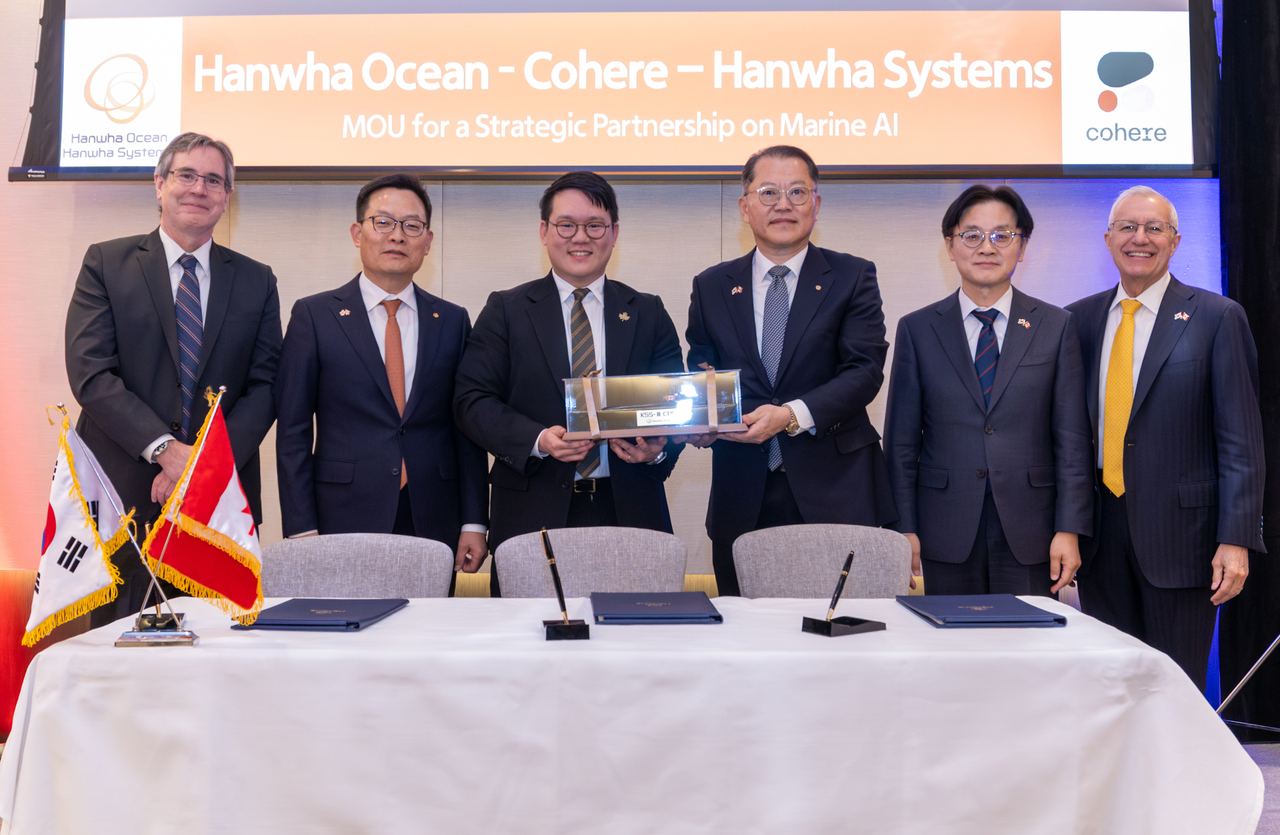
Under a separate agreement, Hanwha Ocean and Hanwha Systems entered a three-way memorandum with Canadian AI firm Cohere to jointly develop specialized AI technologies for shipbuilding and submarine operation systems based on Cohere’s large language and multimodal model.
Hanwha Systems also signed a memorandum with Canadian satellite operator Telesat to cooperate on low Earth orbit satellite communications. It inked separate partnership deals with MDA Space to cooperate on satellite communications and space technologies for defense purposes and with PV Labs to advance electro-optical and infrared sensor technologies for security applications.
“Leveraging our submarine operations technologies across marine, satellite, AI and security, Hanwha Systems will make efforts to help South Korea as a core partner in Canada’s global economic and security supply chain,” said Hanwha Systems CEO Son Jae-il.
In parallel with the corporate agreements, the third Korea-Canada CEO dialogue was held in Toronto, bringing together business leaders and government officials from both countries to discuss broader cooperation across strategic industries, including shipbuilding, defense and energy.
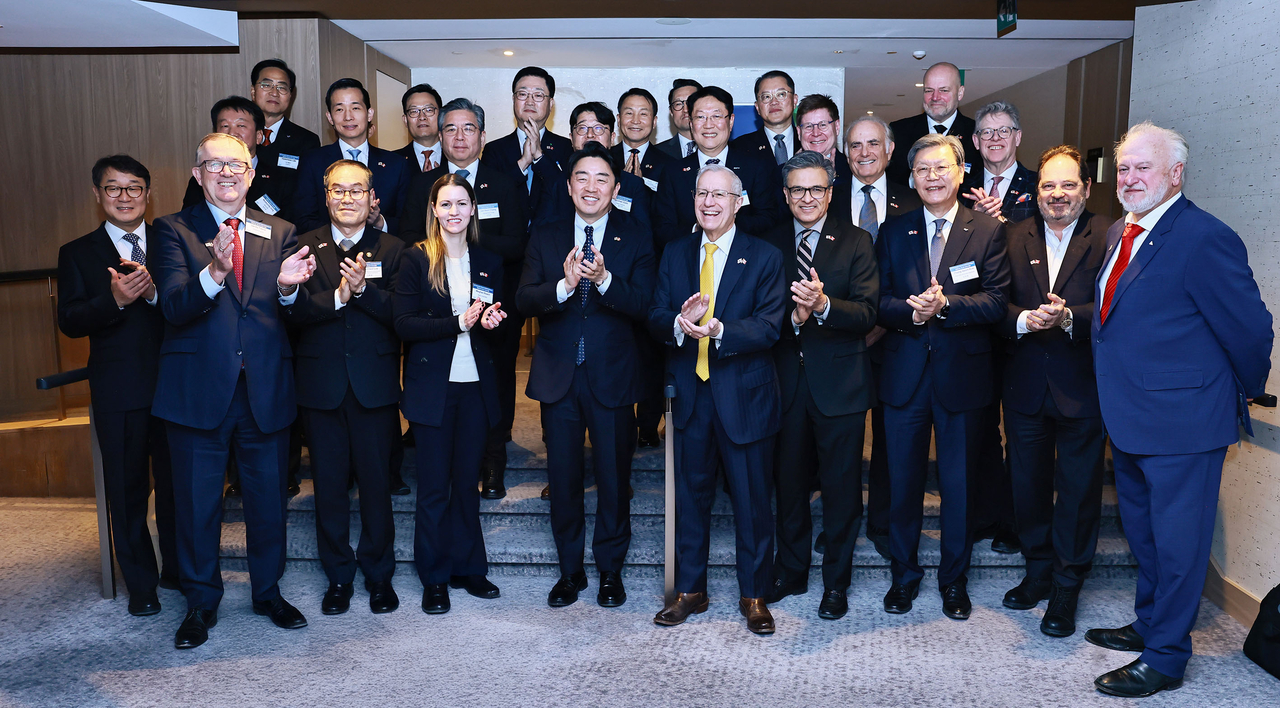
Among the attendees were Kang and Industry Minister Kim, along with Canadian officials, including Deputy Minister of Innovation, Science and Economic Development Philip Jennings and Ontario Minister of Economic Development Victor Fedeli.
In his opening remarks, Kim Chang-beom, vice chair of the Federation of Korean Industries, said South Korea and Canada should move beyond a traditional trade partnership toward a “strategic partnership in industry, security and supply chains,” citing defense, critical minerals and energy as three core areas of cooperation.
“South Korean companies already view Canada as a trusted partner,” Kim said. “Expanded bilateral cooperation would strengthen supply chain stability, create jobs in both countries and enhance global competitiveness.”
From South Korea's businesses, Hyundai Motor Vice Chair Jang Jae-hoon, Hanwha Group Vice Chair Kim Dong-kwan, Hanwha Ocean CEO Kim Hee-chul, Hanwha Systems CEO Son Jae-il, HD Hyundai Heavy Industries CEO Joo Won-ho, Posco Future M CEO Eom Gi-chen and executives from Korea Zinc, LIG Nex1, EcoPro Innovation and LG Energy Solution were among the participants.
The Canadian side included Business Council of Canada CEO Goldy Hyder, Sun Life Financial CEO Kevin Strain and Roots CEO Meghan Roach, as well as executives from companies including CAE, Air Canada, Clean Grid Atlantic and Hatch.
sahn@heraldcorp.com