Autos, biopharma brace for potential return to 25% US duties
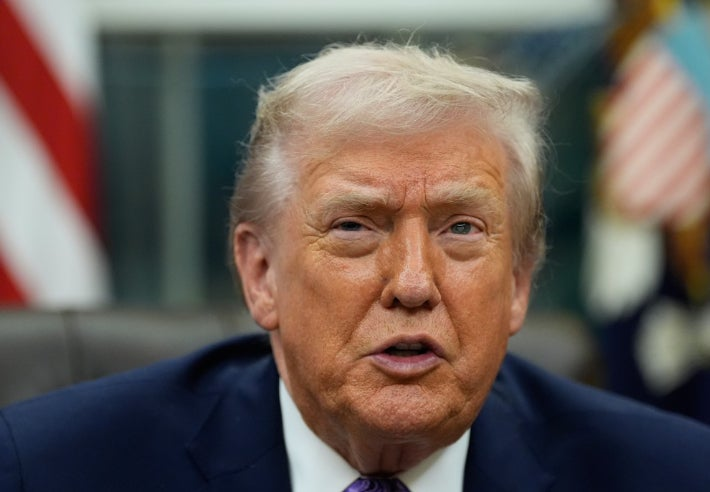
South Korea’s corporate sector grew wary on Tuesday after US President Donald Trump signaled plans to reimpose higher tariffs on Korean exports, including cars and biopharmaceuticals, raising duties to 25 percent from the 15 percent level agreed upon in bilateral talks last year.
Automakers, among the most vulnerable to a policy reversal, were quick to reassess the impact, after Trump said the tariff hike would take effect following what he described as a failure by the National Assembly to approve the agreement.
“Because the Korean Legislature hasn’t enacted our Historic Trade Agreement, which is their prerogative, I am hereby increasing South Korean TARIFFS on Autos, Lumber, Pharma, and all other Reciprocal TARIFFS, from 15% to 25%,” Trump wrote in a post on Truth Social.
For Hyundai Motor and Kia, the fallout from a renewed 25 percent US tariff would be severe. The two companies together absorbed an estimated 4.6 trillion won ($3.4 billion) in tariff-related costs in the second and third quarters combined last year.
If Trump’s comments translate into policy, the damage to Korea’s auto industry could far exceed previous levels, industry sources said, adding that any renegotiation of tariffs is likely to take considerable time.
Hyundai Motor Group had overhauled its business plans after Seoul and Washington reached a detailed tariff agreement in October last year, which cut US auto tariffs on Korean vehicles to 15 percent, in line with rates applied to other countries.
“The fear is that trade policy can be flipped overnight across sectors, forcing companies into endless contingency planning and draining resources,” an industry official said.
After the Trump administration first imposed higher tariff rates in April last year, Korea’s auto exports to the US declined on-year throughout the enforcement period. Total shipments for the year fell 13.2 percent to $30.1 billion, industry data showed.
Electric vehicle exports were hit particularly hard, with monthly shipments to the US at times falling to near zero after the Trump administration also scrapped purchase subsidies.
The battery industry is also closely watching the development, although major suppliers are seen as better positioned to cushion the immediate impact after building local manufacturing bases in the US. Still, industry officials warn that a prolonged slowdown in US demand for Korean-made vehicles would still weigh on the battery sector over the medium to long term.
Pharmaceutical and biotech companies said they are monitoring developments after activating contingency plans. Samsung Biologics and Celltrion said earlier their localization strategies, including US-based contract manufacturing acquisitions and partnerships, should reduce direct exposure to potential tariff shocks.
Other industries not directly targeted by the latest tariff threat are also watching developments closely.
“Repeated changes in tariff policy over more than a year are creating uncertainty, which is the most problematic factor for business operations,” an industry official said.
The chip industry is also monitoring the situation, as Trump recently urged foreign chipmakers to build memory manufacturing plants in the US to avoid potential tariffs. Semiconductors constitute Korea’s largest export sector, accounting for 24.7 percent of exports by value in 2025.
Industry officials, however, believe that tariffs on chips would be difficult to enforce in practice, as that would ultimately raise costs for US tech giants, which are the main customers.
“Even the only American memory producer Micron Technology manufactures most of its chips overseas,” an industry official said. "So it would be difficult for the Trump administration to actually impose high tariffs on semiconductors."

herim@heraldcorp.com