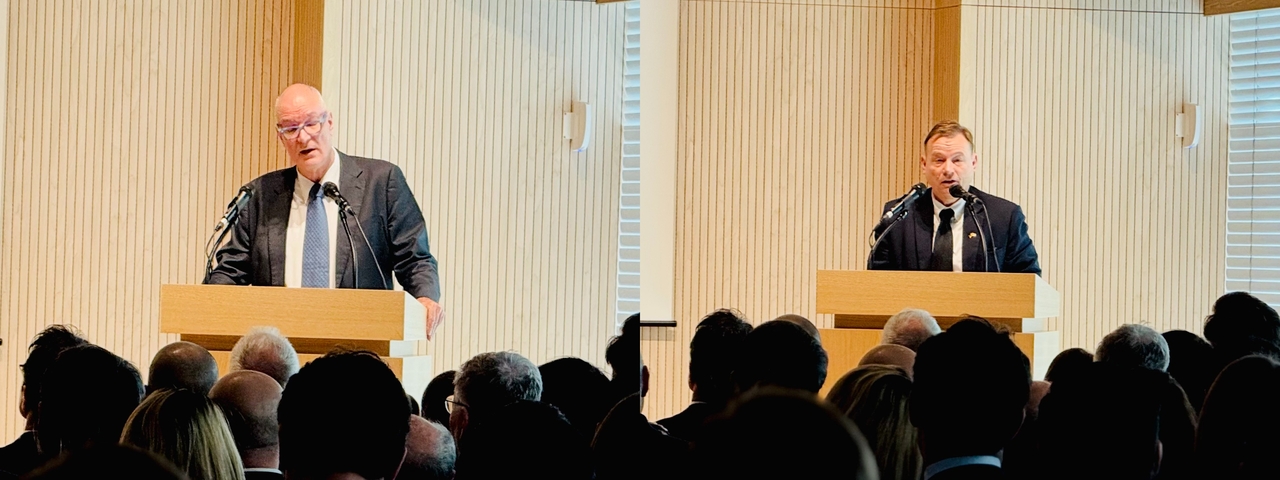
The embassies of Israel and Germany in South Korea jointly hosted a Holocaust remembrance ceremony in Seoul on Tuesday.
Held at the National Museum of Korean Democracy, the event marked the UN-designated International Holocaust Remembrance Day on Jan. 27, commemorating the liberation of Auschwitz-Birkenau in 1945 and honoring the nearly 6 million Jews murdered by Nazi Germany during the Shoah.
Since 2017, the German and Israeli embassies in Korea have held Holocaust remembrance events to uphold historical truth and moral responsibility.
“The Holocaust is not a tragedy of the past. It is painfully relevant today,” Israeli Ambassador to Korea Rafael Harpaz said in his remarks, warning that the Holocaust’s lessons remain urgent as antisemitism resurges, with Jews and Israelis targeted for who they are and hatred amplified by social media and AI.
German Ambassador Georg Schmidt recalled the 81st anniversary of Auschwitz’s liberation, describing it as the ultimate symbol of the Holocaust, and highlighted the story of German-Jewish painter Felix Nussbaum to humanize the scale of the atrocity.
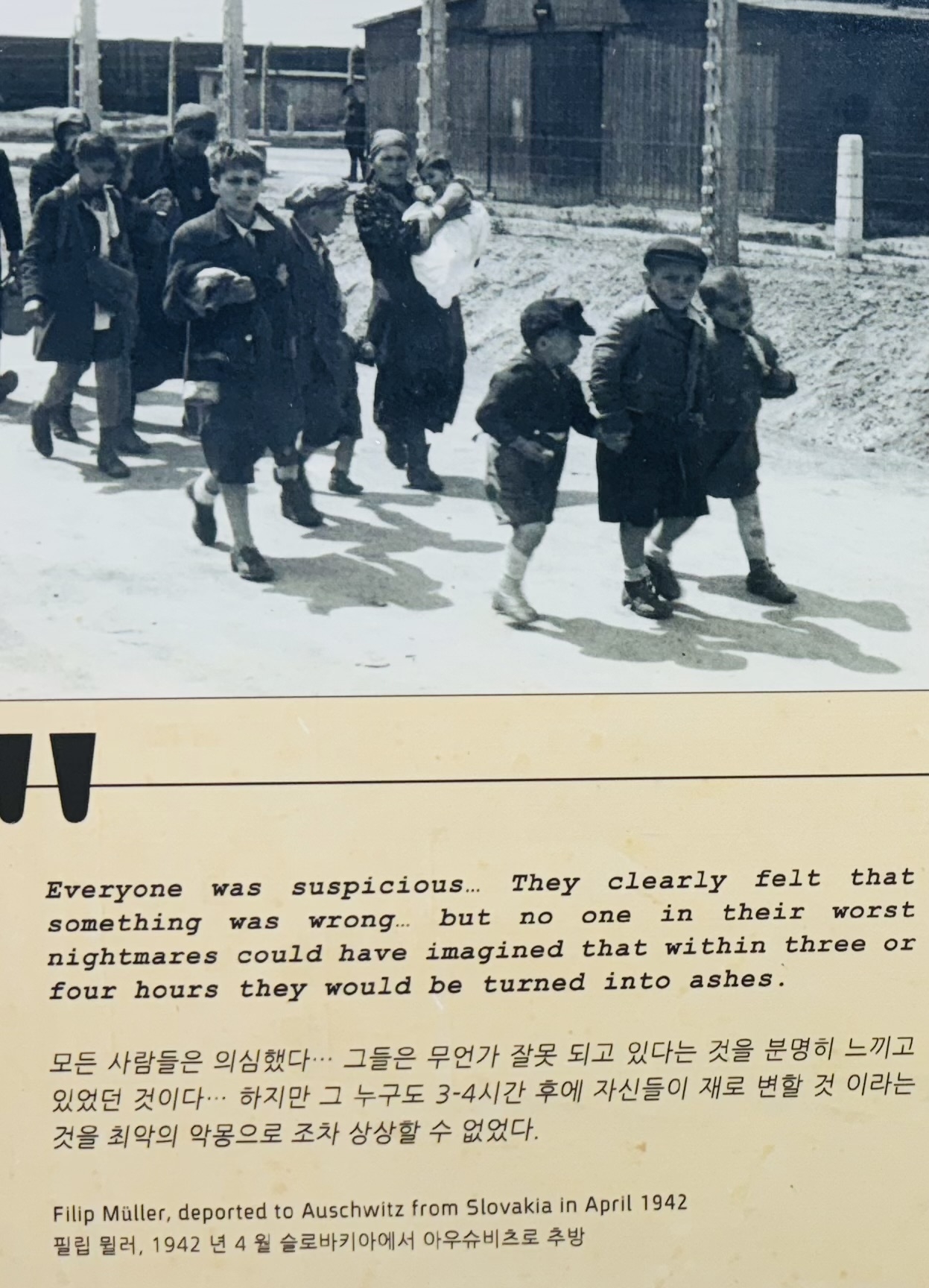
The exhibition of Nussbaum’s works, shown in Korea for the first time, accompanied the commemoration.
“As Germans, we bear historical responsibility for the Holocaust — a responsibility that does not end,” Schmidt said. “The Holocaust remains part of German identity. This responsibility goes hand in hand with protecting democracy and the rule of law as a shield against hatred and exclusion.”
He underscored shared democratic values between Germany and South Korea, noting Korea’s hard-won democracy and stressing that the Holocaust’s lessons resonate universally beyond borders.
“Never again,” the ambassador urged.
Meanwhile, Lee Jae-oh, president of the Korea Democracy Foundation, underlined the venue’s transformation from a site of state violence into a space for reflection, noting that the Holocaust underscores the dangers of ignoring human dignity and unchecked state power, aligning with this year’s theme, “Remembering for the Future.”
“This place bears deep scars of the past,” he said.
“History that is not remembered is a history that regresses,” Lee added.
sanjaykumar@heraldcorp.com