How cyberpunk vanity project of an arthouse darling, 'The Resurrection of the Little Match Girl,' flopped so hard
Making a film is hard, making a good film harder still. But to craft something so spectacularly awful that it ascends to legendary status takes a special kind of genius. This series digs up the gems of Korean cinema remembered for their extraordinary badness. This is the second installment.
Picture this: A delivery guy wanders into an office, only to find something amiss. The secretary insists she didn't place an order. An altercation ensues — he demands payment, she tells him to get lost — and then the guy pulls an assault rifle from beneath the delivery bag.
"You wanna get beaten up with 'jjajangmyeon' (black bean noodles)?"
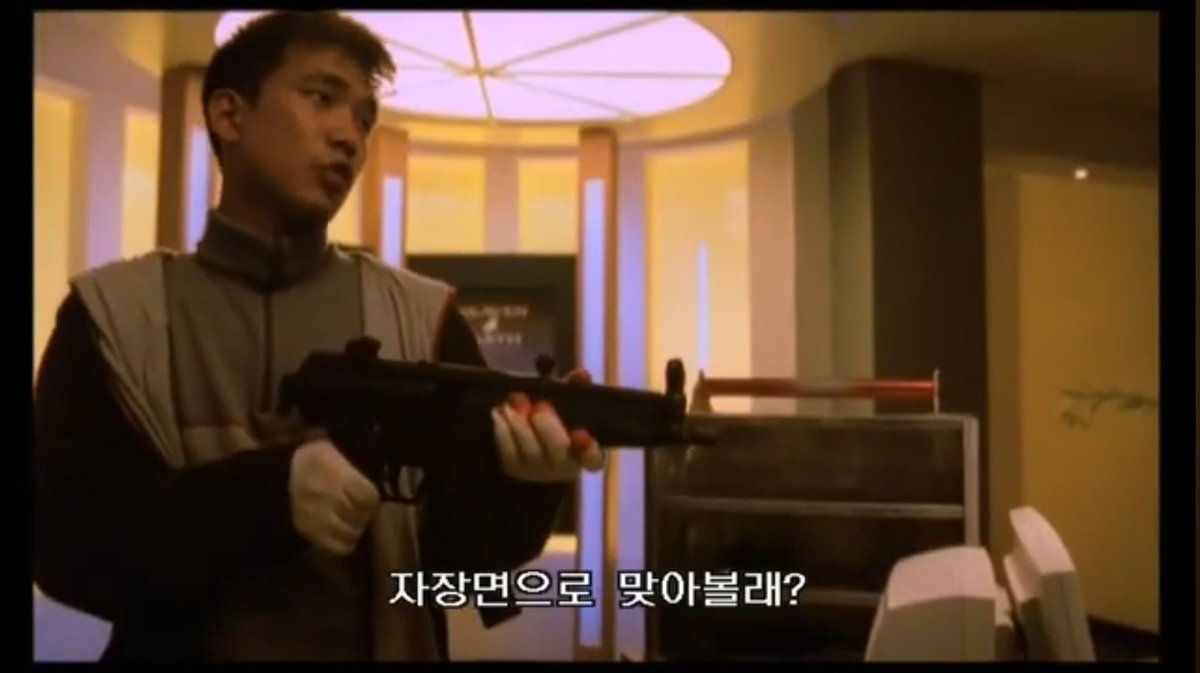
He then unloads into the room. Playing in the background is a pillowy dance number, S.E.S.'s 1998 hit "Dreams Come True," all gentle synthesizers and breathy harmonies soundtracking the massacre.
There's something darkly comic to this choreographed carnage, the kind of gleeful excess that later films like "Shoot 'Em Up" or "Kingsman" would polish into style — except this is a throwaway moment wedged randomly between unrelated threads, serving no purpose other than to show we've entered some bonkers fever-dream territory.
It's also the money shot that turned the film into a legend of sorts, the clip that still gets passed around when we talk about Korean cinema at its most unhinged.
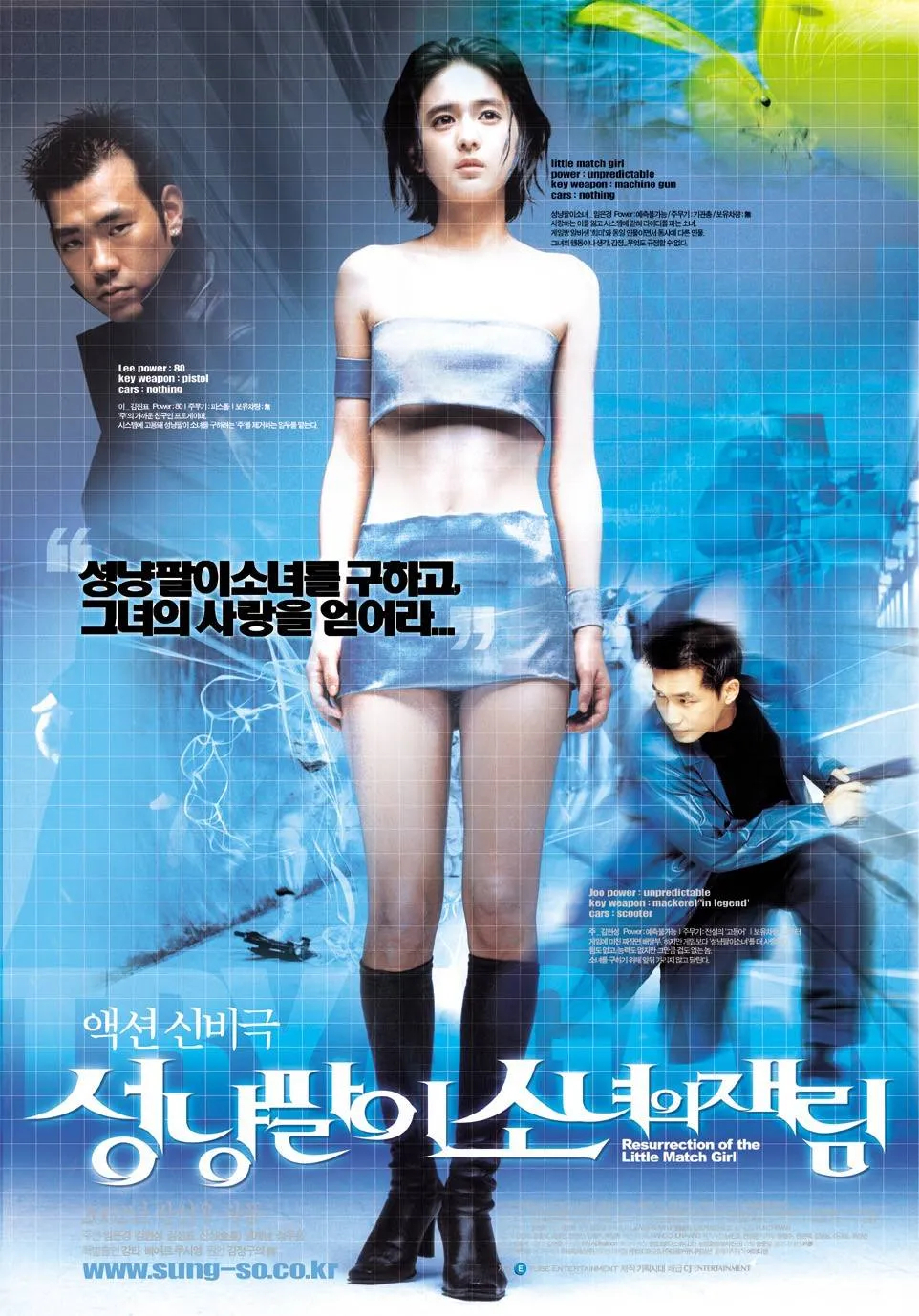
Here is "The Resurrection of the Little Match Girl," Jang Sun-woo's 2002 cyber fantasy, now immortalized as one of the priciest and most bewildering disasters in Korean film history.
The setup
To grasp how this fiasco came together, one needs to understand the moment Korean cinema was having at the turn of the millennium.
The country had just seen locally produced blockbusters pull off something unprecedented — "Shiri" (1999) sold over 6 million tickets nationwide through its four-month run and "Joint Security Area" (2000) came close on its heels, demonstrating Korean films could hold their own against Hollywood imports.
Venture capital was flooding in to fill the vacuum left by conglomerates in the wake of the 1997 Asian Financial Crisis, buoyed by visions of the next "Shiri." Meanwhile, state-sponsored film funds, launched as part of a broader government push to cultivate the domestic film industry through public-private investment schemes, sweetened the pot further.
Confidence was surging across the industry. This was, by all appearances, the dawn of something big.
For starters, the choice of director for "Little Match Girl" was not exactly conventional. The job went to Jang Sun-woo, a political dissident-turned-arthouse darling who had spent the preceding decade building a reputation on festival prestige and boundary-pushing work. Overseas viewers perhaps know him best for "Passage to Buddha" (1993), which won the Alfred Bauer Prize at the Berlinale, or "A Petal" (1996), the first Korean studio film to address the 1980 Gwangju massacre.
He was also something of a provocateur by trade: His 1997 work "Timeless Bottomless Bad Movie" had courted controversy with its faux-documentary format and graphic depictions of violence and sex. Two years later came "Lies" (1999), an explicit S&M drama between a high schooler and her middle-aged teacher, which exploded into full-blown national scandal.
Why this auteur decided to take on blockbuster filmmaking remains unclear, but take it on he did, restraint be damned.
The budget started at 3 billion won ($2.04 million today) — on par with "Shiri"— and eventually ballooned to 11 billion won, an eye-popping sum by the standards of the time. To put that in perspective, the hourly minimum wage in 2002 was 2,100 won, versus 10,320 won in 2026.
That money would be spent on realizing what is essentially Y2K futurist vision of the day, with a cyberpunk virtual reality premise filtered through Korea's burgeoning digital youth culture. By 2002, the country was totally wired and plugged in — cyber cafes on every block, StarCraft turning into a televised sport, cellphone commercials everywhere you looked.
The plot (such as it is)
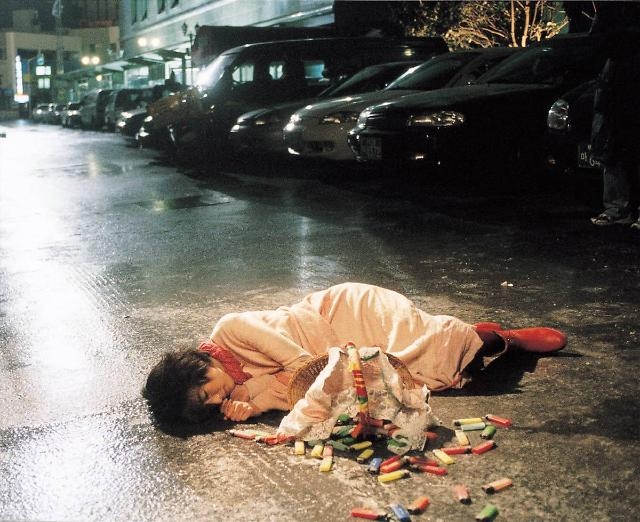
"Little Match Girl" begins with the titular match girl, played by Lim Eun-kyung (then a rising star known from an SK Telecom ad), wandering the streets selling lighters — a baffling image the film supplements with title cards out of a silent film, none of which clarifies anything.
We also have Ju (Kim Hyun-sung), a delivery guy at a Chinese restaurant who spends his spare time hanging with his lowlife buddies and gaming at arcades, dreaming of one day becoming a professional gamer like his best friend Lee (Kim Jin-pyo). Somehow, the characters are now introduced via game-screen-style graphics displaying their stats and attributes, which look about as convincing as you'd expect.
This is all before Ju dials the number on one of the lighters he gets from the match girl and suddenly enters a real-life multiplayer game. The game's goal, in the film's own words, is to "protect her from people around her to make her freeze to death" while becoming "the person on her mind as she dies" — that is, the one she thinks of as her beloved in her death.
Any summary of the plot from this point onwards risks making it sound more coherent than it actually is, but it goes something like this.
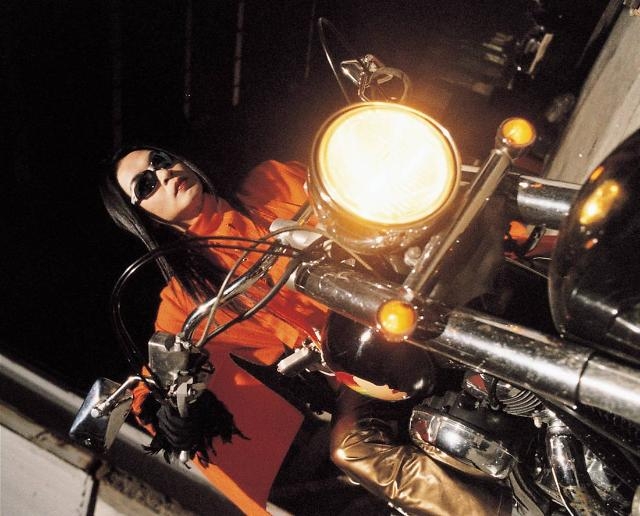
The game world unfolding in real time is filled with bootleg characters ripped from various sources: a dual-pistol-wielding woman on a motorcycle (the film calls her Lala, after Lara Croft of the "Tomb Raider" franchise — played by Jin Xing); agents in dark suits and sunglasses who look lifted straight out of "The Matrix" trying to get the match girl; and a creator of the gaming universe who appears as a sage fishing without bait (Myung Gye-nam). Weapons are purchased at a street-side food stall where figures resembling Leon and Mathilda from Luc Besson's "Leon: The Professional" sit in the corner.
Ju takes down the bad guys one by one, his friend Lee among them, at one point teaming up with Lala before she meets her end. Compounding the confusion, the perspective keeps cutting to game-style overlays — inventory screens, point tallies, status bars cluttering the frame.
Whatever is going on, one thing's for sure: The director has a soft spot for mass shootings. The match girl, glitching out for reasons unknown, develops a habit of mowing down pedestrians with an assault rifle when they won't buy her wares. After a crescendo of madness, Ju makes his way to a final showdown with the System — some Orwellian mastermind voiced by French film producer Pierre Rissient. His secret weapon, handed to him by the game's creator, is a gun that literally transforms into a fish and flops toward opponents.
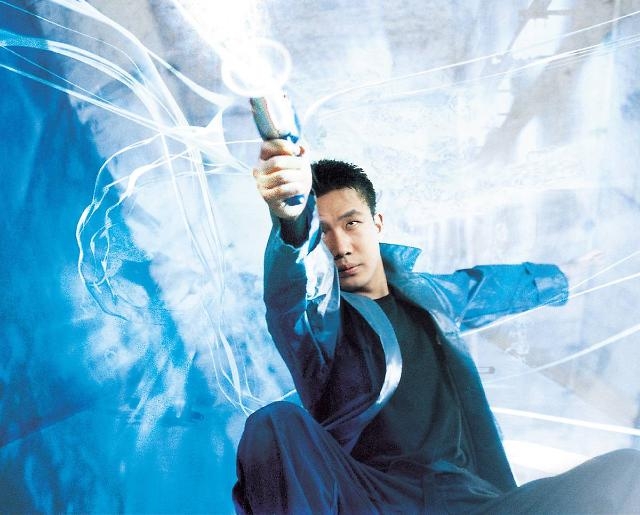
The film then pulls what it presumably considers a clever structural experiment: After the first ending, where Ju returns to ordinary life, credits roll — only for a second ending to begin, in which he fights on and saves the match girl. They end up on a sun-drenched tropical island, with a child between them.
The fallout
The box office returns were catastrophic. "Little Match Girl" managed a mere 140,000 admissions against a record budget that needed 4 million tickets to break even. The shortfall alone accounted for roughly a fifth of the Korean film industry's deficit that year. Insolvencies followed: Both production company Keewheksidae and distributor Tube Entertainment limped on for a few more releases before going bust.
For Jang, this flop effectively marked the end of a career. Critics piled on, and a director once celebrated for pushing boundaries was now dismissed as a cautionary tale in hubris. He would never direct another feature again.
Lim Eun-kyung, the rising star in the lead role, also suffered the blow — her comically wooden performance as the match girl shattered whatever hype her cute-girl image from the telecom ads had built up. It would take one more disaster, the insanely juvenile "Marrying High School Girl" in 2004, before she all but disappeared from screens.
"Little Match Girl," if anything, functions as a time capsule of sorts — from the "Matrix"-inspired leather trench coats and shades to the cyberpunk sheen of early-internet aesthetics, the film reeks of a certain turn-of-the-millennium swagger. There's an angle where it plays as kitsch parody given its shameless pilfering from genre touchstones, and you can squint to see traces of knowing irony: "Tomb Raider" here, John Woo there, a sprinkle of "Blade," all tossed together with reckless abandon.
But a film needs a baseline level of competence and narrative logic to even qualify as subversion, and "Little Match Girl" is a textbook example of what happens when that threshold isn't met. There's an embarrassing clumsiness to it all that makes any charitable reading impossible, the kind that suggests not calculated self-awareness, but a director hopelessly out of touch with the subject matter he's trying to address.
The game elements embedded in the film's fabric — the UI, the pop-up text boxes crammed with netspeak, the stat screens and mission prompts — make it painfully obvious the director has never seen how games actually work; it's as if the whole thing was rendered by an alien who's never played a game but had the concept explained to him by a human. And that the film relies almost entirely on these in-game prompts and texts to carry much of the exposition makes it all the more inexcusable.
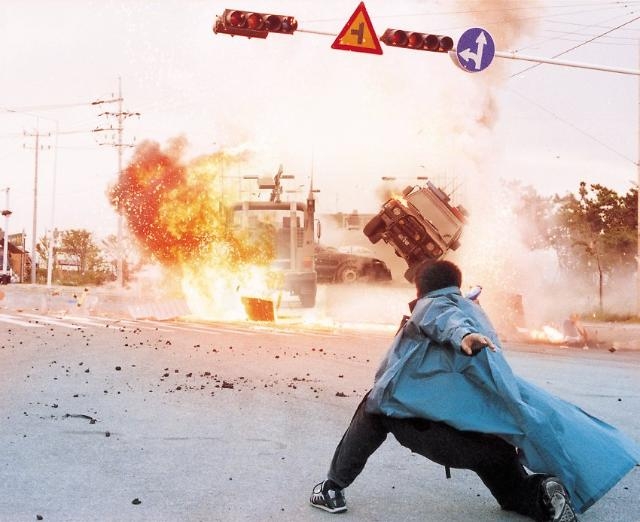
Perhaps most damning, the action fails to deliver the blockbuster spectacle all that money was supposed to buy: The wire work is uninspired and the visual effects are shockingly amateurish, all without a trace of craft.
And the point of it all? As near as anyone can tell, "Little Match Girl" seems to traffic in the all-too-familiar anxieties about digital culture leading to the loss of humanity, basically boomer panic dressed in a shiny cyberpunk wrapper. If there's anything more substantive, it's so lost in the wreckage that trying to find it feels pointless. Which is a shame, because Jang had built a career on incisive critiques of power, whether it be corporate greed in "The Age of Success" (1988) or authoritarian state violence in "A Petal."
Years later, in an interview with film critic Tony Rayns, the director offered the kind of candid postmortem that only arrives after the dust has settled.
"At the time I thought I'd made a cute baby and people just hadn't realized it yet," he said. "But if I look back now, I think I got the whole thing wrong. When I made it, my thinking was very arrogant and lacked any deep understanding. I regret it.
"At the time, I said that this film would judge the audience. What an arrogant thing to say!"
moonkihoon@heraldcorp.com








