Currencies are often described as barometers. The Korean won, however, is better understood as a mirror. It reflects not only trade flows and interest rates, but also how global capital appraises the country’s economic future.
환율은 종종 상황의 지표라고도 불린다. 그러나 한국의 원화는 거울이라는 역할로 더 잘 이해될 수 있다. 원화는 무역의 흐름과 이자율뿐 아니라 세계의 자본이 한국 경제의 미래를 어떻게 평가하고 있는지 또한 반영한다.
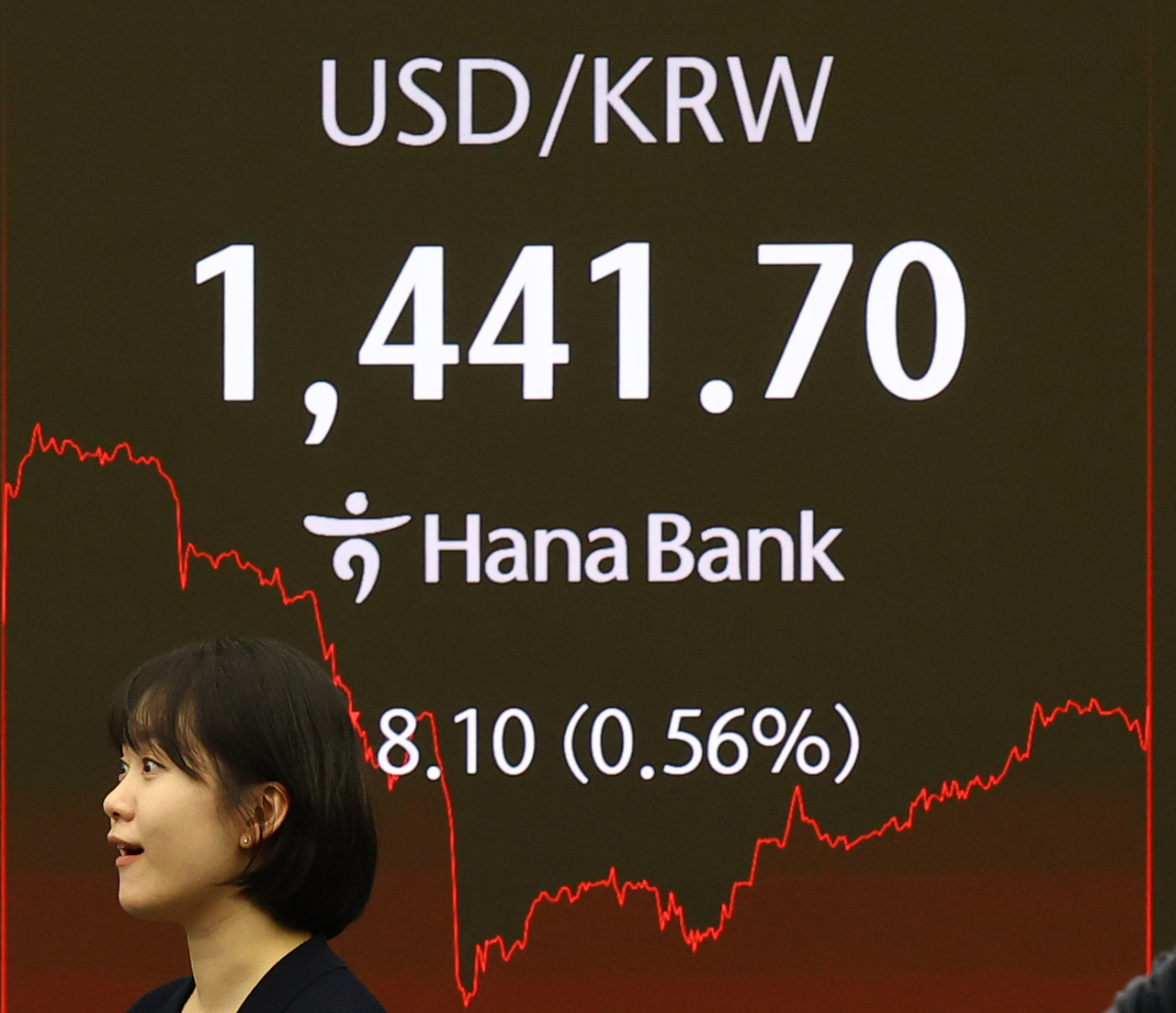
By that measure, the image is increasingly uncomfortable. The won has been hovering near 1,480 per US dollar, brushing against the psychological red line of 1,500, despite a current account surplus of roughly $90 billion through November. The problem is not panic; it is persistent.
그 기준으로 볼 때 보이는 모습은 갈수록 불편하다. 11월까지 경상수지 흑자가 대략 900억달러에 달했음에도 불구하고 원화는 미화 1달러당 심리적 마지노선인 1500원대에 근접하는 1480원대를 넘나들어왔다.
Seoul’s response has been energetic but uneven. On the sensible side, the government has opted for technical deregulation aimed at easing dollar inflows. Foreign exchange liquidity stress tests have been suspended until June 2026. Forward position limits for foreign banks have been expanded to 200 percent of capital. Exporters are now allowed to use foreign currency loans for operating funds.
한국의 대응은 적극적이었으나 들쭉날쭉했다. 정부는 달러 유입을 늦추기 위해 기술적인 규제완화를 선택하는 합리적인 면을 보였다. 외화유동성 스트레스 테스트는 2026년 6월까지 잠정중단되었다. 외국계 은행의 선물환 포지션 한도는 자본대비 200퍼센트로 상향조정되었다. 수출업체들은 이제 운전자금 용도로도 외화대출을 이용할 수 있게 되었다.
These steps lower barriers for dollars to enter and circulate domestically, and acknowledge that Korea’s foreign exchange defenses, built for another era, have become too rigid.
이러한 조치들은 달러가 국내에 유입되어 순환될 수 있도록 장벽을 낮춘다. 지난 시대에 맞춰 세워진 한국의 외화 방어책이 이제는 지나치게 엄격하다는 것을 인정하는 것이기도 하다.
Yet deregulation has been paired with something less reassuring. Senior officials have summoned chief financial officers from the country’s largest conglomerates to discourage dollar hoarding. The financial regulator has issued stern warnings to brokerages whose overseas investment marketing targets retail investors.
그러나 규제완화 외의 조치들은 불안감을 불러일으켰다. 고위 당직자들은 한국의 대기업 CFO들을 불러들여 달러 비축을 줄여달라고 요청했다. 금융당국은 증권사들에 개인투자자들을 상대로 하는 해외투자에 대한 마케팅을 자제할 것을 강력히 권고했다.
The message is clear: Keep dollars at home. But pressuring firms to sell foreign currency while they prepare for an estimated $350 billion in long-term investment in the US is a policy contradiction. Managing the won this way resembles an attempt to stop a waterfall with a handheld sieve.
보내는 메시지는 분명하다. 달러를 국내에서 보유하라는 것이다. 그러나 정부 차원에서 미국에 3500억달러로 추산되는 장기 투자를 준비하면서 기업들에게는 외화를 시장에 풀도록 압박하는 것은 정책적 모순이다. 이런 방식으로 원화를 관리하는 것은 체를 손에 들고 폭포를 멈추게 하려는 꼴이다.
This tension is unfolding against an unsettled external backdrop. On Friday, the Bank of Japan raised its policy rate by 0.25 percent to 0.75 percent, the highest level in three decades.
이러한 긴장상황에는 불안정한 외부적 배경이 있다. 금요일 일본 은행은 기준금리를 0.25퍼센트에서 30년만의 최고치인 0.75퍼센트로 인상했다.
The longer-term implications warrant caution. Years of ultra-low Japanese rates fueled an enormous yen-carry trade, estimated at up to $4 trillion globally. As Japanese yields rise, the risk of abrupt capital reversals grows. In risk-averse markets, the usual benefit South Korea enjoys from a stronger yen is eclipsed by a broader flight into the US dollar, leaving the won exposed.
장기적으로 갖는 함의는 신중함을 요하게 만든다. 일본이 장기간 유지해온 초저금리는 엄청난 규모의 엔캐리 트레이드로 이어졌고 그 규모는 전세계적으로 최대 4조 달러로 추산된다. 일본의 금리가 오르면서 급작스러운 자본 역류의 위험성이 커진다. 위험 회피 시장에서는 엔화 강세로부터 한국이 일반적으로 얻는 수혜가 달러로 몰려드는 더 큰 움직임으로 상쇄되어 원화는 그대로 노출되게 된다.
Still, external shocks do not fully explain the weakness. The more troubling diagnosis lies at home. South Korea is running a trade surplus, yet capital is flowing out far faster. Roughly $150 billion has exited through direct and portfolio investment, dwarfing the surplus that trade generates. This is not a liquidity problem; it is a credibility problem.
그러나 외부적인 충격만이 원화의 약세의 원인은 아니다. 더 우려되는 문제는 국내에 있다. 한국은 무역흑자를 기록하고 있으나 자본은 그보다 훨씬 더 빠른 속도로 유출되고 있다. 약 1천5백억달러가 직접 그리고 포트폴리오 투자를 통해 유출되어 무역에서 이룬 흑자를 훨씬 뛰어넘는다. 이는 유동성의 문제가 아니라 신용도의 문제다.
Domestic investors are voting with their feet. Retail and institutional money continues to leave the Kospi for deeper markets, stronger returns and clearer governance in the US. The prolonged interest rate inversion with the US leaves the won without a yield buffer, while the BOK remains constrained by inflation and household debt.
국내 투자자들은 행동으로 보여주고 있다. 개인과 기관의 자본은 계속해서 코스피 시장을 떠나 시장이 더 깊이있고, 수익이 더 많으며 거버넌스가 더 투명한 미국으로 향하고 있다. 미국과 역전된 채 오래 유지된 이자율로 인해 원화는 금리로 인한 타격을 완충할 능력을 잃었고 한국은행은 여전히 인플레이션과 가계 부채로 제약을 받고 있다.
What emerges is a currency version of the “Korea discount,” a judgment that future returns look more compelling elsewhere.
이로 인해 환율에 있어서의 "코리아 디스카운트," 즉 다른 시장에서의 미래가 더 밝다는 판단이 나오고 있다.
That is why crisis-style management is the wrong frame. Scolding corporations for holding dollars or browbeating brokerages for facilitating global investment amounts to financial isolationism. It may slow outflows at the margin, but it cannot reverse them.
위기상황식의 대처가 구조적으로 잘못된 이유다. 달러를 보유했다고 기업들을 꾸짖고 글로벌 투자를 중개하는 증권사들을 을러대는 것은 금융 고립주의에 해당한다. 미미하게 유출의 속도를 낮출 수 있을지언정 흐름을 되돌릴 수는 없다.
The path to currency stability runs in the opposite direction. South Korea must make itself a place that global capital wants to enter, not one it is coerced to stay in. Structural reform is the real remedy. Accelerating corporate governance reform, following through on global bond index inclusion and restoring confidence in fiscal discipline would do more for the won than any closed-door meeting.
환율 안정을 이루기 위해서는 그 반대로 움직여야 한다. 한국은 세계의 자본이 억지로 머무는 것이 아니라 진입하고 싶은 시장이 되어야만 한다. 구조적인 개혁이 진정한 해결책이다. 기업 거버넌스 혁신에 속도를 올리고 세계 채권지수에 편입하겠다는 계획을 실행하고 금융 규율에 대한 신뢰를 회복하는 것이 어떤 비공개 회의보다도 원화에 도움이 될 것이다.
The mirror the won holds up is unflattering but instructive. Markets are not questioning South Korea’s solvency; they are questioning its trajectory. Until that changes, no amount of administrative guidance will steady the reflection.
원화가 반영하는 모습은 매력적이지는 않지만 유익하다. 시장은 한국의 지불능력을 의심하는 것이 아니라 한국의 나아갈 방향에 의문을 갖는 것이다. 그것이 달라지지 않는 정부가 어떠한 지도를 하더라도 거울에 비친 모습을 안정시키지 못할 것이다.
appraise 평가하다
red line 한계
current account surplus 경상수지 흑자
forward position 선물환 포지션
operating funds 운전자금
hoarding 비축
brokerage 증권사
retail investor 개인투자자
sieve 체
policy rate 기준금리
risk-averse 위험 회피
vote with feet 불참투표하다
inversion 도치, 역전
browbeat 으르다, 협박하다
bond index 채권지수
solvency 지불능력
trajectory 궤도
khnews@heraldcorp.com