South Korea is pushing to cultivate “artificial intelligence talent,” a core pledge of President Lee Jae Myung, who has vowed to make the country one of the world’s “top three AI powerhouses.”
“We must fully implement AI education,” Lee said during a press conference in September marking 100 days since his inauguration. “We must build the capacity of our people to adapt to and use AI.”
As education authorities race to embed artificial intelligence into classrooms nationwide, some critics warn that the push risks reducing schooling to a narrow skills-training exercise — one that priotizes rapid manpower production over defining what kinds of thinkers, citizens and learners the system should ultimately cultivate in the age of AI.
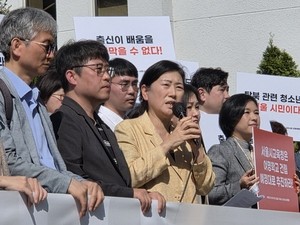
“The Education Ministry’s policies are very shortsighted,” said Kwon Jung-min, a professor of AI and humanities convergence at Seoul National University of Education. “The world is changing so quickly that we cannot even predict five years ahead. Yet the policies do not present a long-term vision.”
Fostering AI talent or losing education’s purpose?
Following President Lee’s call to accelerate AI adoption in education, the Ministry of Education unveiled on Nov. 10 the “AI for All Initiative,” a nationwide plan to expand AI education across all age groups while fast-tracking elite talent.
At the center of the initiative is an “AI innovation talent pipeline,” linking specialized high schools to university and postgraduate programs. The government plans to expand AI-focused secondary schools, introduce AI-specific university admissions tracks, and roll out integrated bachelor’s-master’s-doctoral programs that would allow students to complete a doctorate in as little as 5 1/2 years.
Instruction on AI will also be expanded across the general curriculum, with increased class time devoted to information technology and AI-related content. At the university level, national flagship institutions will provide foundational AI education to all students regardless of major. Working adults would access AI training through cyber universities, Korea National Open University and industry-linked graduate programs.
Local education offices are moving in a similar direction. The Seoul Metropolitan Office of Education has pledged to provide customized AI literacy and ethics education, expand teacher training and integrate AI tools into everyday classroom instruction.
But to Kwon, the government seems too focused on “creating laborers” to work in the AI field, without presenting a clear vision.
“They need to start by defining what kind of person they want our children to become through education,” Kwon said. “But if you look at these policies, that vision is missing.”
While acknowledging that the policies contain substantial content, Kwon said they lack a clear educational purpose.
“AI is just a skill, like using Microsoft Word or Photoshop,” she said. “Learning a tool cannot be the purpose of education.”
“It feels like they are trying to create more laborers,” she added. “But in the age of AI, simply producing more laborers is not the answer.”
Other experts echoed the concern. Lee Han-seop, head of policy at the Korean Teachers and Education Workers Union, said the initiative is overly focused on manpower training.
“There is an urgent need for AI education that enables students to use the technology proactively and critically,” Lee told local media.
AI as a tool for students
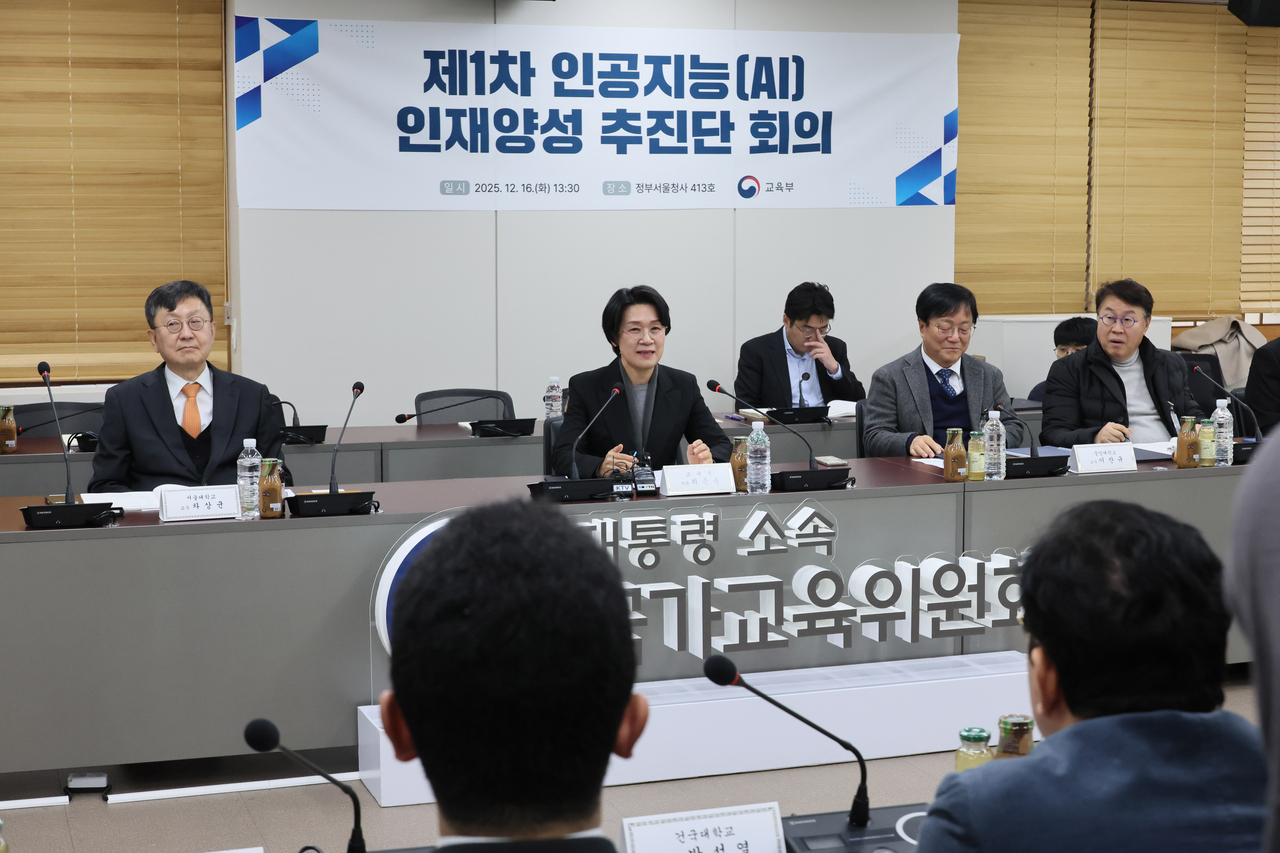
Seoul’s education plan also envisions AI as a tool in ordinary classrooms.
“Not all students can or should become AI developers,” said Lee Sang-soo, director of education policy at the Seoul education office. Instead, the city aims to teach students how to use AI in their future fields by incorporating AI tools into everyday classwork.
“We don’t just teach information technology, but we have created a system that dictates class goals on how (AI) can be taught in social studies, Korean language and ethics classes,” Lee added.
Kwon, however, warned that allowing students to rely on AI under the current education system could do more harm than good.
“When students use AI for tasks like writing, they outsource thinking and tedious work to AI,” she said. “That makes the brain lazy.”
She cited a recent preprint study examining AI use in student writing, which found that students who relied heavily on AI showed little to no brain stimulation.
“This kind of lazy use of generative AI is already widespread on university campuses,” Kwon said. “Some students don’t even remember what they wrote.”
She warned that the risks are greater for younger students, particularly in an education system still heavily centered on memorization.
According to Kwon, a fundamental overhaul of both the education system and college admissions must precede widespread AI adoption, with the premise that the focus of education should be on nurturing creativity, leadership and critical thinking.
“The curriculum needs to change so students can truly develop critical thinking skills,” she said. “Without that, (AI implementation) would be meaningless.”
Kwon noted that the current college admissions process prioritizes students who are trained in solving test questions — an area that fundamentally must change.
"To create leaders that can pioneer new industries, and not just laborers, they need to come up with real long-term policies," she said.
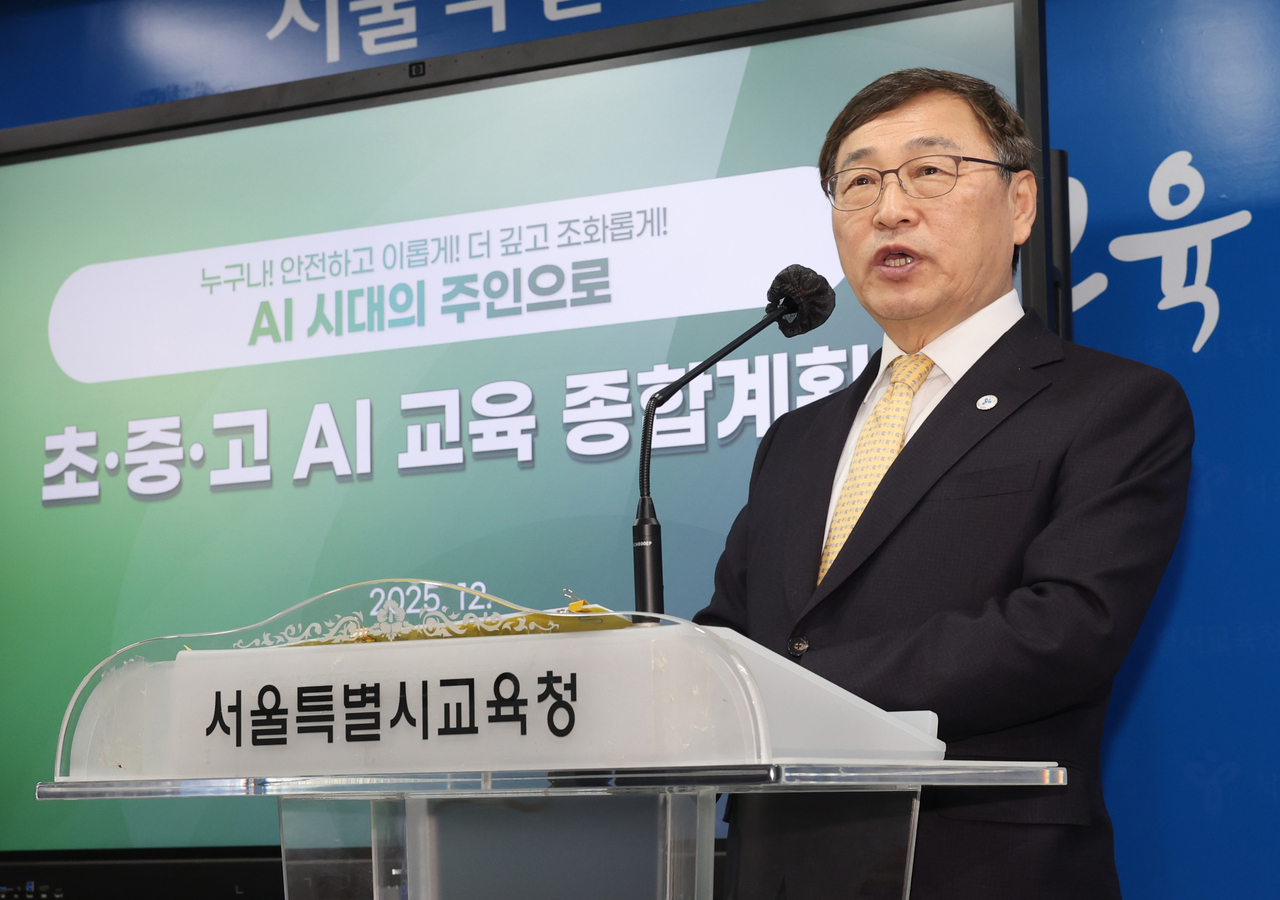
Education authorities appear to share some of these concerns. Seoul Superintendent Jung Geun-sik said Tuesday that the city plans to expand short-answer and essay-based questions, which would make up 50 percent of school exam questions by 2030.
“We are working to move towards more short and long answer questions to develop creative minds,” said Lee, Seoul’s education policy official.
AI as a tool for teachers
A significant portion of Seoul’s AI initiative also focuses on easing teachers’ workloads through AI-assisted tools and providing ethics guidelines for AI use.
Education officials argue that concerns over the accuracy and fairness of AI-based grading can be addressed through system upgrades. Lee said grading accuracy is improving through machine learning trained on curriculum-based achievement standards and real student answers.
Kwon agreed that AI could help reduce teachers’ workloads, but cautioned that unresolved risks remain, including hallucinations and accountability.
A recent survey by Kyunghyang Shinmun of 15 elementary, middle and high school teachers who tested AI assessment tools developed by education offices and private edtech firms found mixed reactions.
While teachers cited personalized feedback as a major advantage, many said the tools sometimes required more effort than manual grading. Teachers also raised concerns about ethics, data protection, responsibility and the appropriate limits of AI’s role as an evaluator.
“Education must take the safest route possible,” Kwon said. “Using unproven methods is unethical.”
seungku99@heraldcorp.com