South Korea will begin distributing 10,000 high-performance Nvidia GPUs to startups, universities and research institutes from February, the government said Thursday, as it accelerates efforts to strengthen national AI competitiveness.
The rollout is part of the government’s "K-Nvidia Initiative and AI Superhighway Project," backed by a 1.46 trillion won ($989 million) supplementary budget. The funding will be used to build a national-scale computing cluster designed to support training and deployment of advanced AI models beyond the capacity of conventional standalone systems.
Applications for GPU access are now open online through Jan. 28. Depending on project scope and potential, applicants may receive up to 256 Nvidia H200 GPUs or 128 B200 GPUs for one year. Universities and public research institutions will be granted access free of charge, while startups and small and medium-sized enterprises will pay about 5 to 10 percent of the market price. Startups led by young entrepreneurs will receive an additional 50 percent discount.
Separately, the government will allocate 6,120 GPUs to the National AI Foundation Model Project, which aims to develop large-scale AI models optimized for the Korean language and domestic industrial needs. Officials say the initiative is intended to reduce reliance on foreign AI platforms and strengthen Korea’s sovereign AI capabilities.
Looking beyond GPUs, the government is also investing in next-generation AI semiconductors. By 2030, Korea plans to develop neural processing units (NPUs) that consume less than half the energy of current GPUs. These chips will be paired with K-NPU, an open-source software platform positioned as a domestic alternative to Nvidia’s CUDA ecosystem.
Public institutions are expected to serve as early adopters of NPU-based systems, with commercial deployment to follow across sectors including robotics, automotive technology, defense, consumer electronics and the Internet of Things. To support the ecosystem, authorities are preparing a mix of tax incentives, long-term equity investments and dedicated funding programs for AI hardware startups.
The infrastructure push also extends to networks. Korea plans to convert its 5G networks to standalone mode, from the current mode which also uses LTE, by 2026, and deploy more than 500 AI-optimized 6G base stations in key industrial zones. By the end of the decade, the government aims to quadruple national backbone network capacity and double undersea cable infrastructure, adding new landing points in the Yellow and South Seas in addition to the East Sea to improve resilience and global connectivity.
According to the Ministry of Science and ICT, the coordinated strategy targets 20 percent of the global 6G and AI network infrastructure market by 2030, while fostering at least five domestic AI firms with annual revenue exceeding 500 billion won.
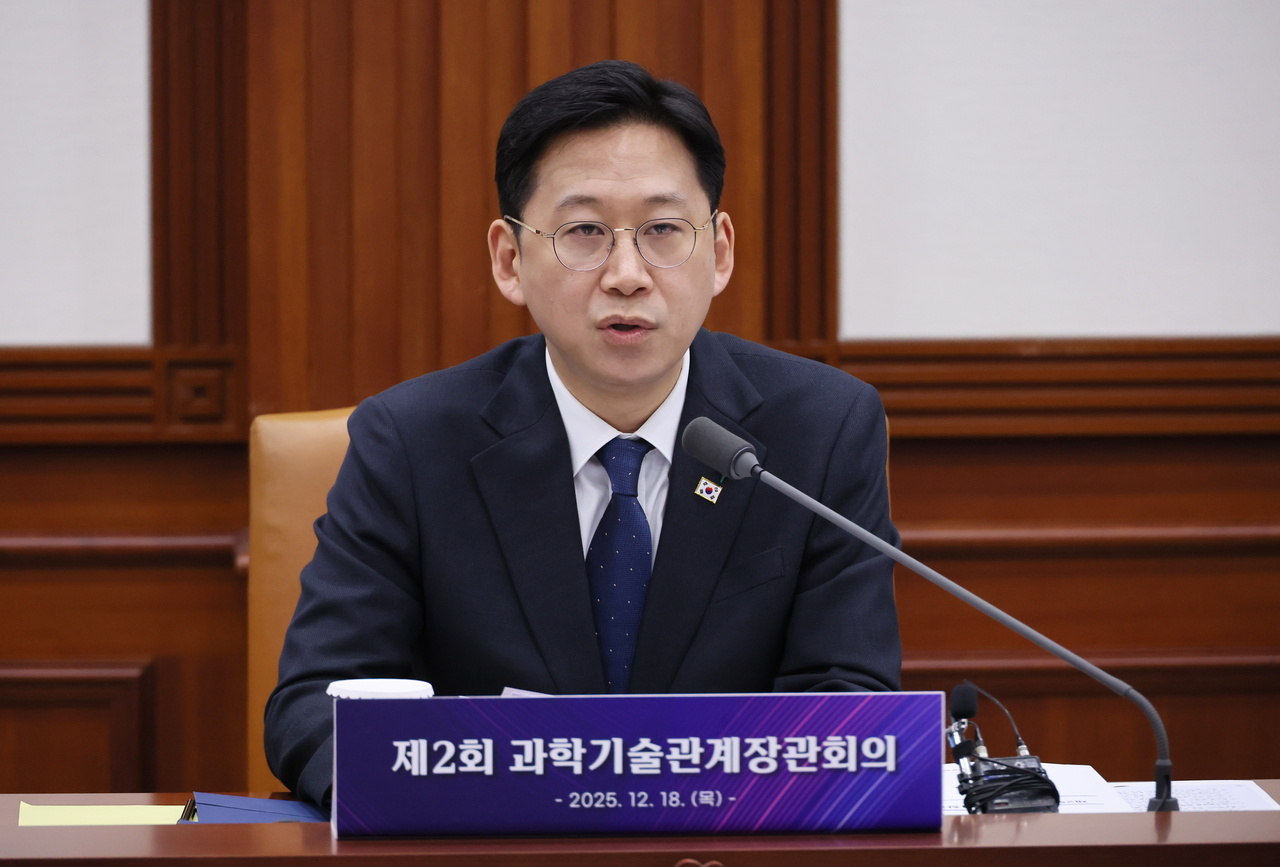
“To stay ahead in the AI era, we need bold, coordinated action across government, academia and industry,” said Bae Kyung-hoon, minister of science and ICT and deputy prime minister for science affairs. “That is how Korea can reclaim leadership in next-generation technologies, just as it did in the early days of CDMA.”
yeeun@heraldcorp.com