In miniature world with toy machines, fans say remote-controlled construction vehicles provide addictive, 'almost meditative' escape
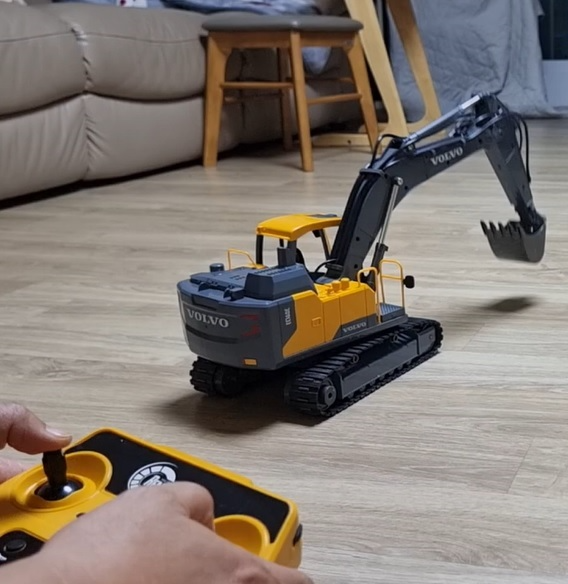
Im Hong-seob, 39, recently bought a remote-controlled excavator.
It was not for his 9-year-old son.
“I made a sand tray with leftover delivery boxes, then used the digger to move around beans or marbles, or to fill paper cups with sand,” he told The Korea Herald. "Before I knew it, an hour had passed."
While remote-controlled toys are more typically associated with speedy sports models or off-road vehicles, his collection is filled instead with construction vehicles: an excavator, a concrete mixer and other types of heavy machinery.
Piling dirt and moving small objects brings him a surprising sense of calm, which he describes as similar to meditation.
“When I’m focused on maneuvering the vehicles, all the stray thoughts about work or money just fade away," he explained. "It brings back memories of childhood toys from a time when I had no worries, and it feels good.”
Im is one of a growing number of "kidults” who have found themselves deeply interested in remote-controlled construction vehicles, mostly men in their 30s and 40s.
YouTube channels have emerged in which these enthusiasts set up structures at home to run their construction machinery or film at children’s playgrounds and even rural farms.
Recently, a cafe dedicated to operating RC heavy equipment opened in Seoul as the first of its kind in Korea — and it quickly went viral.
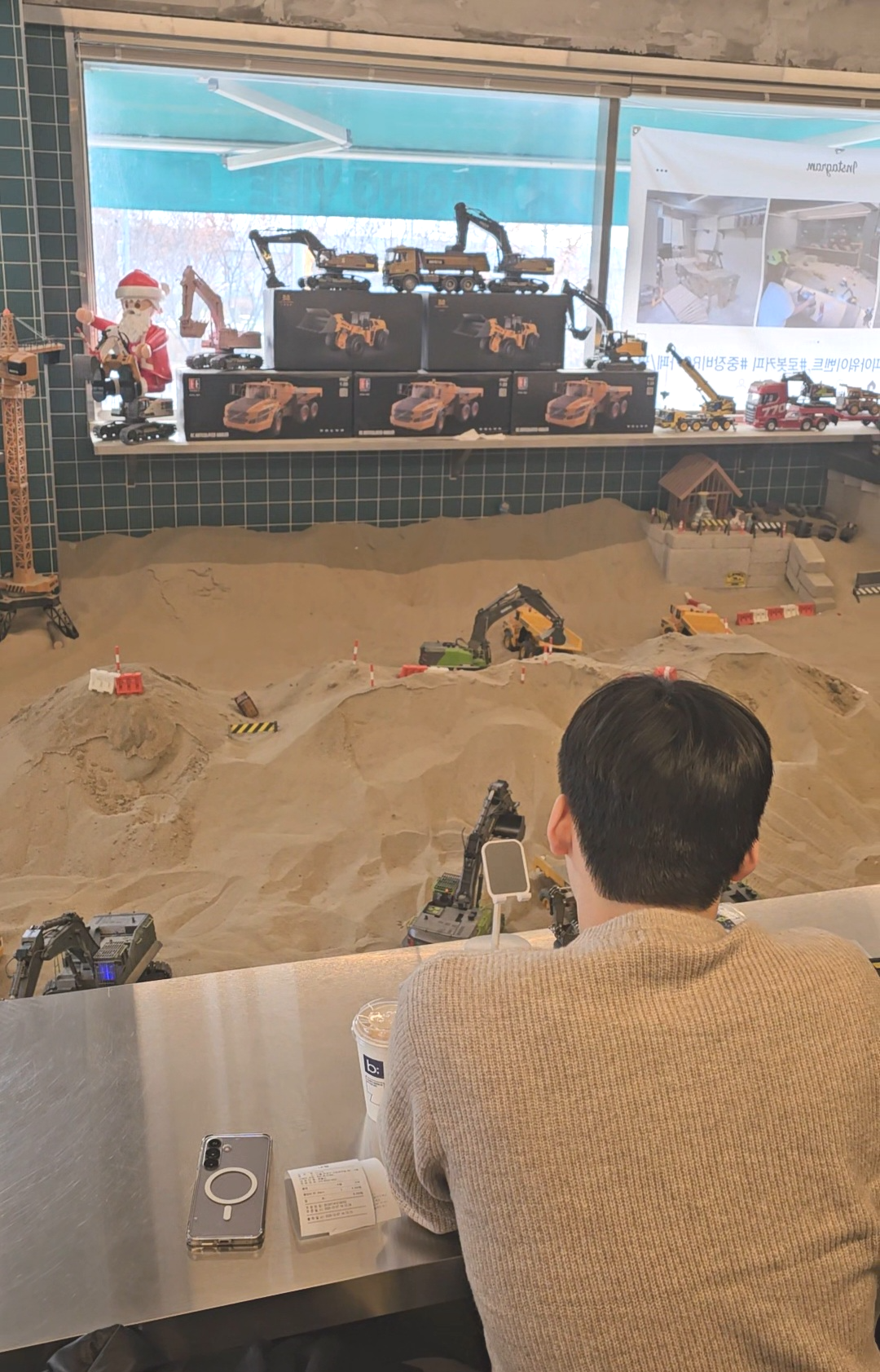
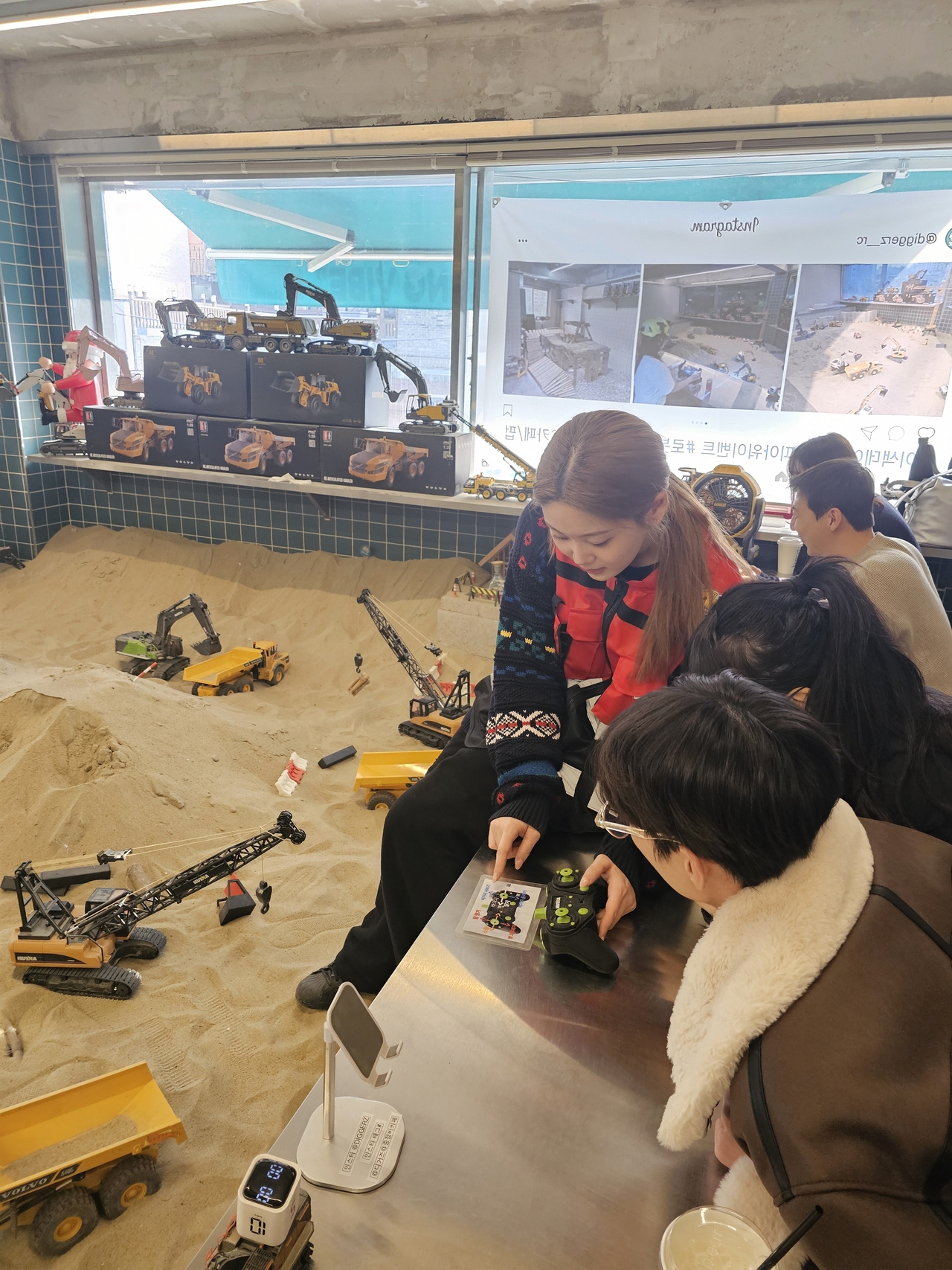
Diggerz, located near Sinchon Station, features a large shared sandpit stocked with miniature heavy machinery, which visitors sit around and operate remotely.
Since opening two months ago, the venue has caught on quickly, with nearly 100 groups visiting every weekend, according to its owner, surnamed Kim, in his 40s.
A 30–minute session is priced at 4,000 won ($3) per person. Behind the main sandpit is a separate off-road zone for miniature mountain vehicles, complete with rocks and wooden steps, which costs 5,000 won per person.
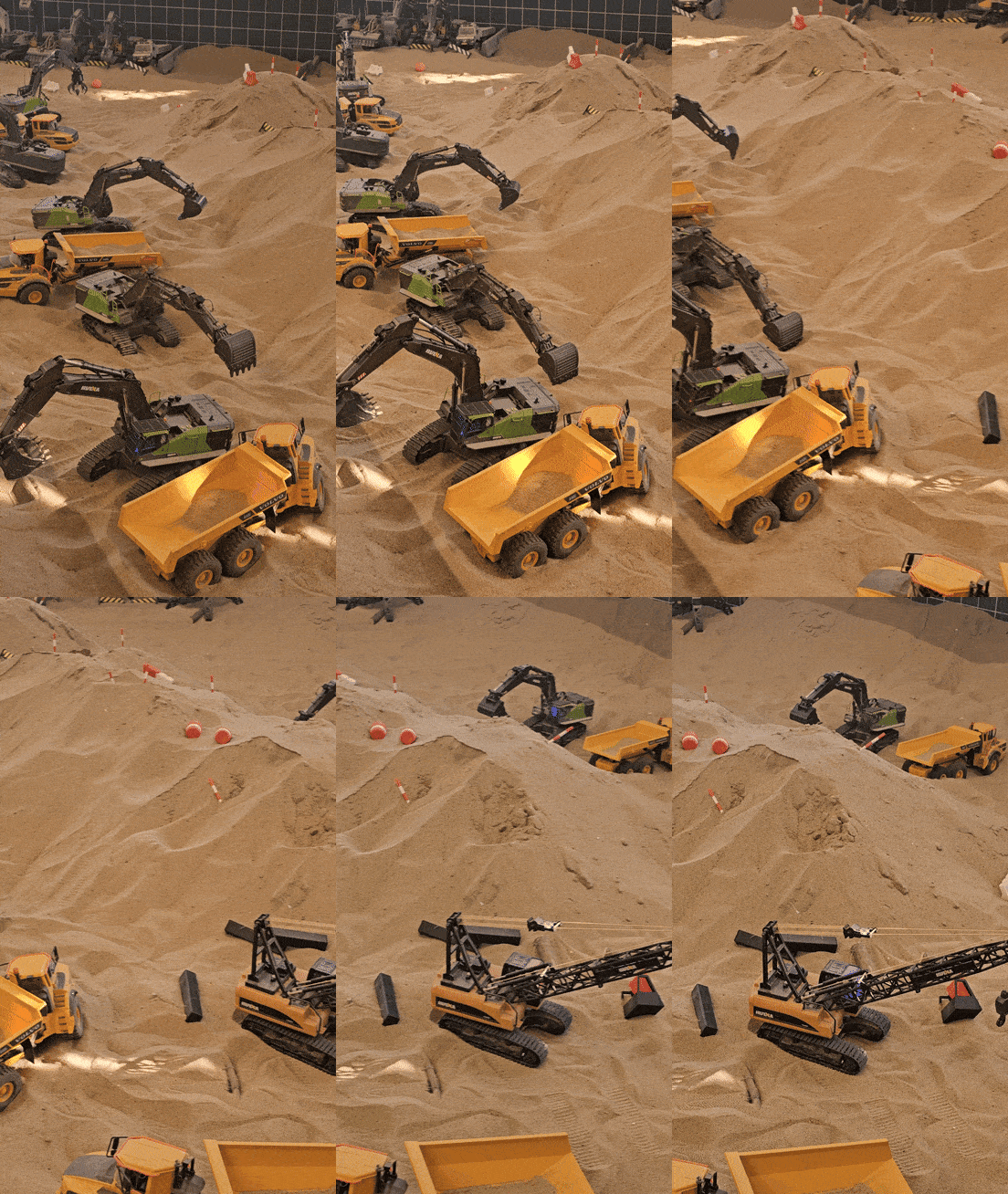
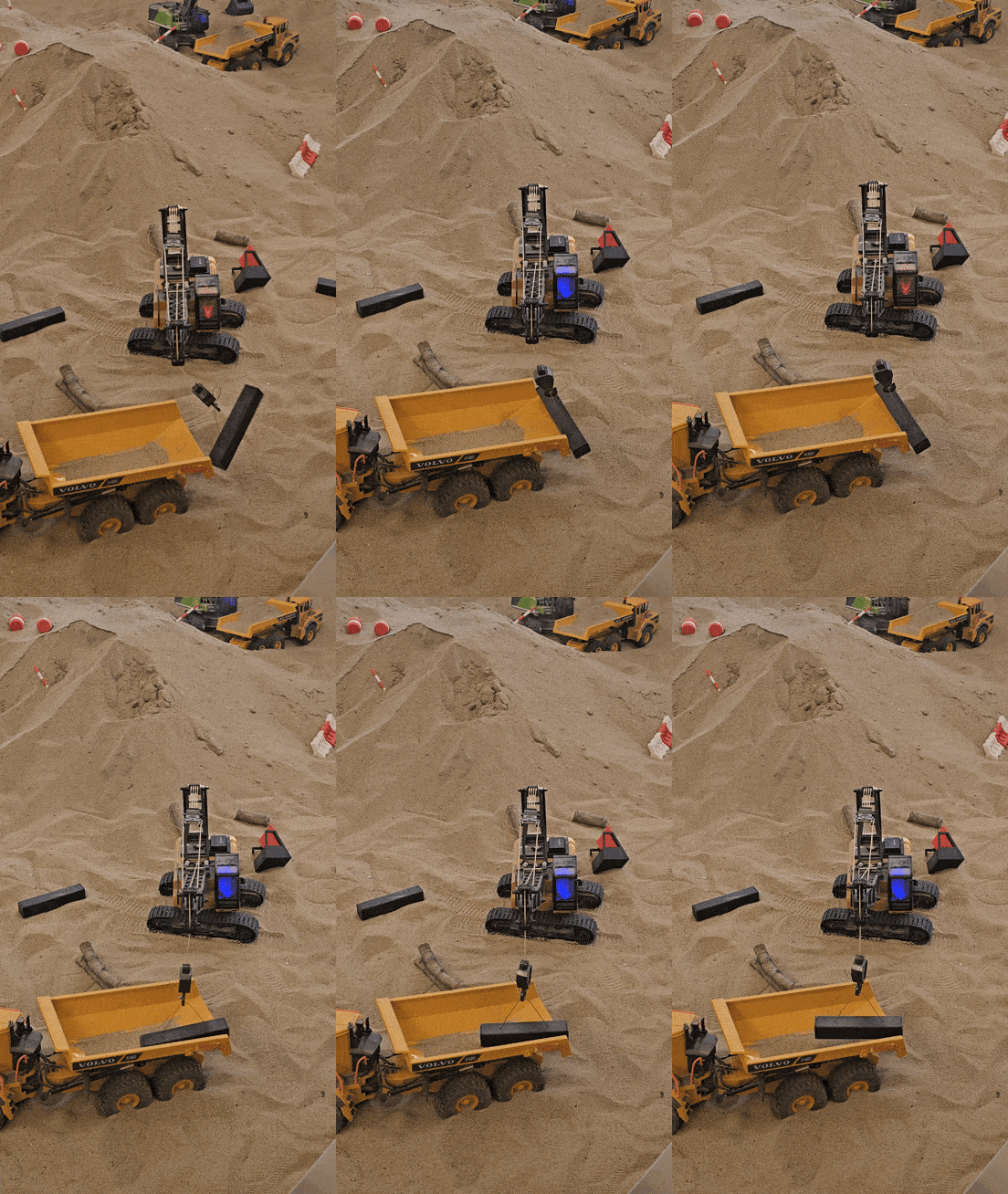
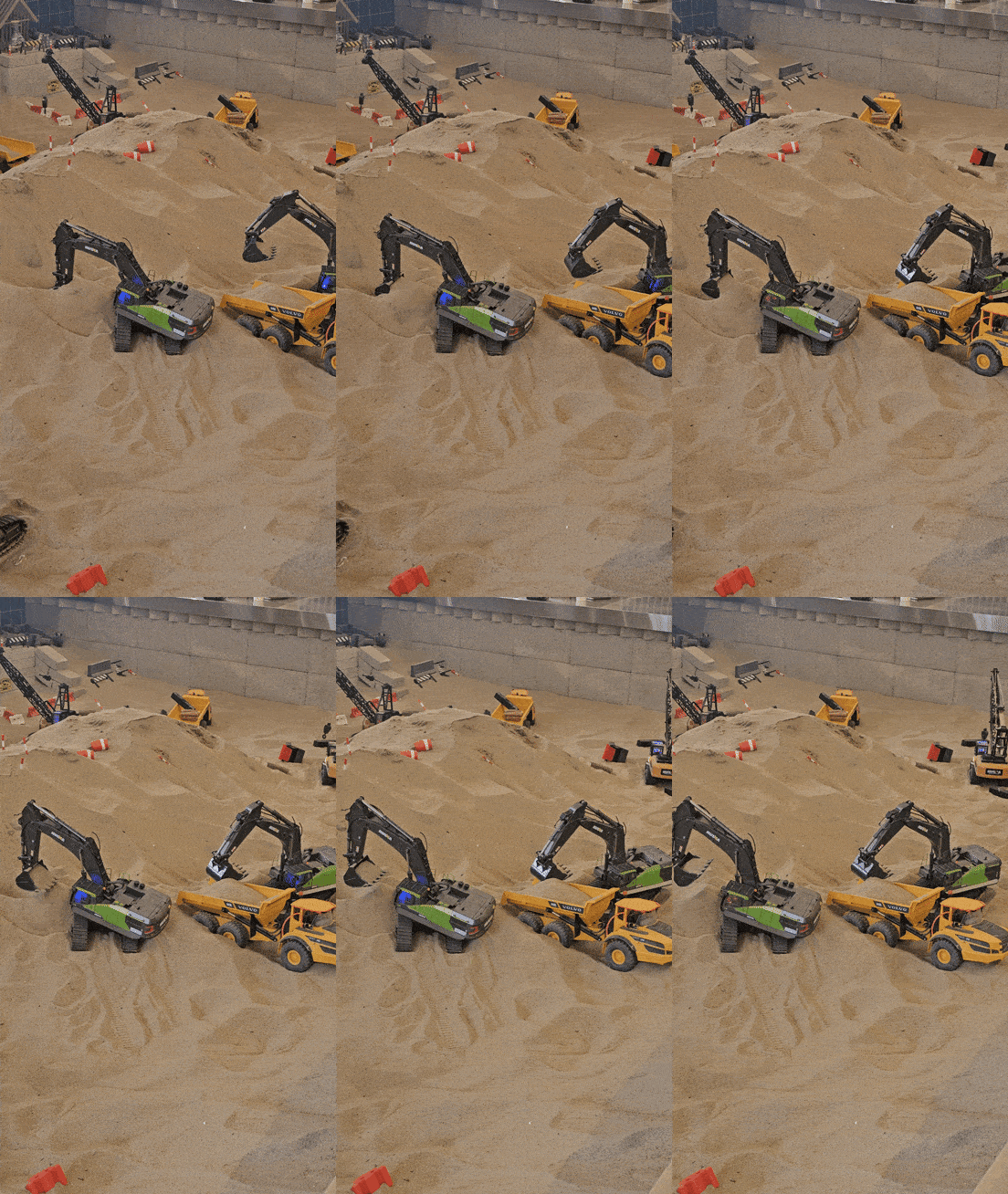
Visitors can play on their own or work together as a team to move objects around. Since the machines do not move so fast, even when several people share the same sandpit the vehicles rarely collide with one another.
“I’ve seen many male customers come on their own or with friends. I also see a lot of fathers bringing their children. Once, we even had three generations — a grandfather, a father and a son — visit together, which made me think that this could be a hobby that bridges generations among men,” Kim said.
Spaces such as Diggerz, which turn construction into a gaming experience, are slowly popping up across Korea. A 24-hour remote-controlled construction machine cafe also recently opened in Nonhyeon-dong in southern Seoul.
What seems to mainly draw white-collar men in their 30s and 40s to remote-controlled vehicles is a mix of nostalgia for the mechanical toys they played with as kids and a long-standing fantasy of male-dominated industrial worksites.
“Men usually grow up in environments where they’re more exposed to toy robots, cars and anything mechanical. And when you watch cartoons full of heavy machinery or special-purpose vehicles, you naturally develop this fantasy of wanting to operate them for real,” said Ahn Jin-woo, 34, an office worker who began uploading videos of himself operating remotely controlled construction machines on his YouTube channel last year.
The fantasy only intensified as he got older.
“Whenever I walked past construction sites — which were almost always all-male spaces — that fantasy grew even bigger. Now that I’m an adult with the time and money to actually try it, I think that’s why men like me, guys in their 30s and 40s, are so into this,” he said.
“My channel only has about 500 subscribers right now, but nearly 90 percent of them are men in that age range,” he said.
cjh@heraldcorp.com