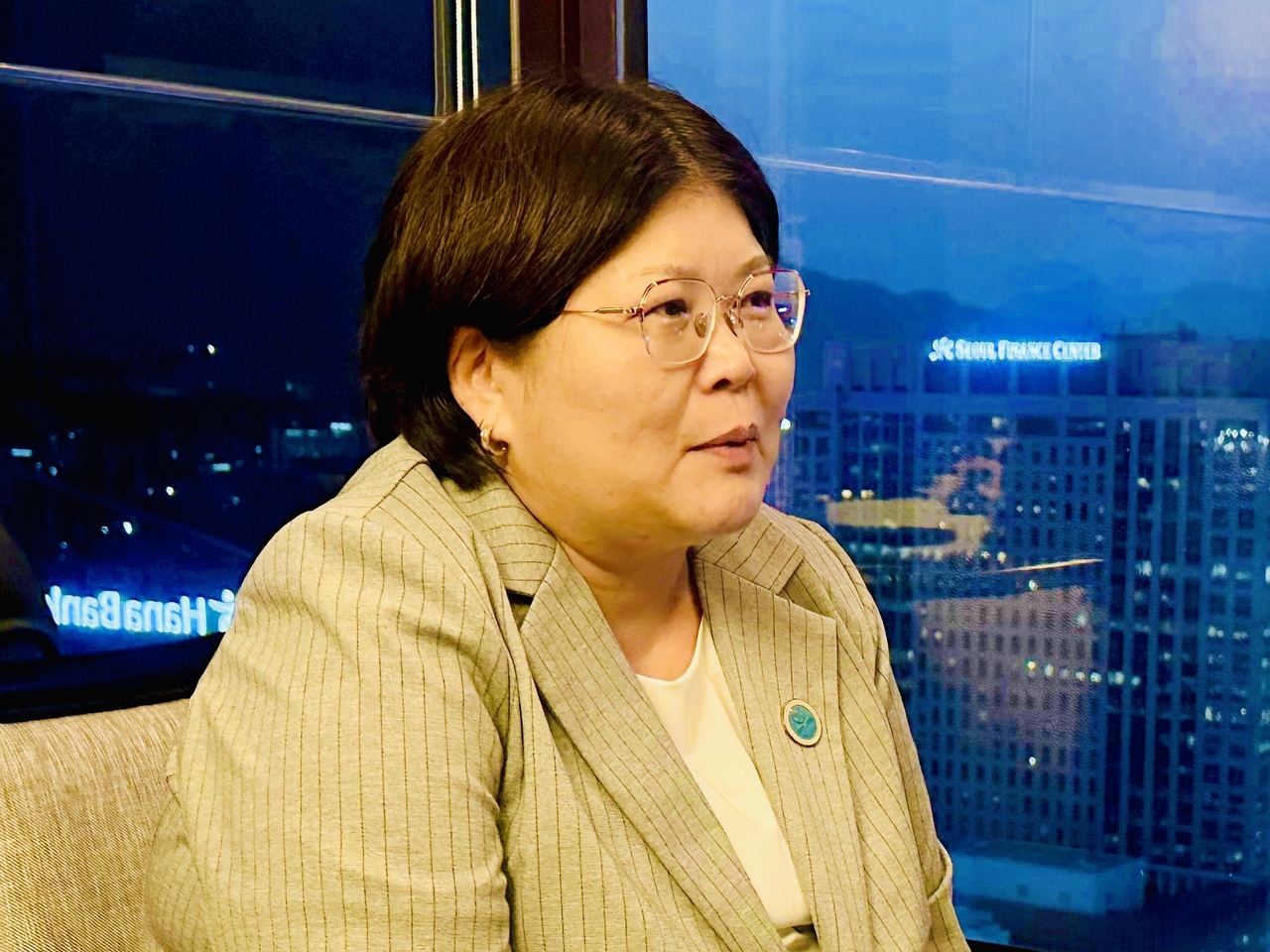
Kazakhstan’s top constitutional judge, Elvira Azimova, has called for deeper judicial cooperation with South Korea, emphasizing that dialogue between legal institutions is essential as artificial intelligence and new technologies reshape justice, responsibility, and public trust.
Azimova visited Seoul last month on an official trip to the Constitutional Court of Korea, during which she met Supreme Court Chief Justice Jo Hee-de, and President of the Constitutional Court of Korea Kim Sang-hwan.
In the meetings with South Korea's top judges, Azimova called for more cooperation between the two countries' judiciaries, and briefed on Kazakhstan’s post-2022 legal reforms and constitutional review practices.
The commitment to increasing exchanges between the two sides was formalized through a memorandum of understanding aimed at enhancing collaboration in constitutional justice — an outcome aligned with the growing diplomatic momentum between Central Asia and Korea, ahead of planned 2026 strategic partnership discussions.
Kazakhstan regards Korea’s Constitutional Court as both a partner and a “legal diplomat,” conveying Korean legal culture and standards. Azimova advocates for cooperation with South Korea to better understand how Korean judges utilize AI and how legal debates unfold within Korea’s professional legal community.
However, she maintains that while AI is becoming widely integrated into state systems, profound questions about responsibility and accountability remain unresolved.
“The process of implementing artificial intelligence and developing digitalization policies is already underway, whether we like it or not, and we are discussing how it evolves," she said. "But the key question is, who bears responsibility for errors that occur?”
She pointed out that both Kazakhstan and South Korea face risks such as digital fraud, data breaches and privacy violations.
According to Azimova, academic and judicial dialogue is vital, and Korea’s discussions on AI provide valuable guidance — even in the absence of formal rulings.
“It helps us consider how to confront challenges in a way that prevents doubts or erosion of public trust in constitutional guarantees.”
Azimova also noted that economic and social disparities will shape access to AI-based justice, emphasizing that technological availability is closely tied to a country’s economic conditions. She pointed out that Korea’s handling of politically sensitive constitutional issues offers important lessons for Kazakhstan.
“Perhaps more than any other country, the Korean Constitutional Court has dealt extensively with cases related to the early termination of presidential terms, which is an extremely complex category of cases,” she said.
She stressed that human judges must remain in control to ensure that “judges are not rendered powerless or weak in the face of AI,” adding that Kazakhstan’s cooperation priorities with Korea begin with media engagement.
“The first is cooperation with the mass media … to explain the decisions of the constitutional court,” she told The Korea Herald.
She also highlighted Korea’s value as a model for training judges and staff, saying they serve as “a reference point.”
“For any judge, it is crucial to have highly professional support staff. … That’s why we chose Korea.”
Kazakhstan is closely studying how other countries respond to emerging challenges and places high value on Korea’s judicial reasoning.
“What is important for us is the legal reasoning, the logic, and the arguments that lead to those conclusions,” Azimova said.
sanjaykumar@heraldcorp.com