The rift within the Lee Jae Myung administration over North Korea policy has repeatedly surfaced in public, well beyond closed-door deliberations over the six months since the administration’s inauguration.
The latest flash point is whether adjusting South Korea-US combined military exercises could be used as leverage to create conditions conducive to resurrecting long-stalled dialogue with North Korea.
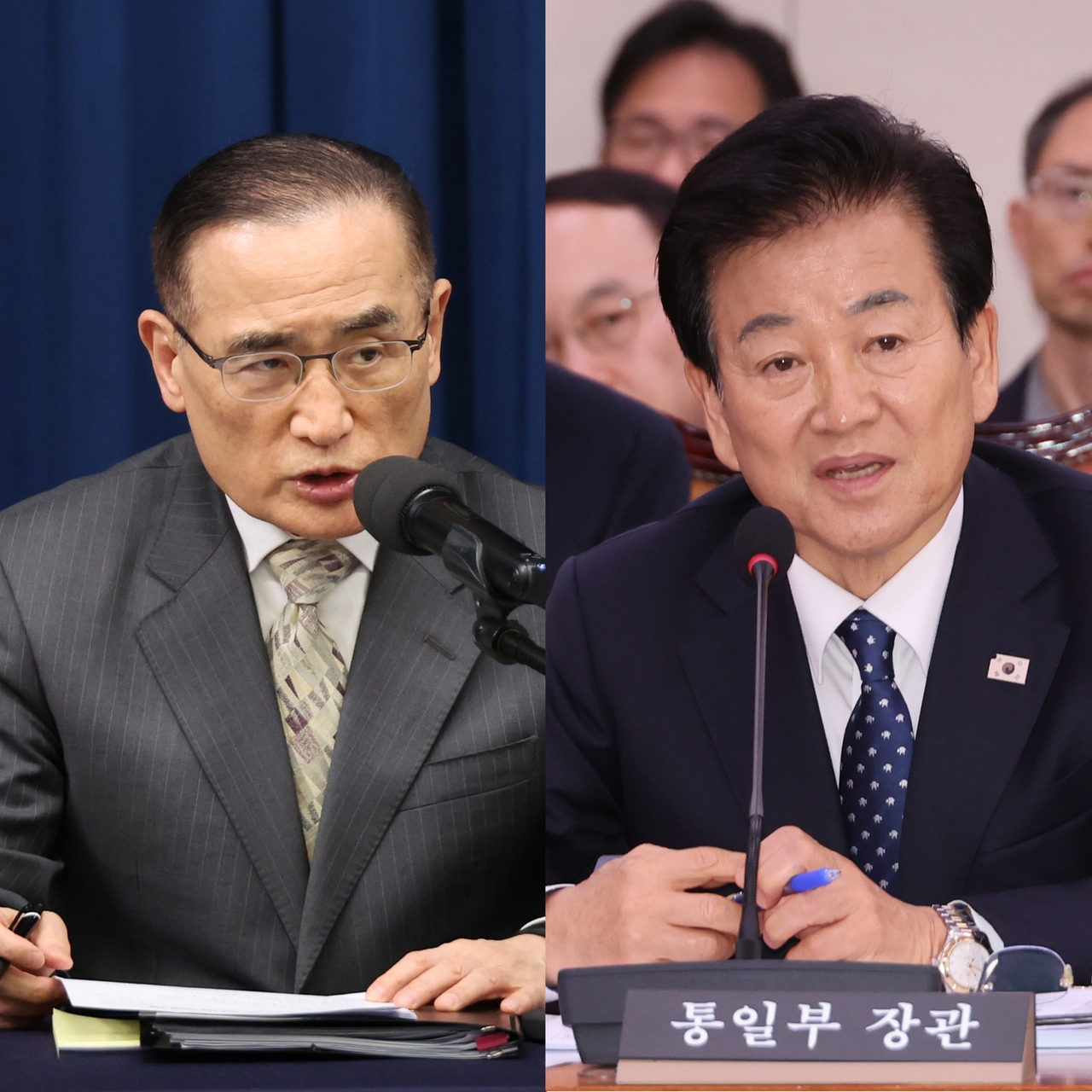
At the center of this protracted standoff within the National Security Council are two policymakers with sharply divergent strategic instincts: national security adviser Wi Sung-lac and Unification Minister Chung Dong-young.
The Unification Ministry on Monday appeared to reaffirm Chung’s repeated calls that adjusting South Korea-US combined military exercises would be inevitable for a US-North Korea summit to take place.
“There is nothing in particular to comment on regarding the national security adviser’s remarks,” the ministry's spokesperson Yoon Min-ho said during a press briefing. “However, South Korea-US combined military exercises carry significant implications not only in military terms, but also for inter-Korean relations and the broader situation on the Korean Peninsula.”
The comments came in response to a question about the Unification Ministry’s stance on Wi’s remarks on Sunday, in which he flatly dismissed the idea of adjusting the scale or schedule of the annual combined military exercises as part of efforts to reinvigorate the Korean Peninsula peace process next year.
“There are indeed many possible cards we could play," Wi clarified in a press briefing. "However, at this point, we are not directly considering combined military exercises as one of those cards.”
The Unification Ministry’s spokesperson also declined to provide a direct answer when asked whether coordination with other ministries over the combined military exercises between the allies had continued or will continue.
“We are not making any definitive conclusions at this stage, and these issues could be discussed in the future depending on conditions and circumstances,” Yoon told reporters.
Deeply divided across core policy fronts
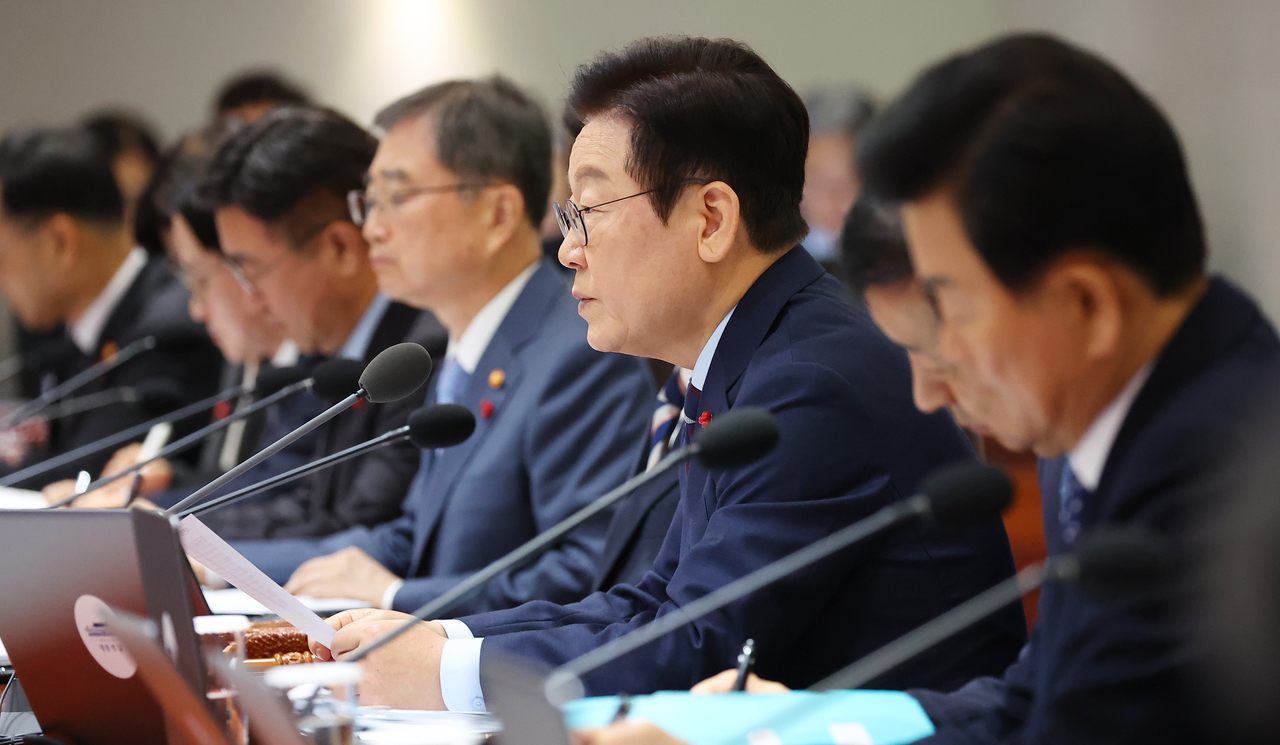
The crux of this confrontation is not episodic. It is structural — and it now runs across major fault lines in the Lee administration’s North Korea policy, with no signs of the disparities narrowing.
The differences on display include the sequencing of denuclearization and inter-Korean engagement, as well as the constitutional question of whether the two Koreas should be treated as separate states.
Against this backdrop, though neither side openly embraces a rigid dichotomy, the policy community broadly perceives the Lee administration as divided into two loose camps. The binary frame first emerged during the Roh Moo-hyun administration from 2003 to 2008 and has resurfaced under the current administration.
One prioritizes inter-Korean engagement — often described as the “pro-autonomy camp,” with Chung at its center — while the other places primary weight on the South Korea-US alliance, commonly called the “pro-alliance camp,” represented by Wi.
The Korea Herald learned from government sources that during internal discussions within the National Security Council over setting the core objectives of North Korea policy, differences of opinion persisted. In particular, the National Security Office argued that denuclearization should come first, while the Unification Ministry opposed that sequencing.
After that internal deliberation, President Lee Jae Myung effectively laid out the three core objectives of the government’s North Korea policy at the launch ceremony of the 22nd National Unification Advisory Council on Dec. 2. Lee presented them — in order — as: ending the state of war on the Korean Peninsula and pursuing a nuclear-free peninsula, peaceful coexistence and co-prosperity. Lee, however, concurrently opted for the more conciliatory phrase “a nuclear-free Korean Peninsula" instead of using the term “denuclearization."
Also, differing views on Lee’s “Exchange, Normalization and Denuclearization Initiative,” disclosed at the UN General Assembly in September, surfaced when Wi rejected prioritizing any of its three pillars, while Chung insisted that dialogue and exchange must come first.
Credibility under strain
Critics say the ongoing disputes are producing side effects, particularly in the absence of a concrete policy road map for translating the administration’s core North Korea principles and objectives into its broader national agenda.
Above all, the debate over the “two states” concept on the Korean Peninsula remains unresolved and politically charged, according to a report released last week by the Institute for National Security Strategy, an affiliate of the National Intelligence Service.
Chung has signaled openness to North Korea’s two-state assertion, saying the Unification Ministry is proceeding with the process of formalizing a “unification-oriented peaceful two-state framework” as its official ministerial position.
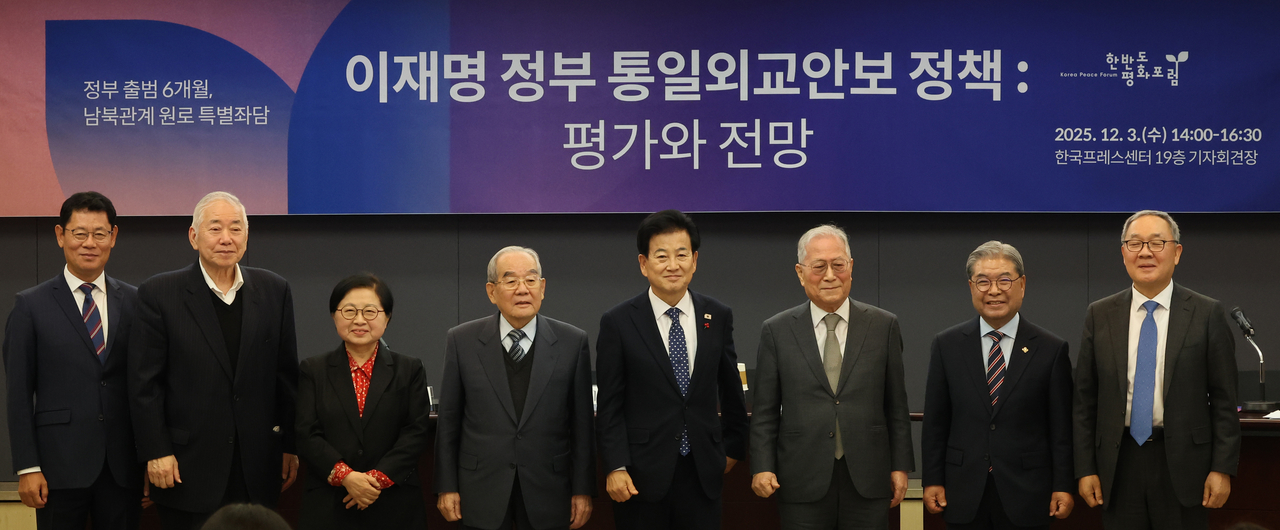
Chung reiterated during a seminar co-hosted by the Unification Ministry on Monday, “Establishing a relationship of ‘two peaceful states pursuing unification’ between the South and the North, and institutionalizing peaceful coexistence on that basis, is a top and critical priority."
In contrast, Wi maintains that the Lee administration neither endorses nor recognizes the two-state framework, reiterating that “the official position is that inter-Korean relations constitute a temporary special relationship until unification,” as stipulated in the Inter-Korean Basic Agreement.
“The lack of a clearly articulated implementation road map for the Lee administration’s North Korea policy, coupled with the perception of ongoing frictions between the presidential office and the Unification Ministry — and between the pro-autonomy camp and the pro-alliance camp — is emerging as a burden on the credibility of government policy,” the INSS said in the report.
dagyumji@heraldcorp.com