Visa service starts with major US-bound investors to remove investment hurdles ahead of a broader rollout
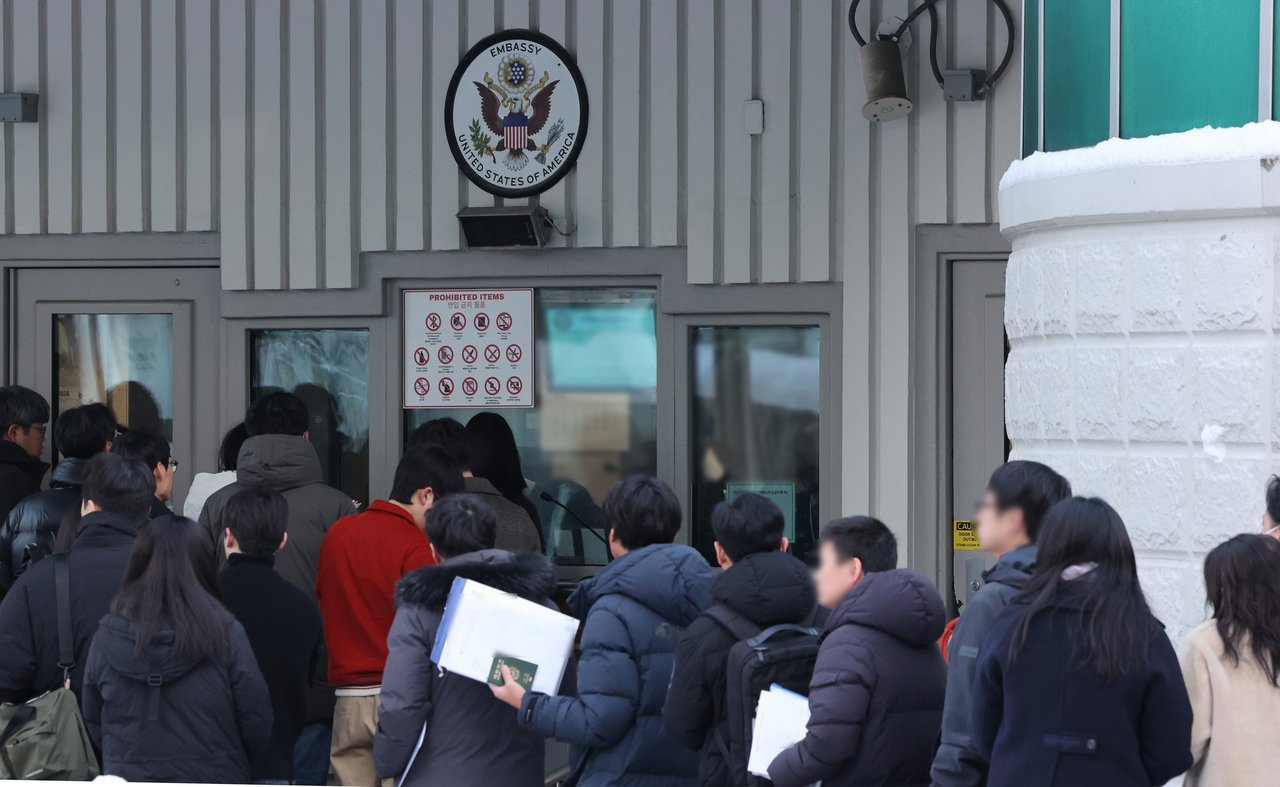
The US Embassy in Seoul on Friday launched a one-stop fast-track visa service for major Korean conglomerates investing in the United States and their partner firms, aiming to lift persistent hurdles their employees face in obtaining short-term visas for work.
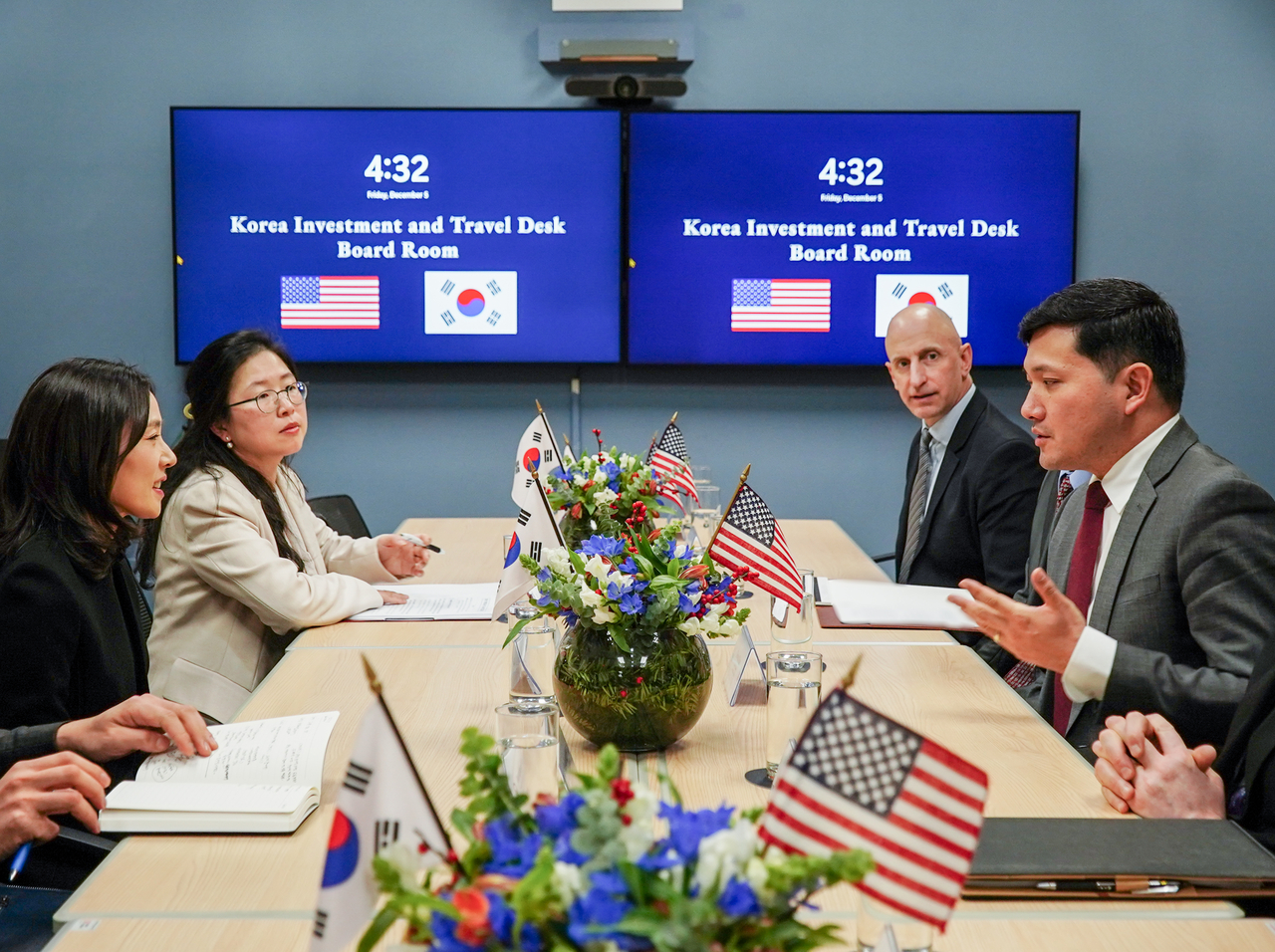
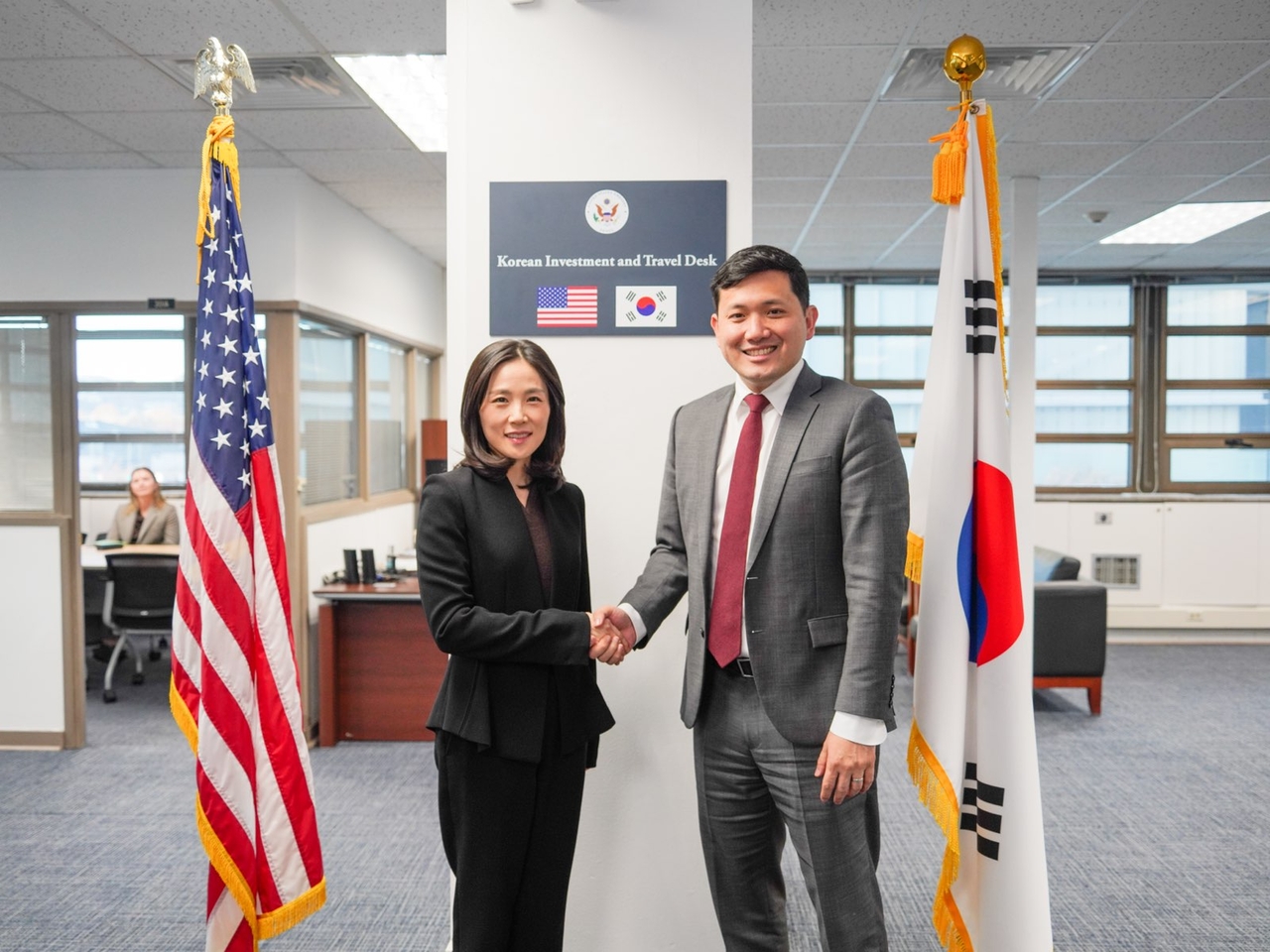
The Korean Investment and Travel Desk was officially opened with an inauguration ceremony at the US Embassy in the presence of South Korea's Second Vice Foreign Minister Kim Jina and acting Ambassador to the US Kevin Kim, according to the Foreign Ministry in Seoul.
The setup of the desk followed two meetings in September and October of a bilateral working group dedicated to addressing business-travel and visa issues for South Korean workers.
Those issues ranged from reaching agreement on the permissible scope of business activities under the B-1 and Electronic System for Travel Authorization categories — visas typically used by Korean workers for short-term business trips — to mounting delays in visa issuance despite Korea’s growing investment in the US.
The working group itself was created after the unprecedented mass detention of 317 Korean workers during a Sept. 4 immigration raid in southeastern Georgia at an electric vehicle battery plant being built by HL-GA Battery Co., a joint venture between Hyundai Motor Group and LG Energy Solution. Most of the Korean workers detained at the time were employees of LG Energy Solution partner firms.
What revised visa system allows
In light of persistent issues, South Korea and the US have revised the system to allow major Korean investors in the US to apply for short-term visas — chiefly B-1 and ESTA — not only for their own employees, but also for those of partner companies, according to the Foreign Ministry in Seoul.
“Partner firms can now ask the conglomerate to submit visa applications on their behalf for specific project-related travel if applying through a major company is judged to be faster and makes supporting documentation easier to prepare,” a Foreign Ministry official said on condition of anonymity. “There is no minimum number of applicants required; the point is that a dedicated channel now exists to process these visas more quickly."
The official added, “While large companies will also benefit, the vast majority of the gains are expected to accrue to their partner firms.”
According to the Foreign Ministry in Seoul, the US Embassy has begun adding annotations to B-1 visas for Korean company employees, specifying their status, worksite — such as Ohio or Chicago — and project completion date.
The details, printed in the remarks section of the visa, help ensure that travelers are not denied entry upon arrival in the US by allowing authorities to clearly verify the purpose and duration of their trip.
The Korea Herald learned from sources that adding annotations to B-1 visas is a service offered only to South Korean applicants. No other country is known to receive this level of support.
Why system needed overhaul
The overhaul was essential given that Korean conglomerates and their partner companies have long applied for US visas separately, a system that left partner company employees facing greater hurdles, The Korea Herald learned from sources with knowledge of the matter.
The Korea Herald also learned that employees of partner companies, who often make shorter, monthslong business trips, face prolonged delays in visa issuance and even denial of entry at US airports when they are unable to clearly explain the purpose of their visit.
In contrast, large corporations can typically obtain more secure visa categories such as E-2 or L visas.
To fix this, Seoul and Washington have introduced a new process that allows major firms to submit a single, consolidated visa application covering their own staff and the workers of partner companies.
The Korean Investment and Travel Desk inside the US Embassy in Seoul began operating informally on a pilot basis in early October, even amid the government shutdown, according to the unnamed Foreign Ministry official.
Since then, the desk has already processed a three-digit volume of visa cases, amounting to several hundred approvals.
In its initial phase, the Korean Investment and Travel Desk will provide consultation mainly to a select group of major investors in to the US, including Samsung, LG, Hyundai, SK and Hanwha. Discussions will need to continue on how widely to expand that scope in the coming months.
“We do plan to expand the program, of course. But for now, it applies primarily to large-scale investors because — from the US perspective — the purpose is not simply visa issuance; it also has the advantage of attracting more Korean investment into the US,” the unnamed official said.
“So the system is being introduced first for major investors to ensure that their investment activities proceed without unnecessary obstacles.”
dagyumji@heraldcorp.com