Gondola system planned by 2027, as Seoul targets world-class status with landmark upgrades
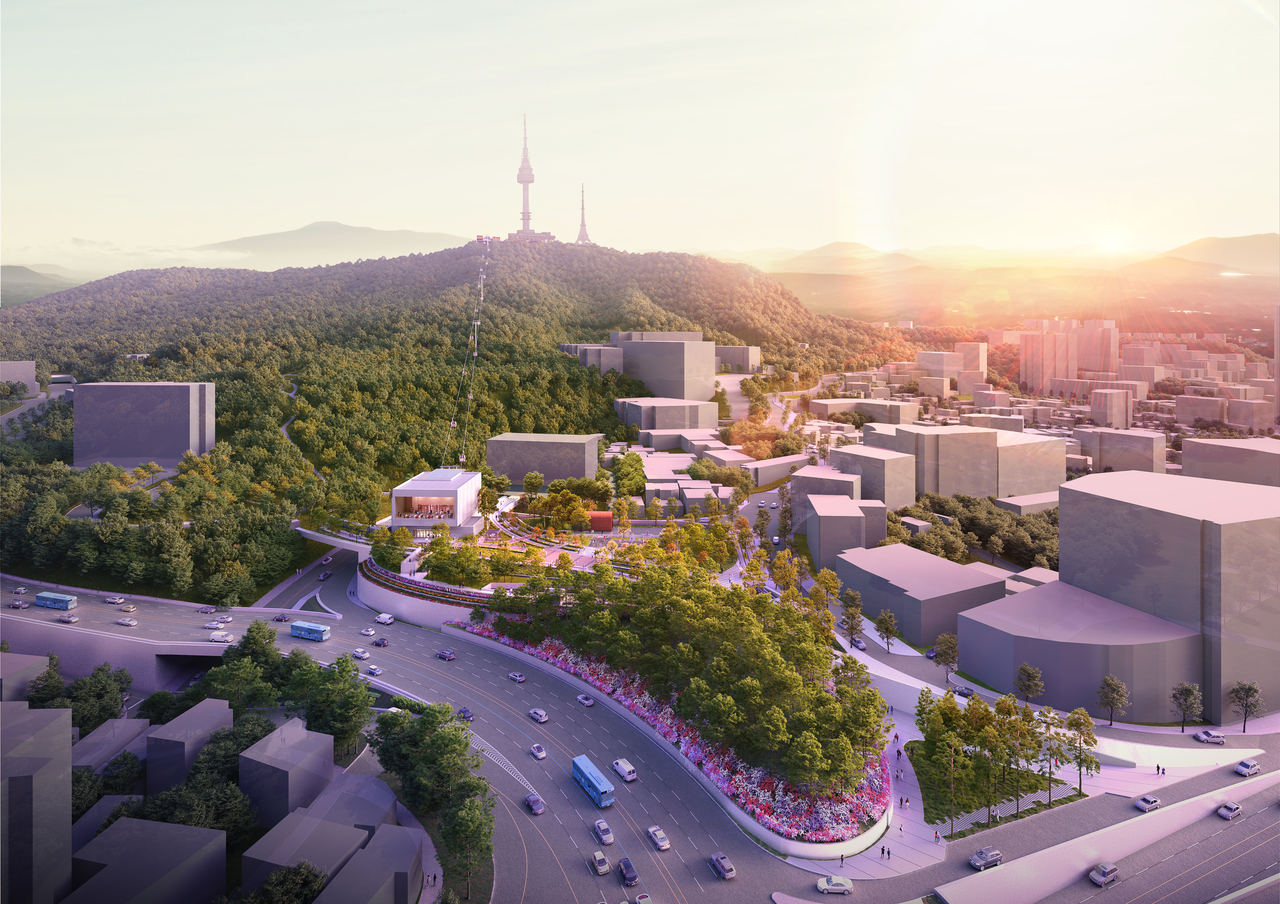
Namsan is seeing renewed global attention, with foreign visitors to Seoul Tower jumping more than 50 percent from last year — a surge partly fueled by the popularity of the Netflix's "KPop Demon Hunters," which prominently features the capital city's central mountain.
As tourist interest grows, the Seoul Metropolitan Government has announced an extensive redevelopment blueprint aimed at transforming Namsan into a more accessible, globally competitive landmark by 2030.
Under the city’s plan, visitors will be able to reach the summit from Myeong-dong Station in just five minutes via a new gondola system set for completion in 2027.
Currently, visitors would usually have to take a 30-minute bus ride from Myeong-dong Station to the mountain's summit or walk for over 40 minutes.
The 10-seat cabins are expected to transport more than 2,000 people per hour, easing access for both tourists and mobility-impaired visitors like wheelchair users, as well as families with strollers, who currently face steep climbs or limited cable cars.
The plan also includes the construction of a 360-degree observatory at the summit, offering panoramic day-and-night views of the capital, alongside upgrades to eight scenic lookouts and a full redesign of forest trails connecting the mountain’s north, sky and perimeter routes.
Accessibility remains Namsan’s core weakness
Despite drawing more than 11 million visitors annually and recording a 96 percent satisfaction rate, the mountain remains surprisingly difficult to reach. Many of its facilities are outdated, and pedestrian bottlenecks near popular entry points — Myeong-dong, Haebangchon and Gyeongnidan — have long frustrated both tourists and residents.
The new plan addresses pedestrian bottlenecks by widening walkways, redesigning road space and creating “welcome gardens” in the high-traffic tourist areas.
Inside the mountain, the city will expand and link forest trails, restore ecological habitats and create themed history and culture paths. Additional multilingual tourism programs — including guided walking tours covering Seoul Tower, the old city wall and Namsan’s beacon site — are set to launch next year.
Legal battle threatens to delay gondola construction
The most contentious element of the plan — the gondola, remains stalled at 15 percent completion.
Korea Sakkto Industries, which has operated the Namsan cable car for more than six decades, filed a legal injunction to halt construction, arguing the new system would destroy its business.
The city argues that the decades-old monopoly — granted without a fixed expiration and maintained on below-market land-use fees — has prevented service improvements and modernization.
Chief Presidential Secretary Kang Hoon-sik has criticized the arrangement as “an unreasonable, quasi-permanent privilege,” saying people have long complained about outdated service quality.
A court ruling on the injunction is expected on Dec. 19. Seoul says it will resume construction immediately if it wins. Even if it loses, officials say a pending amendment to the Park and Green Space Act, which is now awaiting procedural completion, will allow the city to proceed regardless of the ongoing lawsuit.
Beyond infrastructure, the city plans to revamp visitor facilities, with new rest areas, upgraded restrooms and more tourist information centers. Seoul will also leverage rising international interest through programs linked to "KPop Demon Hunters," though officials stress this is a small component of a much larger redevelopment effort.
“Namsan has always stood alongside Seoul’s history,” said a city official. “With this plan, we aim to restore the mountain’s ecological and cultural value and elevate it as a flagship global destination.”
jychoi@heraldcorp.com


![[Survive&Thrive] Tips for getting around Seoul by subway (2)](https://wimg.heraldcorp.com/news/cms/2026/10/08/news-p.v1.20261006.1e7dee51d7f64cdba1a20b897d88cee6_T1.jpg?type=h&h=800)