'Lack of system to statistically capture such violence puts women in more significant danger'
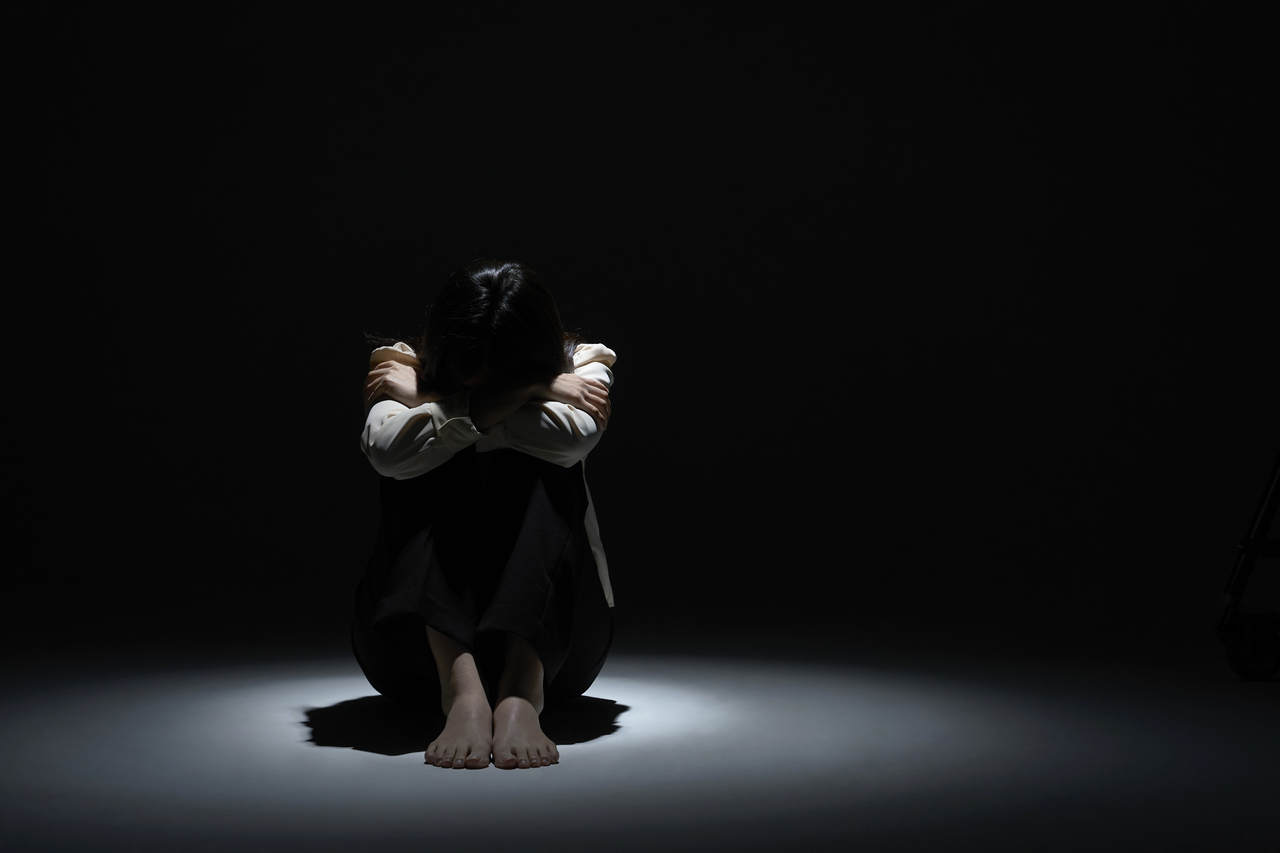
One out of five Korean women has experienced violence in an intimate relationship, yet South Korea still lacks the statistical and institutional systems needed to understand the scale of the problem or protect victims, according to new findings released Monday by the Korea Women’s Development Institute.
Coinciding with the 2025 International Week for the Elimination of Violence Against Women, the analysis — based on nationwide surveys conducted in 2021 and 2024 — found that 19.2 percent of women reported experiencing at least one form of intimate partner violence at least once in their lifetime, up from 16.1 percent in 2021.
The types of violence include physical, sexual, emotional, economic abuse or controlling behavior. Rates of physical and sexual violence rose from 10.6 percent to 14 percent over the same period.
The report follows a string of high-profile murders and attempted murders by current or former partners that have fueled public outrage.
In Bupyeong-gu, Incheon, a man killed his wife with a knife just a week after a court-issued restraining order expired. In Uijeongbu, Gyeonggi Province, another woman was killed at her workplace despite filing stalking reports, receiving emergency police protection and being issued a safety smartwatch.
The most shocking case occurred in May in the Dongtan district of Hwaseong, Gyeonggi Province, where a woman who had been repeatedly threatened by her former partner was kidnapped and murdered, despite multiple reports, requests for help and prior police involvement.
“These cases show how wide the blind spots still are in Korea’s protection and support system for victims of violence within intimate relationships,” KWDI associate research fellow Kim Hyo-jung told The Korea Herald.
Dating violence by a former or current partner also increased. The ratio for women being victimized by dating violence during their lifetime rose from 5 percent to 6.4 percent. Women in their 20s recorded the highest dating-violence rate at 2.7 percent last year, including 1.5 percent for physical or sexual violence.
Kim stressed that the absence of a state-level statistical system obscures the severity of the crisis.
“Even the limited indicators we have, based only on media reports, suggest that a woman is killed by an intimate partner every two days,” she said. “Those are only the cases that reach the news. The real scale is far larger.”
Kim noted that Korea maintains surveys on domestic violence and sexual violence, but these frameworks exclude much of the violence occurring in dating, cohabiting or other nonmarital relationships.
“As long as violence inside ‘private relationships’ is seen as beyond state intervention, victims in these relationships remain statistically invisible,” she said.
Why lack of statistics is dangerous
KWDI emphasized that intimate-partner violence is one of the most dangerous forms of gender-based violence, with a high likelihood of escalation into severe crimes such as assault, rape and homicide.
Without accurate national-level data — including information on victim–perpetrator relationships — the government cannot design effective prevention policies, allocate resources or intervene early.
Because most victims do not report abuse, intimate-partner violence is also considered a major “hidden crime.”
“Only the most extreme cases, often those ending in death, are reported,” Kim said. “This means the actual occurrence of violence in intimate relationships is far higher than what official data captures. We need integrated national statistics to reveal what is currently invisible.”
KWDI President Kim Jong-suk said that despite growing public concern and evidence of structural gaps, institutional responses remain insufficient. The institute called for legal reform, integrated national data production and dedicated systems to monitor intimate-partner violence and femicide.
jychoi@heraldcorp.com