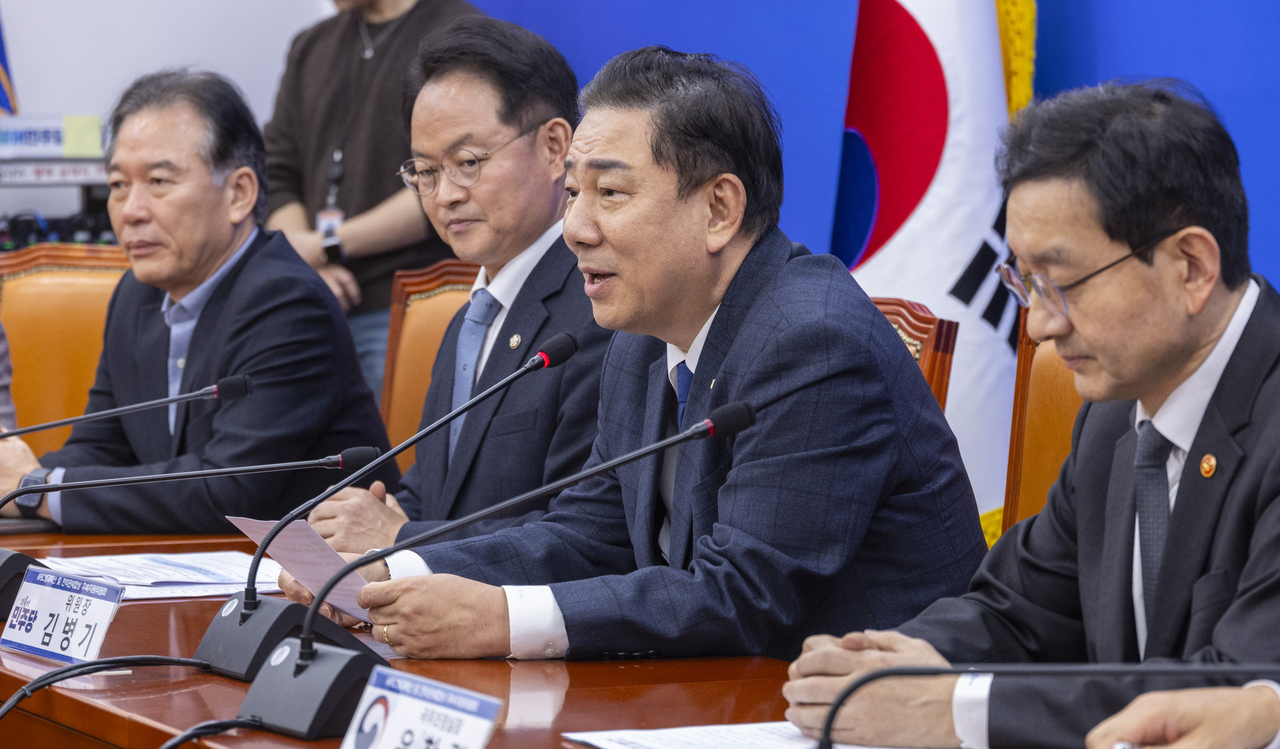
The ruling Democratic Party submitted a special bill Wednesday to support South Korea's investment pledge in the United States under a tariff deal that was finalized last month and reduced US tariffs on the nation's exports, officials said.
The bill, introduced by DP floor leader Rep. Kim Byung-kee, outlines the installation of a special strategic investment fund to facilitate the $350 billion pledge, among other support measures.
Under the terms finalized during President Lee Jae Myung's meeting with US President Donald Trump in Gyeongju, Seoul will provide $200 billion in cash installments, along with an additional $150 billion earmarked for bilateral cooperation in shipbuilding.
With the bill's submission, US tariffs on South Korean autos are expected to be reduced to 15 percent from the current 25 percent, and the reduction will also apply retroactively to the month of submission.
"(We) will spare no effort for the National Assembly's support to expand the diplomatic achievements made in tariff negotiations to economic results," Kim said in a release.
While the DP has moved quickly to submit the bill this month, Kim said Tuesday it would undergo a thorough review to reflect demands from South Korean businesses.
Meanwhile, Rep. Huh Young, a senior deputy floor leader of policy affairs for the DP, dismissed the same day the main opposition People Power Party's call for parliamentary ratification of the investment package.
"As there is mutual trust (between South Korea and the United States), a ratification is not necessary," he said, adding the agreement is based on a memorandum of understanding, which itself is not binding under international law and is not subject to ratification. (Yonhap)










