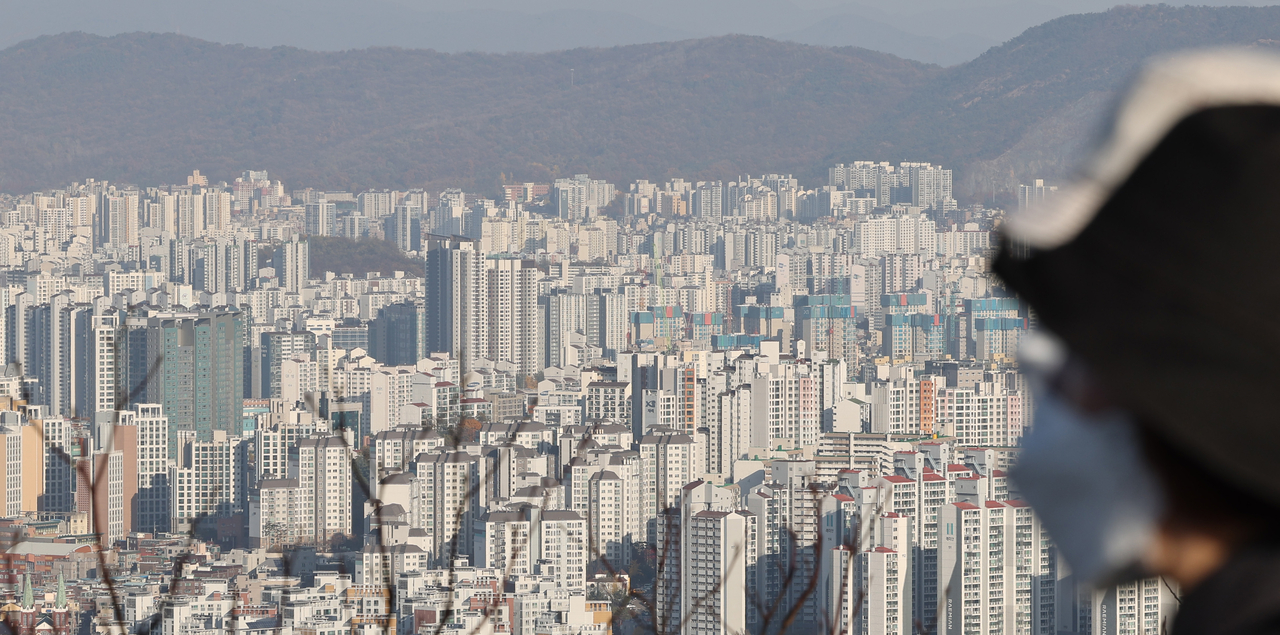
Only a quarter of Seoul residents in their 30s are homeowners, government data showed Monday, as housing issues persist for South Korea's youth.
A total of 527,729 heads of household in their 30s in the nation's capital did not own homes in 2024, according to the Ministry of Data and Statistics. This marks an increase of 17,215 from 2023 and is the highest figure since the government began keeping track in 2015.
The number of 30-somethings without a home had decreased from 475,606 in 2015 to 456,461 in 2016, but then rose for six consecutive years. The on-year increase from 2023 to 2024 was the largest margin to date.
The homeownership rate among Seoul’s 30-somethings has steadily declined from 33.3 percent in 2015, with the pace of decline accelerating since 2021: 31.2 percent in 2021, 29.3 percent in 2022, 27.3 percent in 2023, and 25.8 percent in 2024.
The nationwide figure for the same age group was 36 percent last year, marking the lowest figure ever, but was significantly higher than the number for the capital city.
Homes in Seoul cost significantly more than the rest of the country, and data suggests the gap is increasing. According to KB Real Estate's data released Sunday, apartment sale prices in Seoul rose from October to November at the highest rate in five years, marking a consecutive 18-month increase.
The statistics agency said the tendency to delay purchasing a first home until major life events, such as marriage, may be contributing to the continued rise of 30-somethings without homeownership. South Koreans are getting married at an older age than before, with the 2024 figure for first marriages being 33.9 for men and 31.6 for women.
Surveys suggest that most young Koreans consider owning their own home to be a pressing issue. An Aug.-Sept. survey by the state-affiliated Land & Housing Research Institute, conducted on 700 people aged 19-39 who did not own homes, showed that 83.2 percent of the respondents said it was important for them to own homes.
When asked about the most necessary government policy to address this issue, 24.3 percent said a government subsidy to buy homes.
minsikyoon@heraldcorp.com