South Korea has won its 13-year legal battle with US private equity firm Lone Star after an international arbitration panel under the World Bank Group annulled a 2022 ruling that ordered Korea to pay the firm $216.5 million in damages, Seoul officials said Tuesday evening.
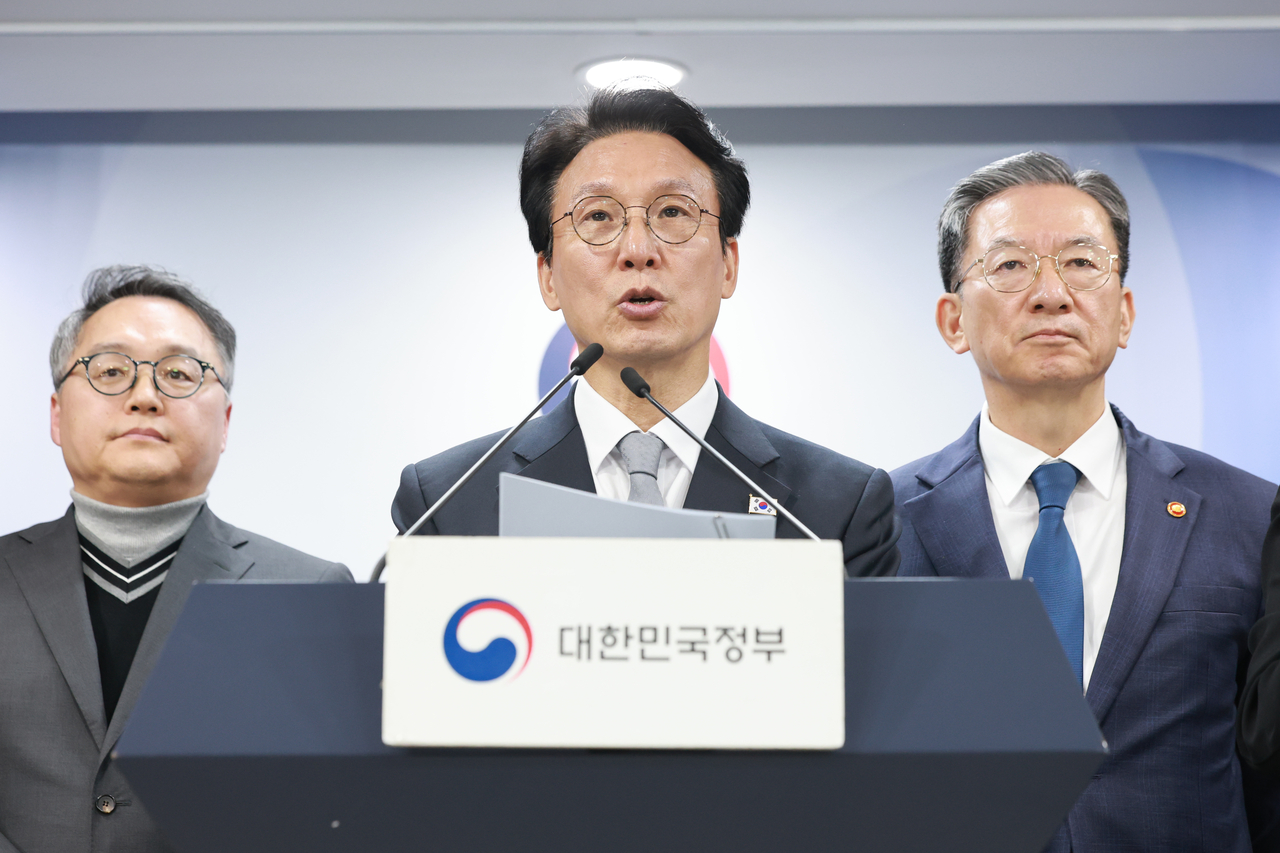
Prime Minister Kim Min-seok, in an emergency briefing, welcomed the decision as “a decisive outcome that protects the public finances and reaffirms Korea’s sovereign authority in financial regulation.”
Kim said the annulment committee of the International Center for Settlement of Investment Disputes informed the government at around 3:22 p.m. that it had nullified the entire award, including the principal amount and all interest. The committee also ordered Lone Star to reimburse 7.3 billion won ($4.98 million) in legal costs within 30 days.
“With this ruling, Korea’s roughly 400 billion won compensation liability has been retroactively extinguished,” Kim said. “This result safeguards taxpayer money and confirms that Korea acted lawfully in overseeing the sale of Korea Exchange Bank.”
Kim added that the ruling “sets an important precedent” and reinforces international confidence in Korea’s regulatory and legal processes.
The decision is notable because full annulments are extremely rare under Article 52 of the ICSID Convention, which allows awards to be vacated only on five procedural grounds. Annulment committees do not revisit the merits of a dispute; instead, they examine whether the original tribunal committed procedural violations such as manifest excess of powers, failure to state reasons, and serious departure from a fundamental rule of procedure.
Although the South Korean government did not release the committee's detailed reasoning on Tuesday, it is understood to have sought annulment on these three grounds. The complete annulment suggests the tribunal’s award contained fundamental procedural defects.
Lone Star purchased the then-state-run Korea Exchange Bank in 2003 and sold it in 2012 to Hana Financial Group. The private equity firm is estimated to have earned around 4.6 trillion won in total returns from that investment. The transaction sparked widespread public criticism in Korea.
In 2012, Lone Star filed a $4.67 billion ISDS claim against the Korean government, alleging that regulators delayed approval for its planned 2007 sale of KEB to HSBC, causing the deal to collapse. Lone Star claimed the delay forced a later sale at a lower price, resulting in financial losses.
The government maintained that all regulatory actions were taken fairly and in accordance with international law, and denied any improper intervention.
In August 2022, an ICSID tribunal partially upheld Lone Star’s claim and ordered Korea to pay $216.5 million — only 4.6 percent of what Lone Star sought. Both parties filed for annulment: Lone Star said the award was too small, and the government argued the tribunal exceeded its powers and failed to provide adequate reasoning.
With the annulment, Lone Star cannot seek enforcement of the vacated decision.
While ICSID rules allow investors to initiate a new arbitration in limited circumstances, legal experts say relitigating the case for the same claims after 13 years of proceedings and a complete annulment would be extremely difficult.
mkjung@heraldcorp.com