Chief of staff tells parliament release of fact sheet to come no later than this week
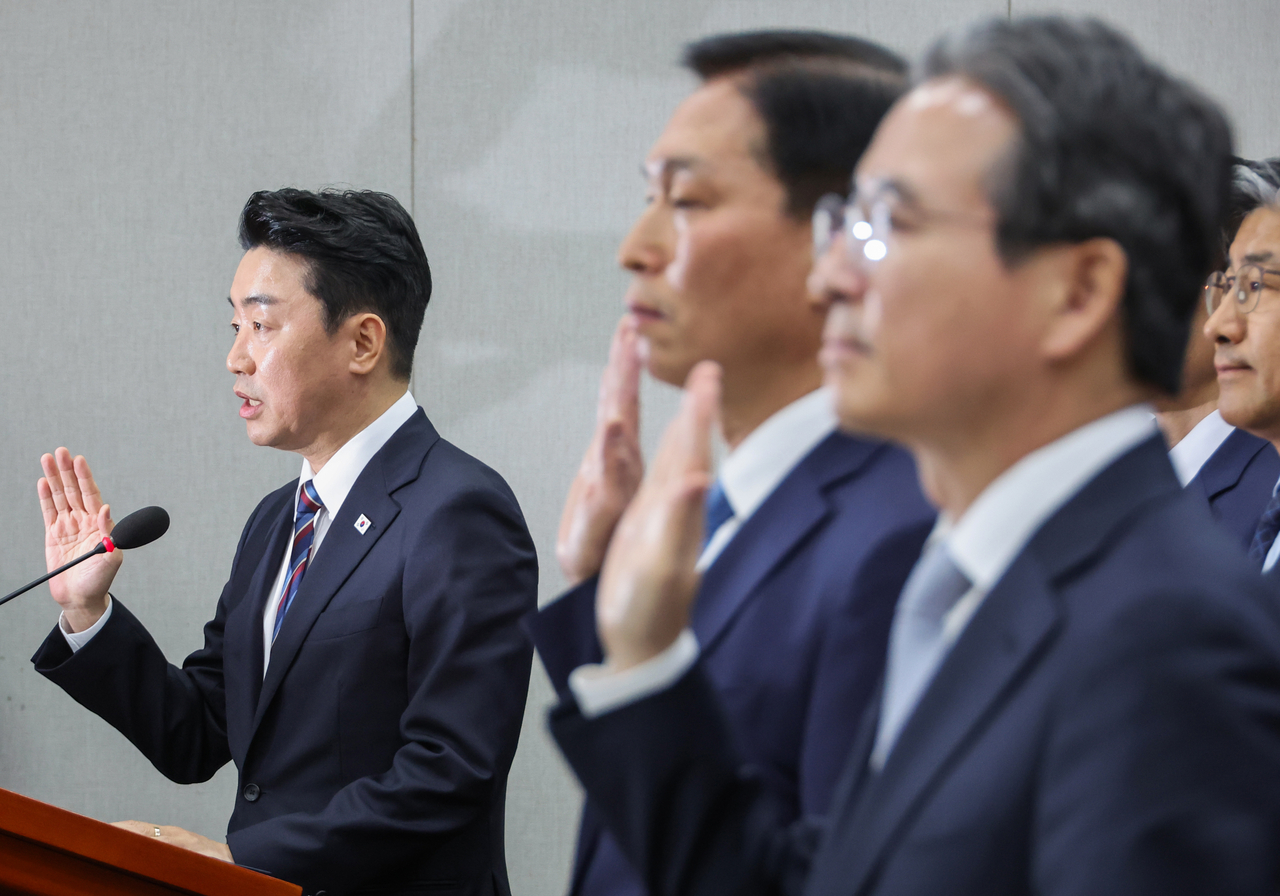
A clause on “commercial rationality” has been included in Article 1 of the memorandum of understanding to be signed between South Korea and the United States, a senior presidential aide told parliament on Thursday, amid delays in releasing both the fact sheet and the memorandum.
Chief presidential secretary for national policy Kim Yong-beom, speaking at a parliamentary audit of the National Assembly’s Steering Committee, made the remarks in response to Rep. Kim Nam-geun of the ruling Democratic Party of Korea, who raised concerns over potential risks in recovering the principal and interest from investments in the US.
Kim Yong-beom also said the memorandum would stipulate that South Korea's committee, in consultation with the US side, may choose to decline US projects if their profitability is deemed uncertain.
South Korea announced hours after the summit between Lee and US President Donald Trump that it had tentatively reached a deal with the United States to invest $350 billion, comprising the government's $200 billion investment in US projects and South Korean firms' $150 billion of spending on US shipbuilding projects. In return, the US would apply lower tariffs on South Korean cars, semiconductors, drugs and lumber products, thus reducing Trump's "reciprocal" tariffs applied to most South Korean goods since August.
Regarding the clause to split returns on South Korea's investment equally on US projects, Kim said the memorandum would stipulate that the profit split could shift in favor of South Korea if uncertainty over the prospect for the US project is high from South Korea's perspective.
"We've tried to set up multiple layers of safety features in the document," Kim said.
As to how the annual investment ceiling of $20 billion was set for South Korea's state spending on US projects, Kim said the ceiling would minimize the impact on South Korea's foreign exchange market, given that its foreign exchange reserve has reached $422 billion as of September, and that the foreign exchange equalization fund was also being operated by the government.
Kang Hoon-sik, chief of staff of the presidential office, who was also present at the parliament's inspection, repeated his stance that a joint fact sheet — which would summarize the newest South Korea-US agreements on trade and security — would be finalized by no later than the end of the week. Kang, however, said that he could not confirm the date for the deal finalization because the US government was also internally coordinating over the agreement.
Foreign Minister Cho Hyun, in a separate parliamentary session concerning state budget, echoed Kang's stance Thursday. Seoul had received a request from the US State Department to "wait for some time" as Washington seeks broad consent from a federal government department, he said.
Regarding South Korea's decision to finalize the deal on trade instead of buying more time, Kang said it was due to lingering uncertainties with the negotiation not being finalized, as well as the automaking industry's call to maintain a competitive edge over Japanese rivals. Firms in Japan have already been enjoying lower US tariffs than those in South Korea, following the Tokyo-Washington trade deal finalized in September.
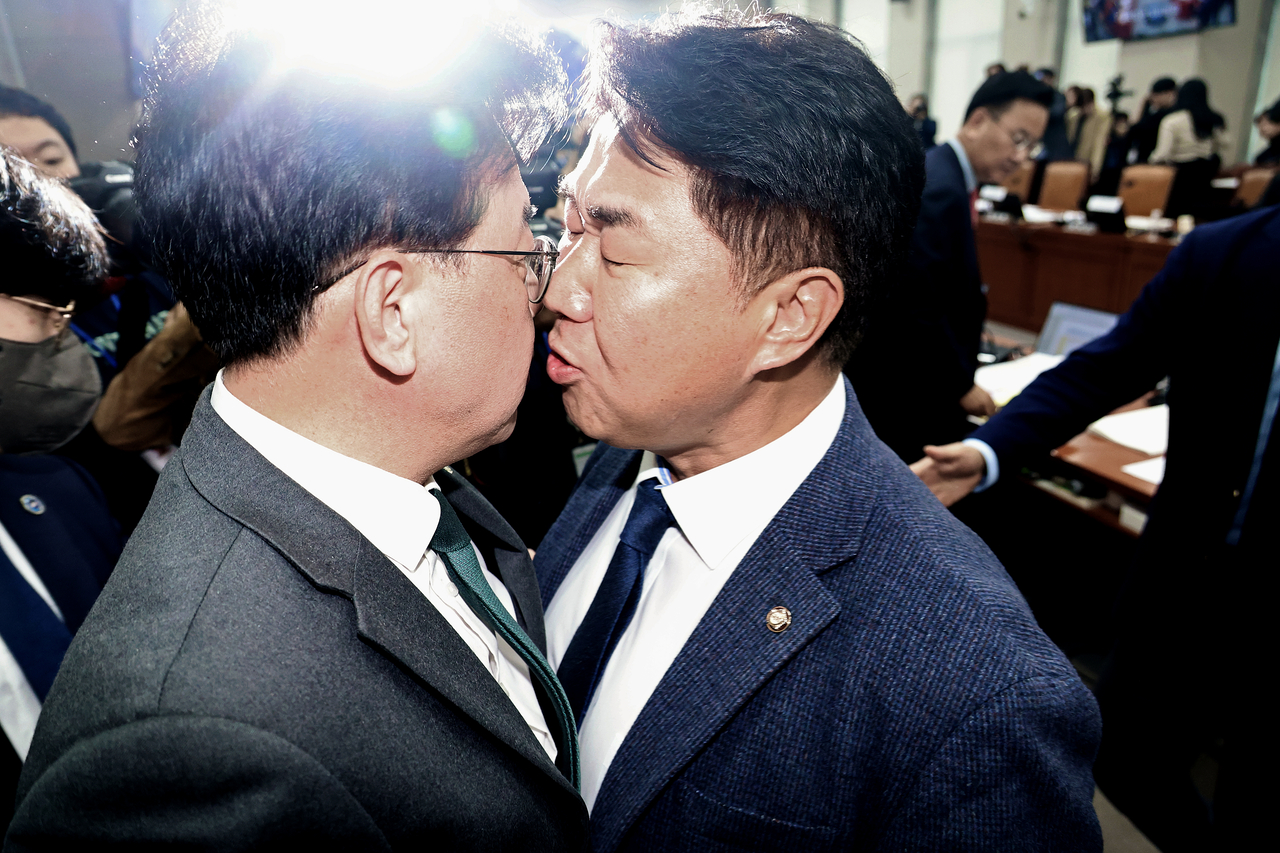
These remarks came during the National Assembly's first audit of the presidential office since Lee became president in June.
Aside from the Seoul-Washington trade deal, another point of contention was the failure of Kim Hyun-ji, personal secretary to Lee, to appear for the inspection Thursday morning. The main opposition People Power Party has continued to raise speculation over the opacity of Kim's role in the presidential office as Lee's key aide.
A physical altercation occurred between People Power Party floor leader Rep. Song Eon-seog and Democratic Party Rep. Lee Ki-heon. The parliament's inspection of the presidential office was briefly adjourned after the rival parties exchanged fiery words over personal secretary Kim's absence.
Lee’s longtime aide served as presidential secretary for administrative affairs until late September, before becoming his personal secretary — a position that has traditionally not taken part in parliamentary audits. Lee's senior secretary for political affairs Woo Sang-ho told the parliament Thursday that Kim's move to the new position "was not meant to avoid her public appearance."
consnow@heraldcorp.com