Xi proposes building Asia-Pacific community, calls for multilateralism at APEC summit skipped by Trump
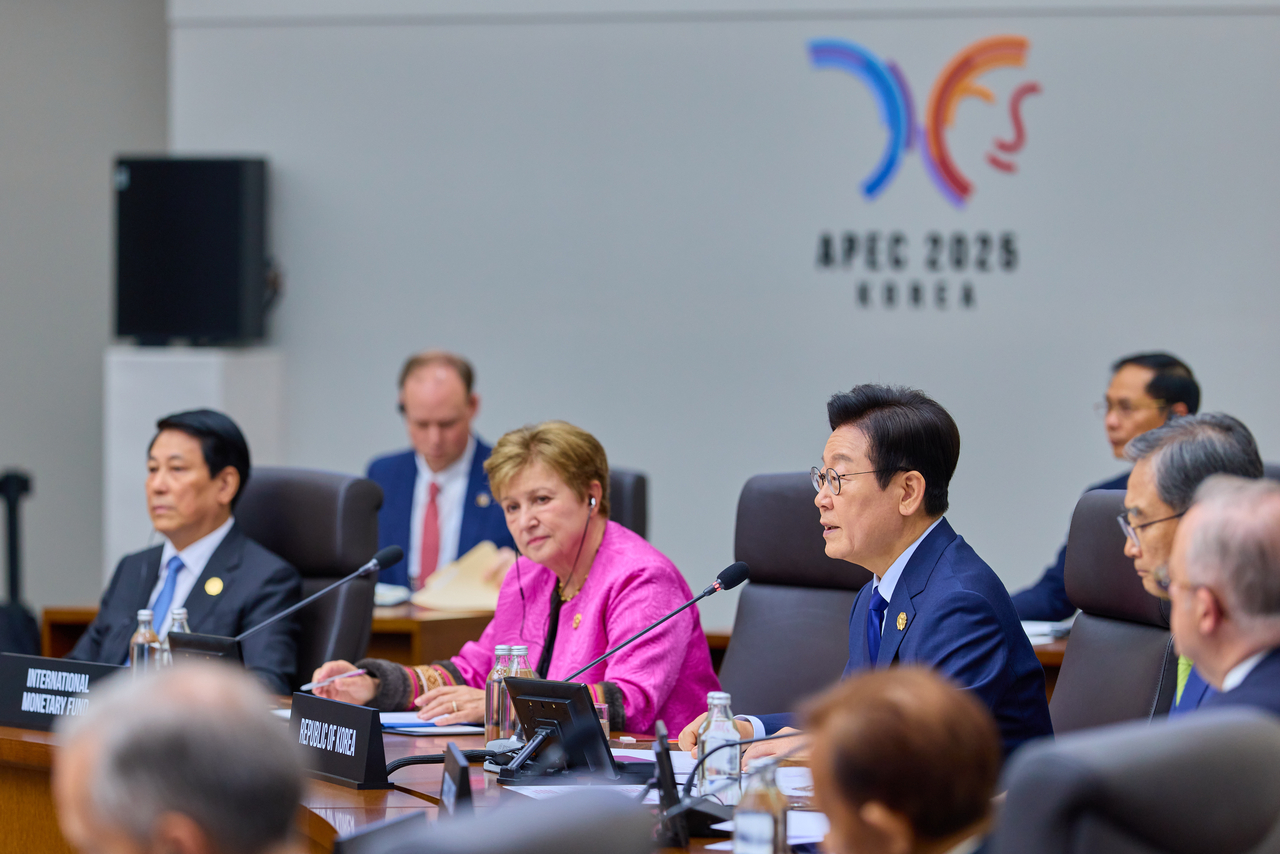
GYEONGJU, North Gyeongsang Province — South Korean President Lee Jae Myung raised the curtain on the Asia Pacific Economic Cooperation summit on Friday with a call for unity, saying the forum holds the answer to the world’s current turbulence.
Presiding over the first day of the two-day gathering, Lee called on leaders and representatives from the 21 member economies — including the United States and China — to rekindle APEC’s core spirit of cooperation, connectivity and openness at an increasingly challenging time.
However, Lee conceded that the current global landscape is too precarious for easy optimism, even as he expressed hope that the APEC spirit would shine again during the Gyeongju summit.
"We are all standing at a crucial inflection point amid a seismic shift in the global order," Lee said during the first session, titled "Towards a More Connected, Resilient Region and Beyond," held at the Hwabaek International Convention Center in Gyeongju, North Gyeongsang Province.
"The free trade order is undergoing a major shift, the uncertainty of the global economy is heightening and the drive to boost trade and investment is losing momentum."
Lee underscored that the "technological revolution, represented by artificial intelligence, presents us with an unprecedented crisis and, at the same time, unprecedented opportunities."
"Though the challenge is not an easy one, I believe that the journey APEC has taken holds the answer to overcoming the current crisis. Only cooperation and solidarity can serve as the certain answer that will lead us toward a better future," Lee said.
"Because each of our national interests is at stake, it is clear that we cannot always stand in the same position. However, we can stand together before the ultimate goal of achieving shared prosperity through combined efforts."
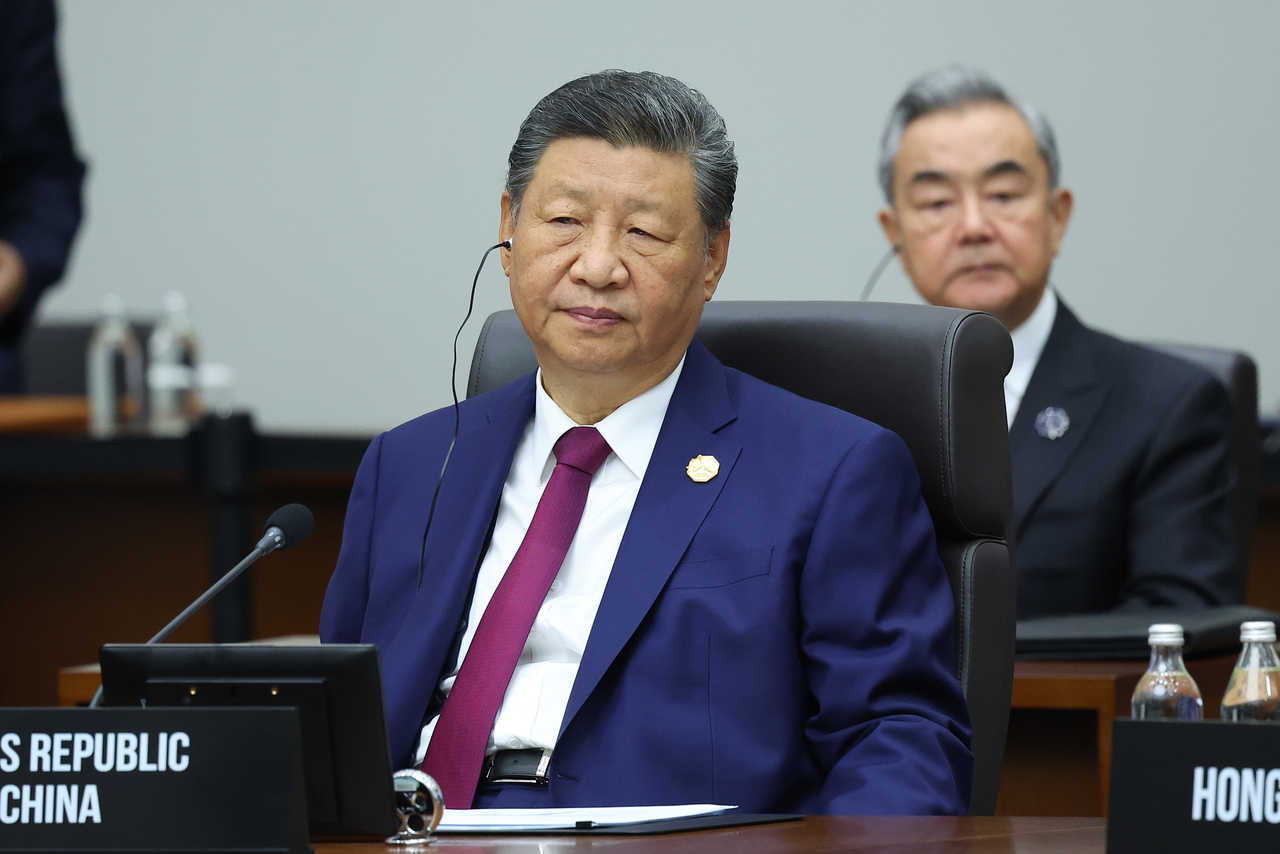
During the closed-door session, Chinese President Xi Jinping delivered a speech emphasizing the importance of building an open and inclusive Asia-Pacific economy and upholding multilateralism, according to the Chinese government.
Xi reiterated his flagship initiative of “building an Asia-Pacific community,” outlining five specific approaches to that end during the APEC summit, which was not attended by US President Donald Trump, who espouses unilateralism and protectionism.
The approaches included enhancing the effectiveness of the multilateral trading system, with the World Trade Organization at its core, and building an open regional economic environment, such as through trade and investment liberalization.
Xi underscored that APEC economies "should stay true to APEC's founding mission," especially at a juncture marked by "growing uncertainties and destabilizing factors in its development" across the Asia-Pacific region, amid a fluid and turbulent global landscape.
"Currently, changes unseen in a century are accelerating across the world," Xi said in his speech. "The rougher the seas, the more we must pull together."
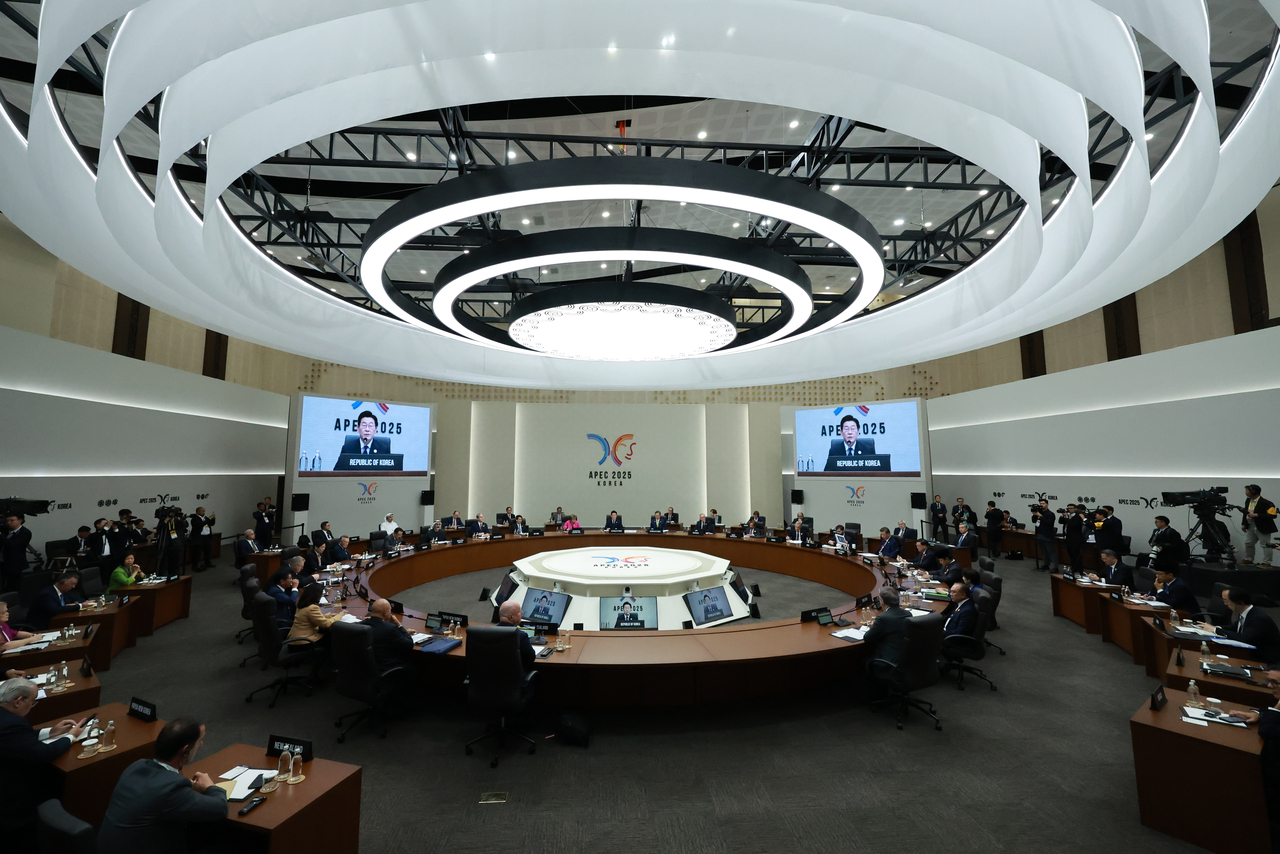
The first session aimed to hold leader-level discussions on ways to promote trade and investment, enhance regional connectivity among Asia-Pacific economies and strengthen public-private cooperation to unlock the potential of the private sector, according to South Korea’s presidential office.
Lee's office added that the session "was held in an informal dialogue format to allow participating leaders to engage in candid and open discussions."
In his opening remarks, Lee also expressed his hope that APEC leaders would "engage in candid and constructive discussions on how to realize APEC’s vision."
Lee’s remarks came as APEC members worked to adopt a "Gyeongju Declaration" at the conclusion of the two-day summit, amid an increasingly challenging period marked by rising protectionism and the weaponization of trade — even among APEC members — in ways that run counter to the forum’s core principles.
A leaders’ declaration can only be adopted by consensus, requiring the support of all 21 member economies to bridge any remaining differences. APEC has failed to produce such a joint communique only once, in 2018, when the summit was hosted by Papua New Guinea.
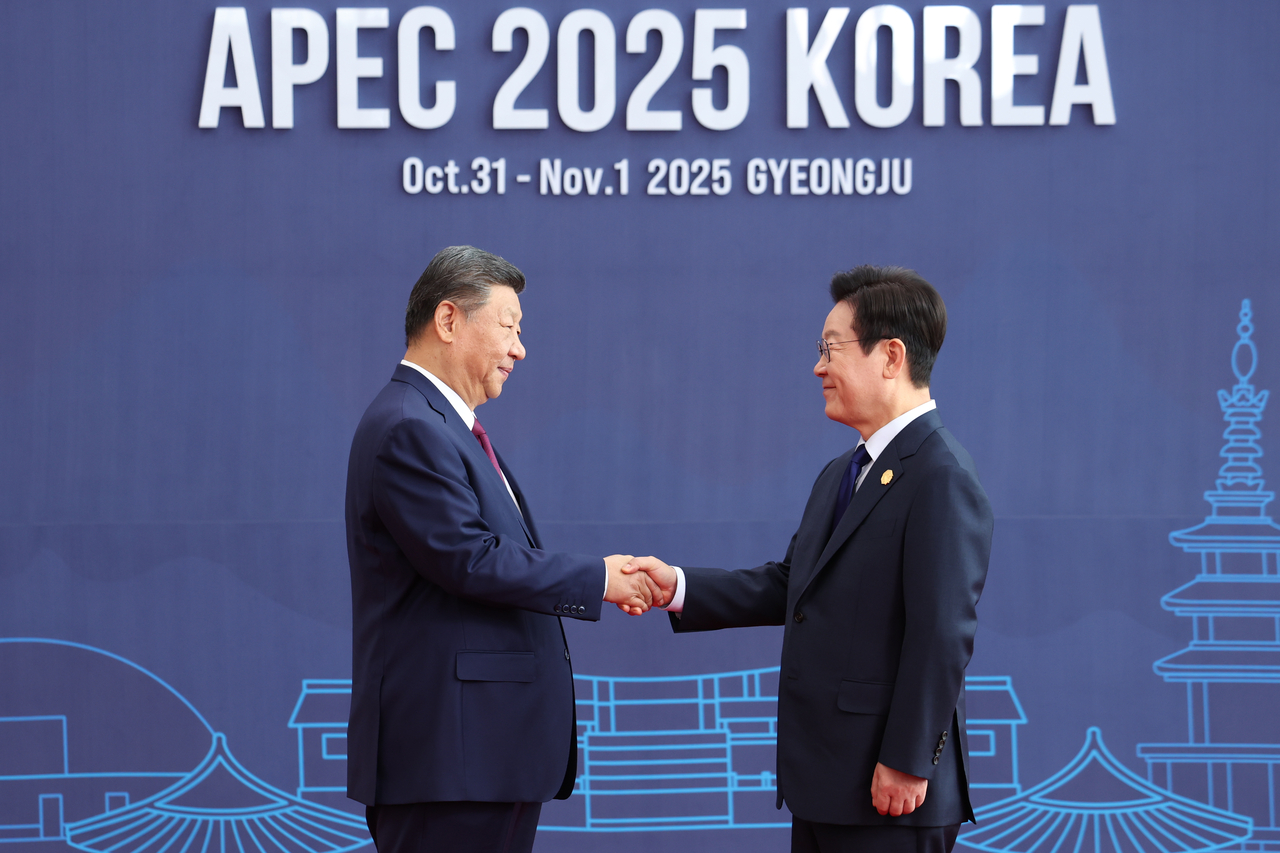
Before the first session began, Lee personally greeted leaders and representatives from the 21 member economies, representing a bloc that accounts for 61 percent of global gross domestic product and 49 percent of world trade.
Among them was Xi, who met Lee in person for the first time since Lee’s inauguration in early June, ahead of their first summit scheduled for Saturday during the Chinese leader’s state visit to South Korea — his first since 2014.
Lee exchanged remarks with US Treasury Secretary Scott Bessent, who attended the session on behalf of Trump after the US president returned to Washington on Thursday. Their conversation lasted noticeably longer than Lee’s exchanges with other delegations.
Lee also greeted Japanese Prime Minister Sanae Takaichi, whom he met the previous day for their first-ever in-person summit.
Lee further welcomed International Monetary Fund Managing Director Kristalina Georgieva and Sheikh Khaled bin Mohamed bin Zayed Al Nahyan, the crown prince of Abu Dhabi who led the United Arab Emirates delegation attending the forum as a guest of honor at Lee’s invitation.
dagyumji@heraldcorp.com