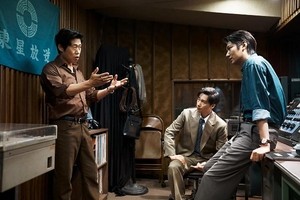
Home of Korea's beloved love story 'Chunhyangjeon' boasts 15th-century garden, acclaimed art museum
NAMWON, North Jeolla Province — Known as the backdrop of Korea’s beloved folktale “The Story of Chunhyang,” Namwon is a city where romance, tradition and creativity meet. Nestled in the foot of Jirisan, this “City of Love” celebrates not only the legendary devotion of Chunhyang and Lee Mong-ryong but also its deep cultural roots that stretch across centuries.
Timeless tale of Chunhyang
The story that made Namwon famous tells of Lee Mong-ryong, the son of a nobleman, and Chunhyang, the daughter of a courtesan, who fall in love at Gwanghallu. When Lee leaves for Hanyang (today's Seoul), Chunhyang refuses the advances of a corrupt governor and is imprisoned. The lovers reunite when Lee returns as a secret royal inspector, exposing injustice and rewarding fidelity — a story cherished for generations as a symbol of steadfast love and virtue.
Namwon honors this tale every May with the Chunhyang Festival, one of modern Korea’s oldest celebrations. First held in 1931, it has grown into a civic festival that blends performance, art and participation. The highlight, the Global Chunhyang Contest, draws contestants from across the country in a pageant that celebrates beauty, talent and cultural grace.
Gwanghalluwon
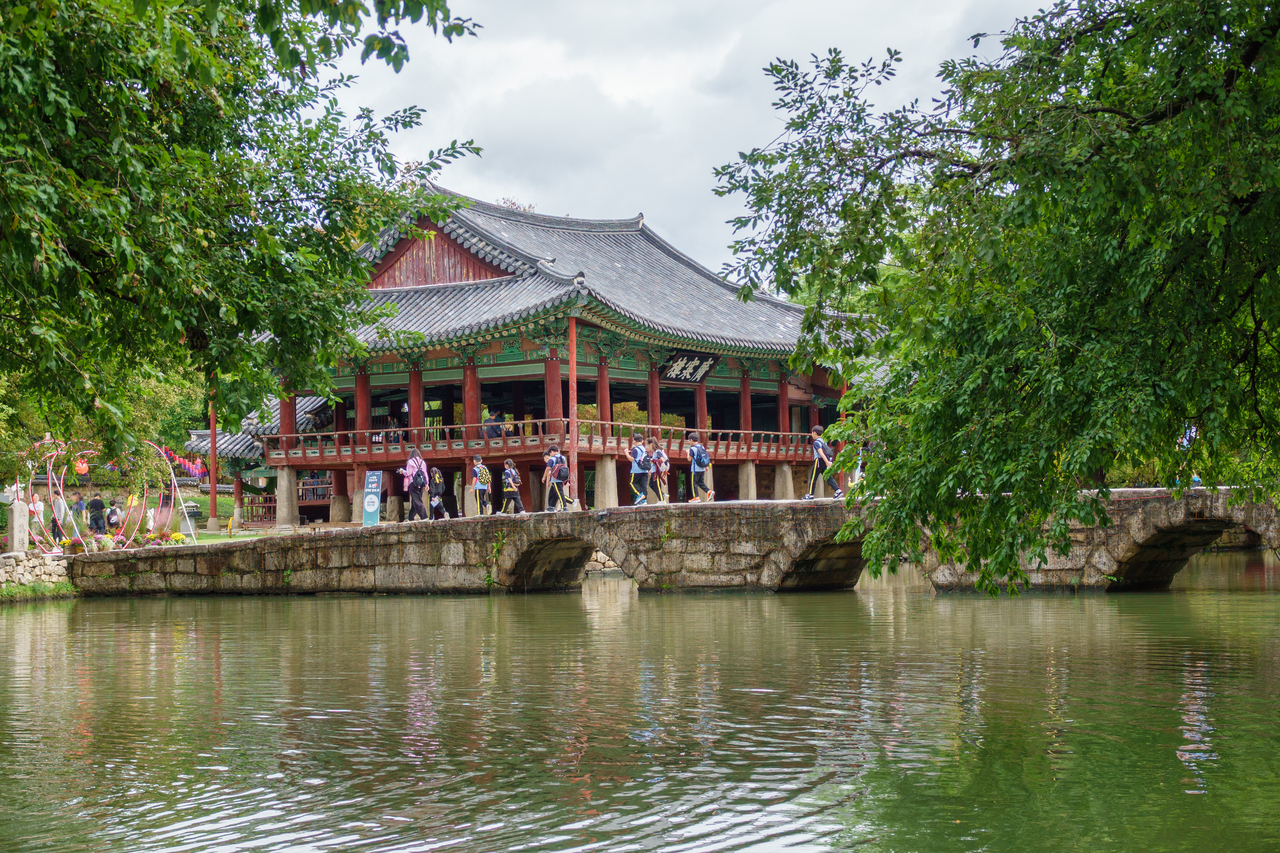
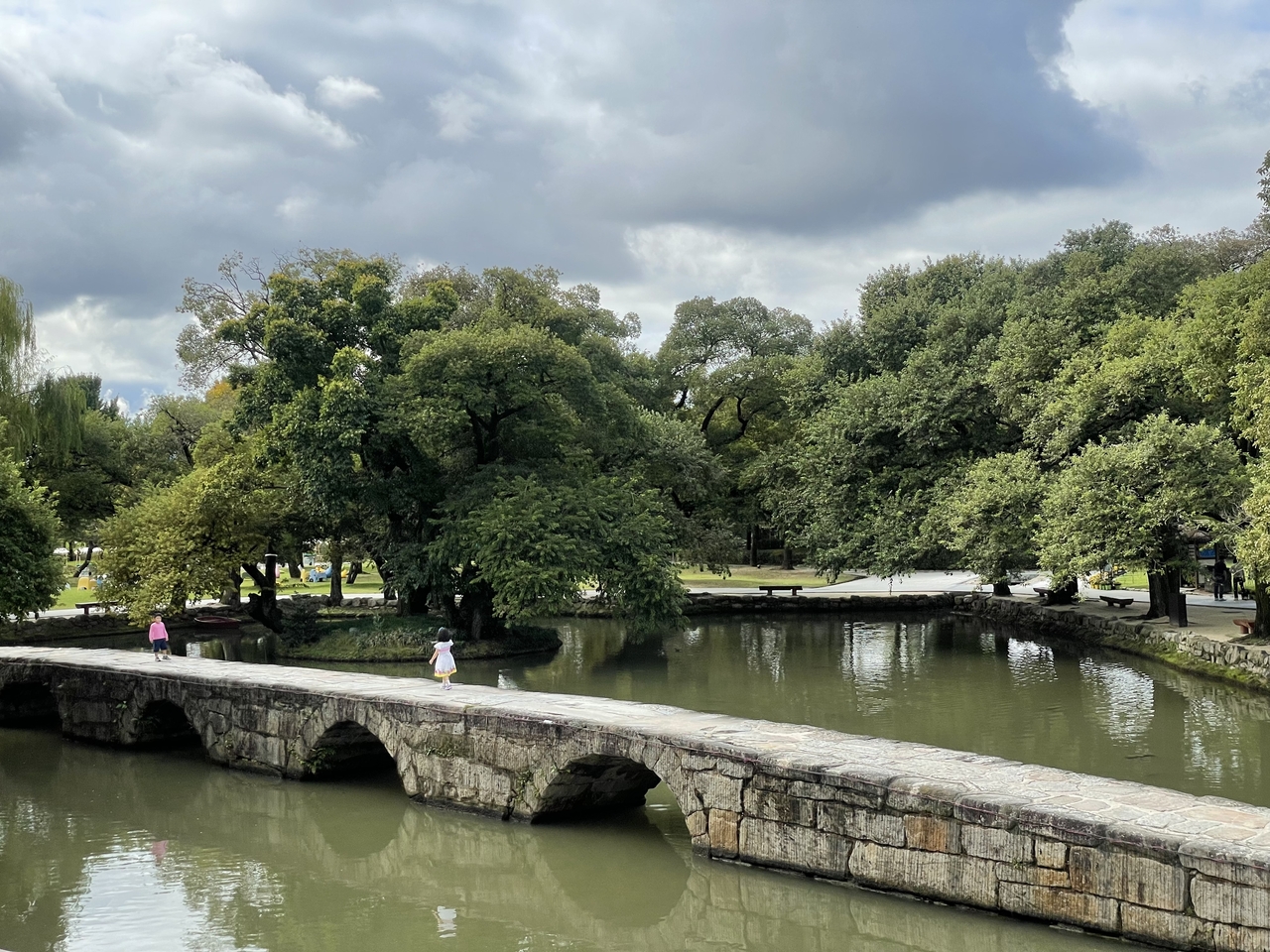
At the center of Namwon stands Gwanghalluwon, one of Korea’s most enchanting traditional gardens. Originally constructed in 1419 by Hwang Hui Jeongseung and renamed by scholar Jeong In-ji in 1444, Gwanghallu was designed to symbolize the heavenly palace on the moon.
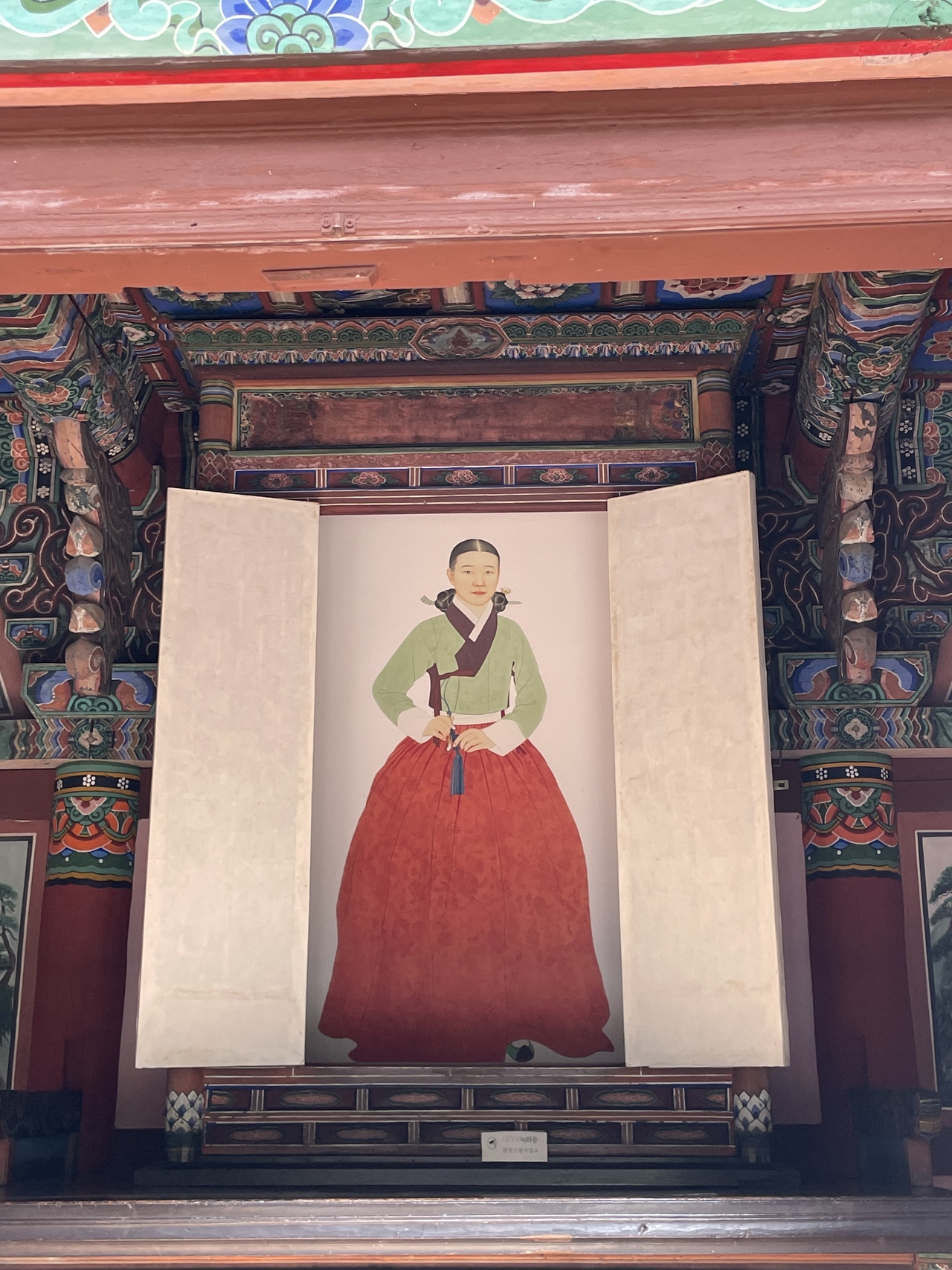
Gwanghalluwon’s serene pond, crossed by the Ojakgyo, evokes the Milky Way — the celestial path connecting the separated lovers Gyeonu and Jiknyeo from the "Chilseok" folktale. Visitors can stroll past Wolmae cottage, the house of Chunhyang’s mother, and the Shrine of Chunhyang, which enshrines her portrait painted by artist Kim Eun-ho. The site’s pavilions — including Gwanghallu, Wanwoljung and Yeongjugak — create an atmosphere of poetic reflection, against the backdrop of Gyoryongsan and the distant peaks of Jirisan.
Guided tours by local cultural interpreters bring the place to life. Dressed in hanbok, they recite passages from “The Song of Chunhyang,” transforming the garden into a living stage of Korea’s musical storytelling tradition.
"'Chunhyangjeon' was born here as a pansori narrative,” explains guide Park Eun-suk, who describes how market singers once performed the story at Namwon’s five-day fairs.
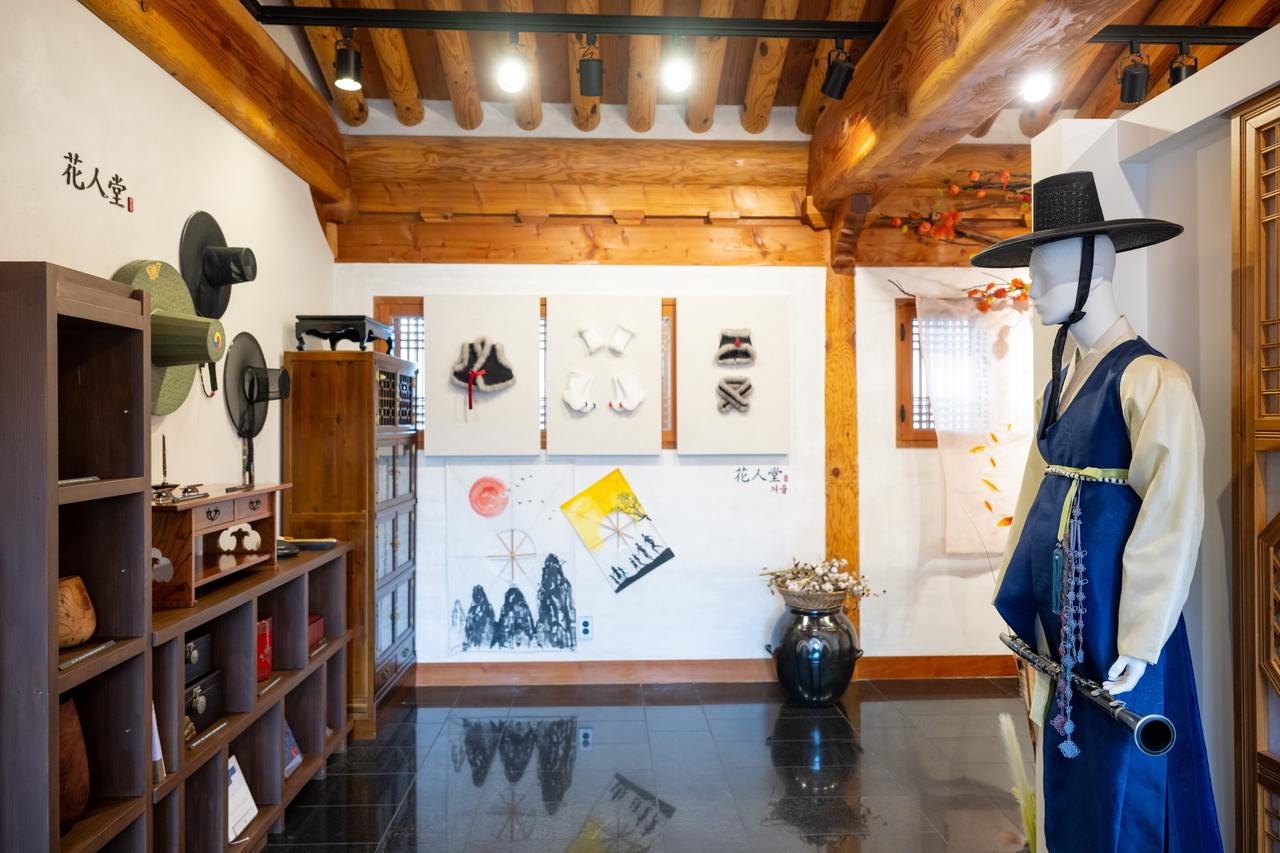
For visitors seeking immersion, the nearby Hwaindang hanbok studio offers traditional attire rentals at 20,000 won for two hours. The experience includes hairstyling and accessories — and even free entry to Gwanghalluwon. Hwaindang provides a wide range of garments, from elegant jackets and skirts to sleeveless outerwear called "gwaeja," and even a photo studio for capturing timeless portraits.
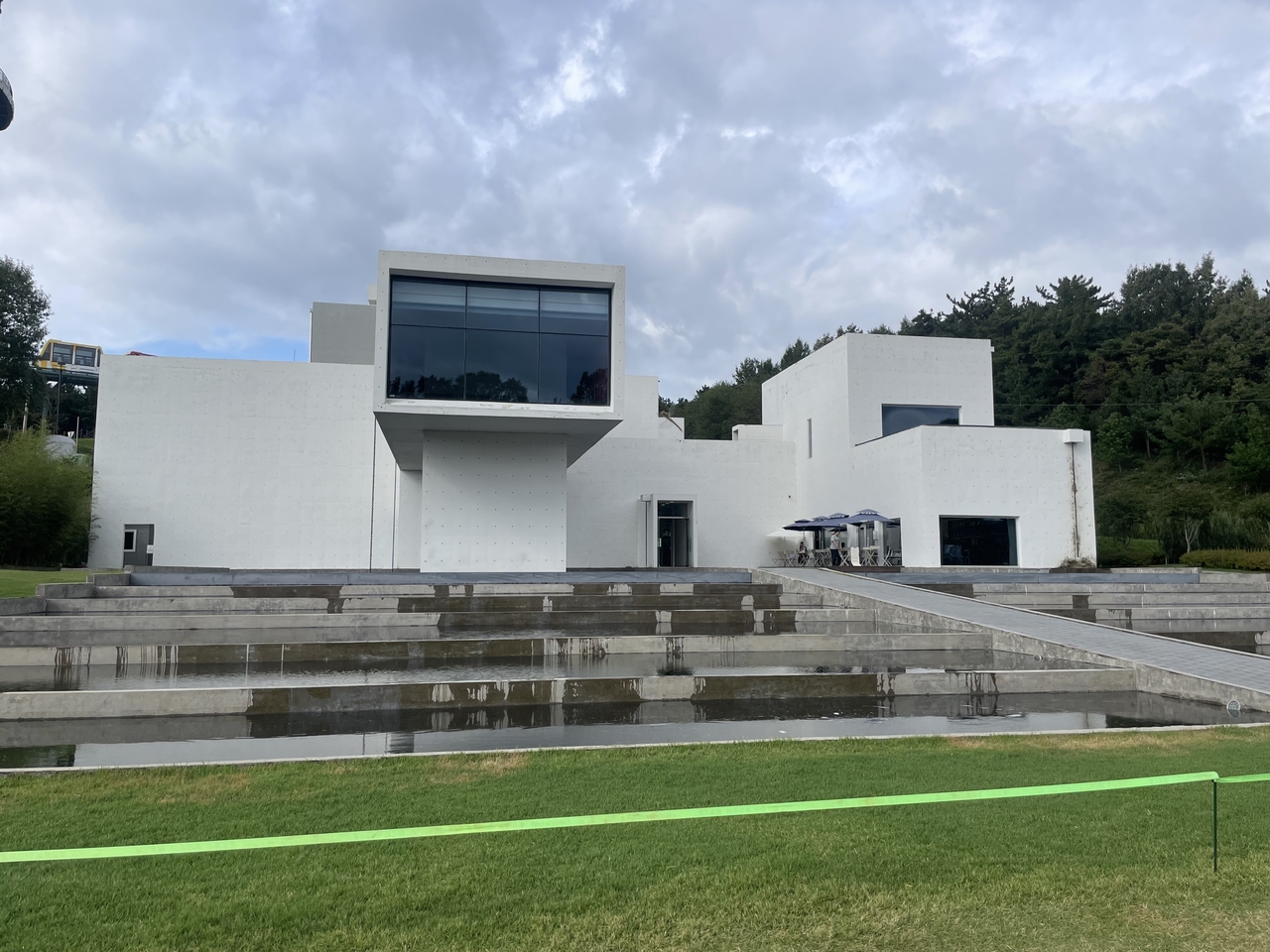
Kim Byung-jong Art Museum
Beyond folklore, Namwon is also a city of art. The Namwon City Kim Byung-jong Art Museum, opened in 2018, is surrounded by forests and designed by architect Jeon Hae-gap, known for his work on Awon Old House. The museum embodies the painter’s wish for “a humble museum lying low in nature.” Inside, floor-to-ceiling windows reveal pine forests and views of Jirisan, inviting quiet contemplation.
Kim Byung-jong, a Namwon-born artist and writer, donated a vast collection of his paintings and literary works to his hometown. Exhibits include his iconic "Jesus the Fool" and "A Song of Life series." The museum’s book cafe houses more than 2,000 volumes on art, literature and the humanities.
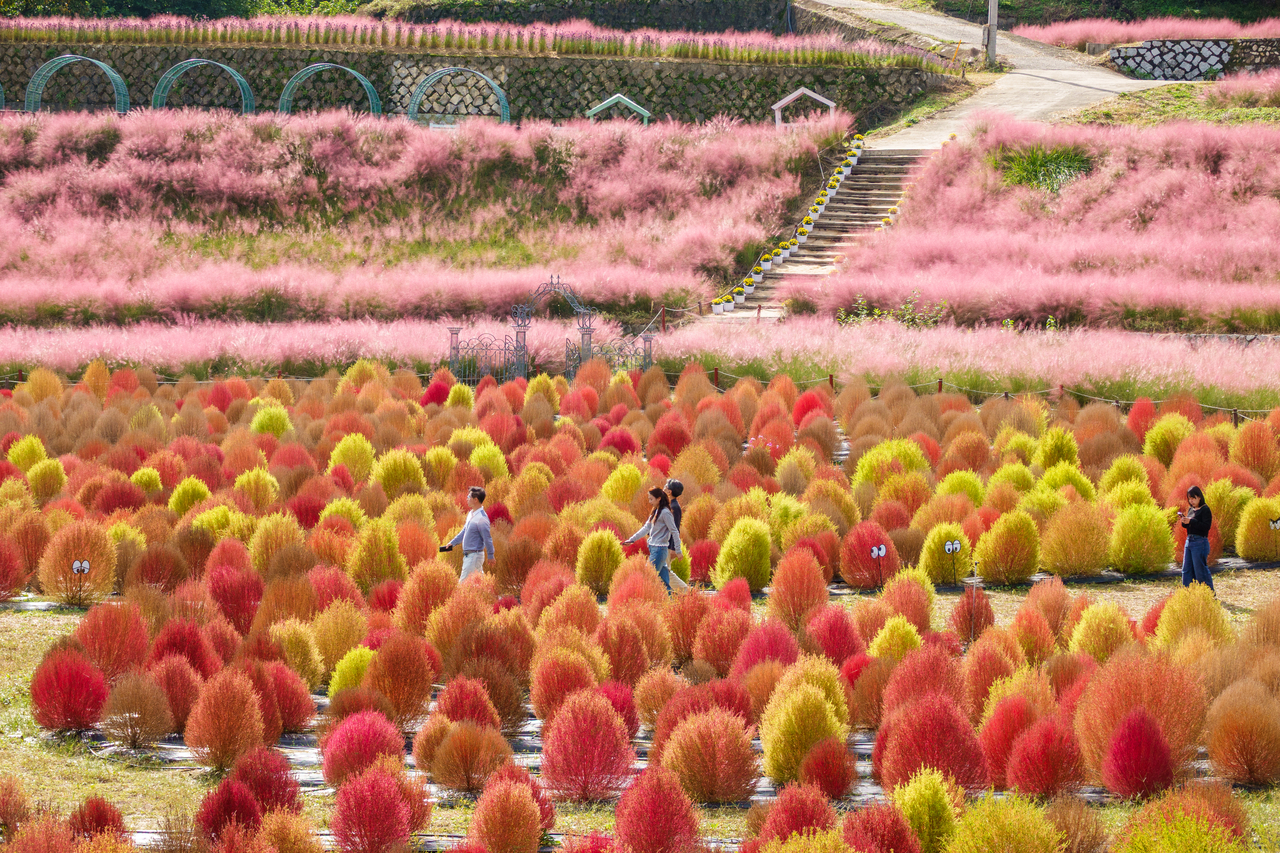
A blooming village of autumn colors
Just outside the city, Sinsaeng Village transforms into a floral wonderland in autumn. Pink muhly, zinnias and asters paint the fields in dreamy hues, swaying under the crisp blue sky. The seasonal blooms create a perfect backdrop for photographers and travelers seeking tranquility.
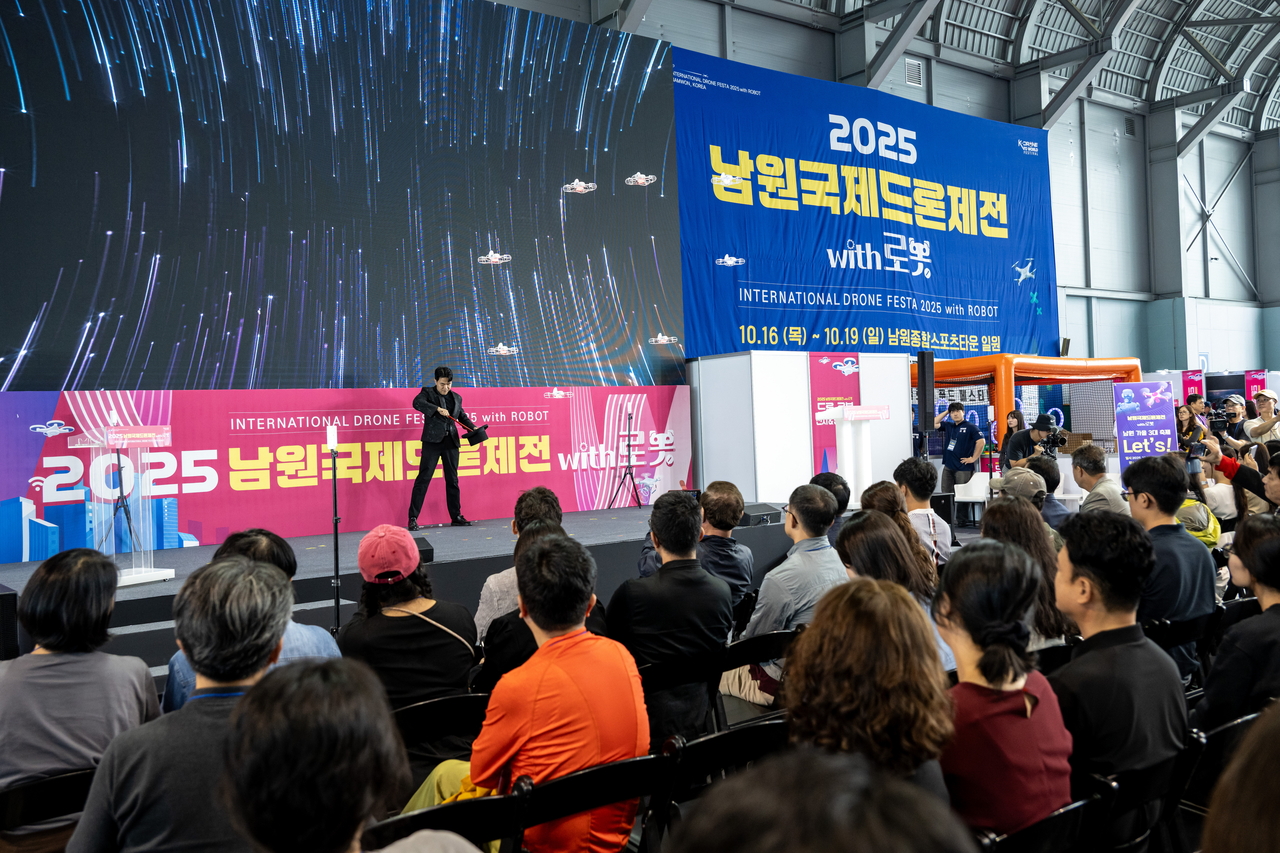
Where past and future meet
Each autumn, Namwon hosts three major festivals: the International Drone Festa with Robot, Namwon National Heritage Night and the Heungbu Festival. These events highlight the city’s unique blend of tradition and innovation, with drone light shows, performances and heritage storytelling illuminating Namwon’s night sky.
Though this year’s festivals have ended, their spirit of connecting past, present and future continues to define the city. For travelers planning ahead, next fall offers the perfect time to visit, when Namwon once again comes alive with light, music and the timeless Korean traditions.
yoohong@heraldcorp.com