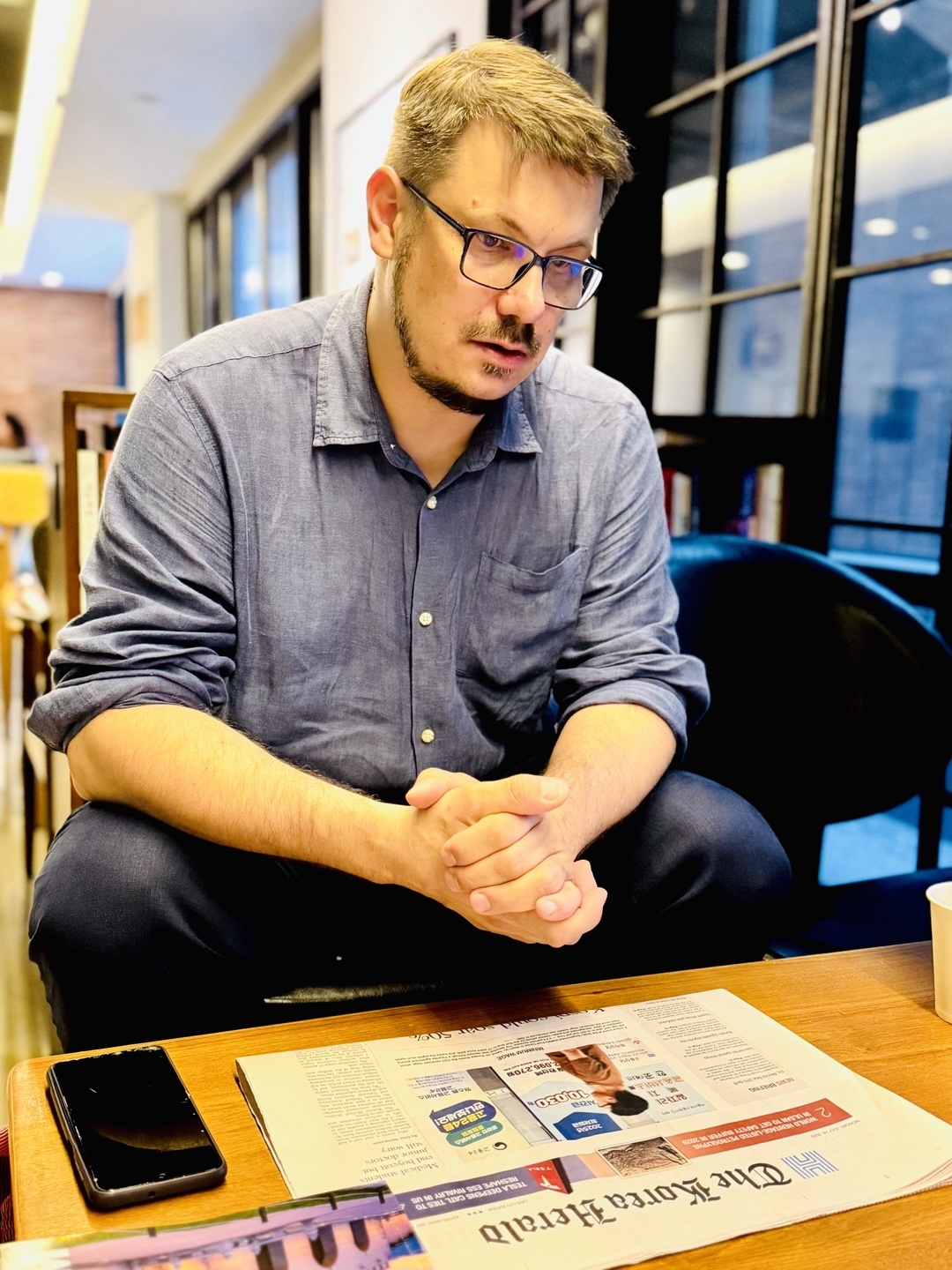
To stay competitive in defense exports, international relations expert Przemyslaw Biskup, says that Seoul must swiftly pursue joint research, production and development projects with European partners such as Poland.
“Success of launching joint programs based in Poland, between Korea and Poland, is quite important for Korea to keep exporting arms to Europe,” Biskup said, citing Poland’s role as a gateway to the European market.
“European producers will push to keep the market for themselves,” meaning Korean defense firms may need to become “partly European,” just as their carmakers did in past decades.
Defense industry cooperation with the Global West and particularly Poland would be advantageous for South Korea if Europe moves to prioritize its own defense industries, Biskup told The Korea Herald.
The Global West is a group of wealthy liberal democracies with shared political, economic and security values, rather than geography. The group includes Western Europe, North America, and key Indo-Pacific allies closely tied to the United States.
The group has supported Ukraine in its war against Russia through military supplies rather than troops.
Biskup notes that South Korea’s direct military involvement in the European war is unlikely, but a defense industry partnership would be desirable.
“War in Ukraine has an impact on (South) Korea, whether Korea likes it or not,” he said, elaborating that South Korea’s defense and industrial ties with Europe and the Global West are increasingly interconnected.
Just as “Kia or Hyundai invested in factories within the European space,” South Korean companies are expanding into battery production and arms contracts in Poland.
He suggested that South Korea should align with global cooperation efforts and EU initiatives such as the European Defense Industrial Program, Permanent Structured Cooperation and Security Action For Europe.
Europe is considering whether defense funds should remain within the EU or be extended to partners such as South Korea, whose cooperation with Poland could be affected.
Asked how South Korea can increase arms exports in Europe, Biskup said that Korean arms industry products are high-tech and often also provide good value for money.
“But in general, they are not fundamentally better than the ones produced in Europe,” he pointed out.
Biskup explained that from a European perspective, American arms are the most advanced but costly, European arms support jobs and technology, and Korean arms offer fast delivery and good value.
He advised Korean producers to push for joint research and development, technology transfer and local production.
"If I were in the shoes of Korean arms producers, I would keep emphasizing advantages and try to reduce the disadvantages," he said.
"A good way to do it would be to develop partnerships," he added.
Asked how South Korean firms can navigate Europe’s regulations and prepare for defense procurement trends over the next 5–10 years, Biskup noted that Europe’s arms market is rapidly consolidating, making success increasingly dependent on local production and partnerships with national governments and their defense firms.
"The basic rule of this market is 'Buy European.' The experience of Korean automobile industry leaders could be helpful in this context,” he said.
sanjaykumar@heraldcorp.com