Foreign participants hold up their handwritten Hangeul calligraphy works at the 16th annual Gwanghwamun Square Calligraphy Competition, at the lawn behind the King Sejong statue in Gwanghwamun Square in central Seoul, Thursday. (Yonhap)

Oct. 9 is the Hangeul Day holiday, commemorating King Sejong’s creation of the Korean writing system in the 15th century.

At the lawn behind the King Sejong statue in Gwanghwamun Square in central Seoul, crowds of both Koreans and foreign visitors gathered for the 16th annual Gwanghwamun Square Calligraphy Competition hosted by the Korea Arts Culture Center.

Dressed in "durumagi," or traditional Korean overcoats, participants re-created the atmosphere of the civil service exams of the Joseon era as they spent two hours creating works inspired by Hangeul.
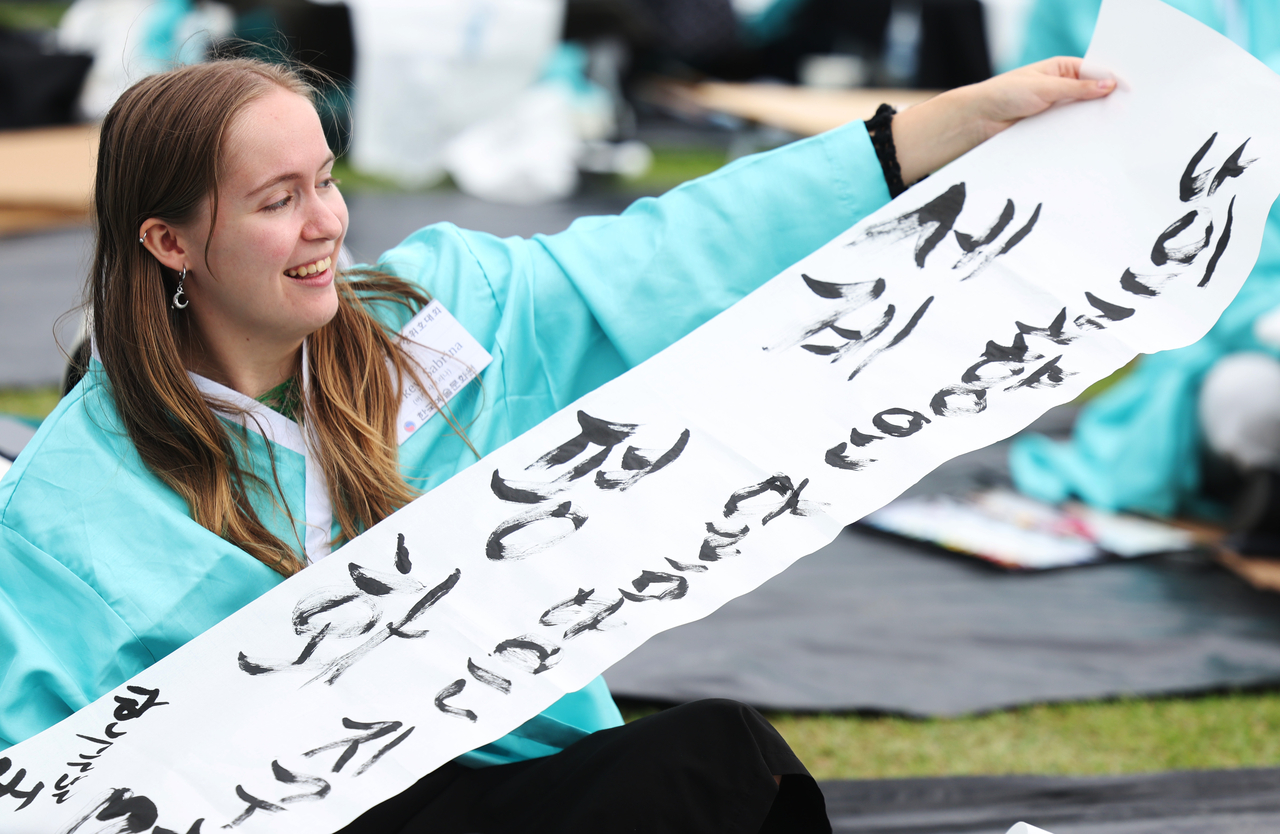
A participant holds up her Hangeul calligraphy that reads “world peace,” at the 16th annual Gwanghwamun Square Calligraphy Competition in Gwanghwamun Square, central Seoul, Thursday. (Yonhap)
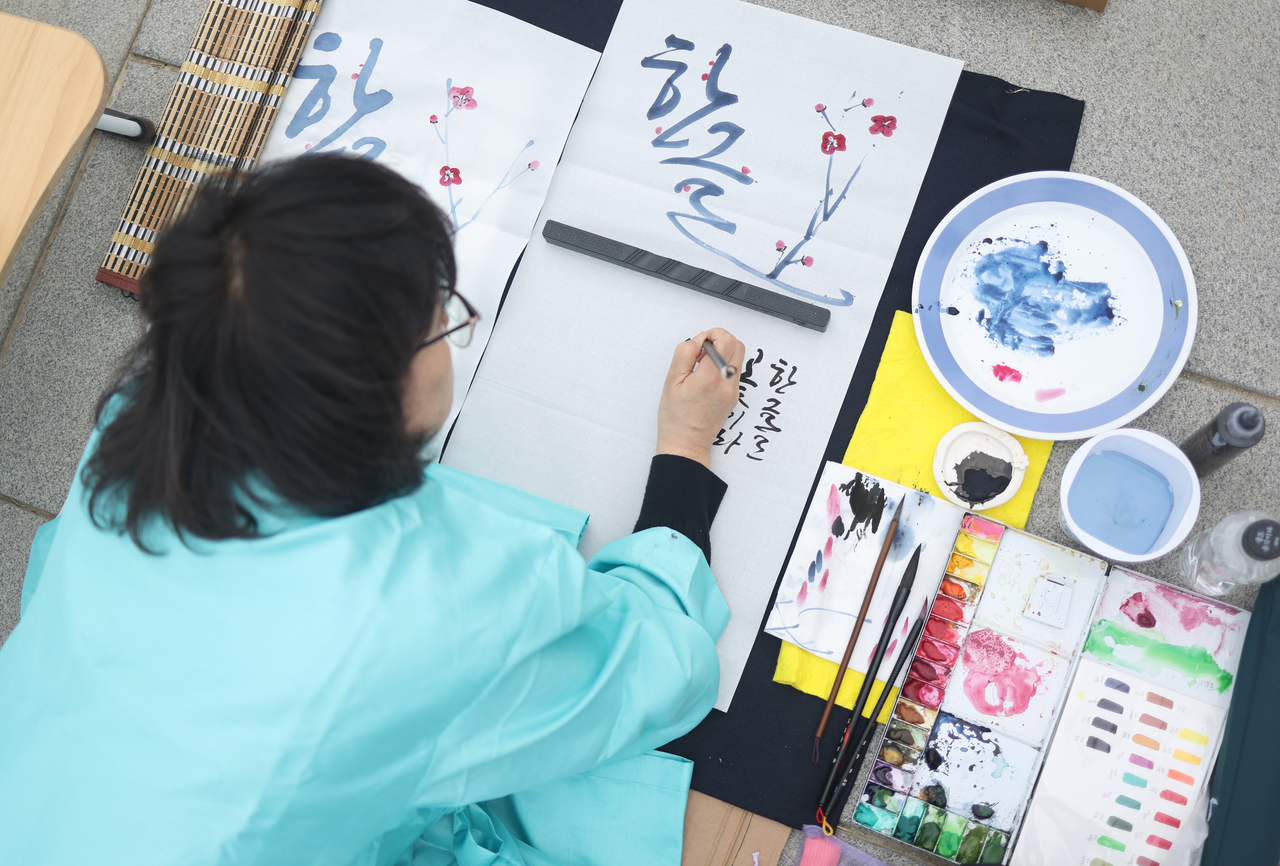
A woman paints a Hangeul phrase alongside illustrations of traditional Korean flowers at the 16th annual Gwanghwamun Square Calligraphy Competition in central Seoul on Thursday. (Yonhap)

Out of some 500 entries screened in the preliminary round, 400 finalists took part in the main competition, including about 80 participants from 30 countries across Asia, Africa and Europe.

From brief phrases celebrating the beauty of Hangeul to colorful drawings of traditional flowers with the Korean script, Hangeul works beautifully decorated Gwanghwamun Square.

“Hangeul is the heart and soul of Korea,” read a calligraphy piece written by one of the foreign participants.

Parents and their children color an image of King Sejong on a large sheet of paper laid out at Gwanghwamun Square in central Seoul on Thursday. (Yonhap)
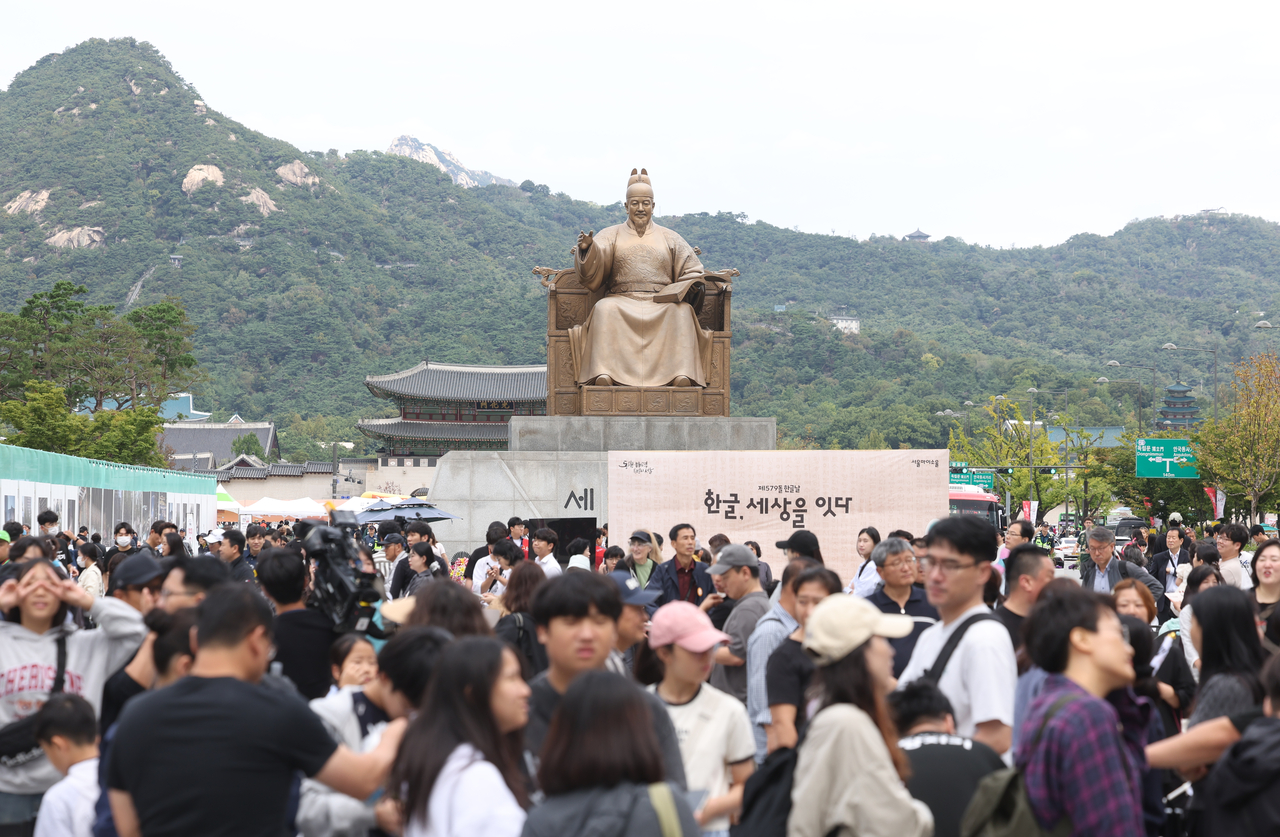
Crowds gather at Gwanghwamun Square in central Seoul on Thursday for a Hangeul-themed experience event organized by the Seoul Metropolitan Government. (Yonhap)

Meanwhile, on one side of the square the Seoul Metropolitan Government hosted a hands-on experience program dubbed “Connecting the world through Hangeul,” designed to highlight how Hangeul has evolved from a writing system into a medium for global understanding and exchange.

Booths offered various activities where foreign visitors wrote their names in Hangeul, children made art using Hangeul-shaped stamps and visitors crafted hats decorated with Korean letters.

On a large paper sheet laid out on the ground featuring an image of King Sejong, children drew pictures and played freely, adding color to the celebration.


cjh@heraldcorp.com