Whether drawn by mountains, monasteries or memories, those who visit Seoraksan rarely come just once
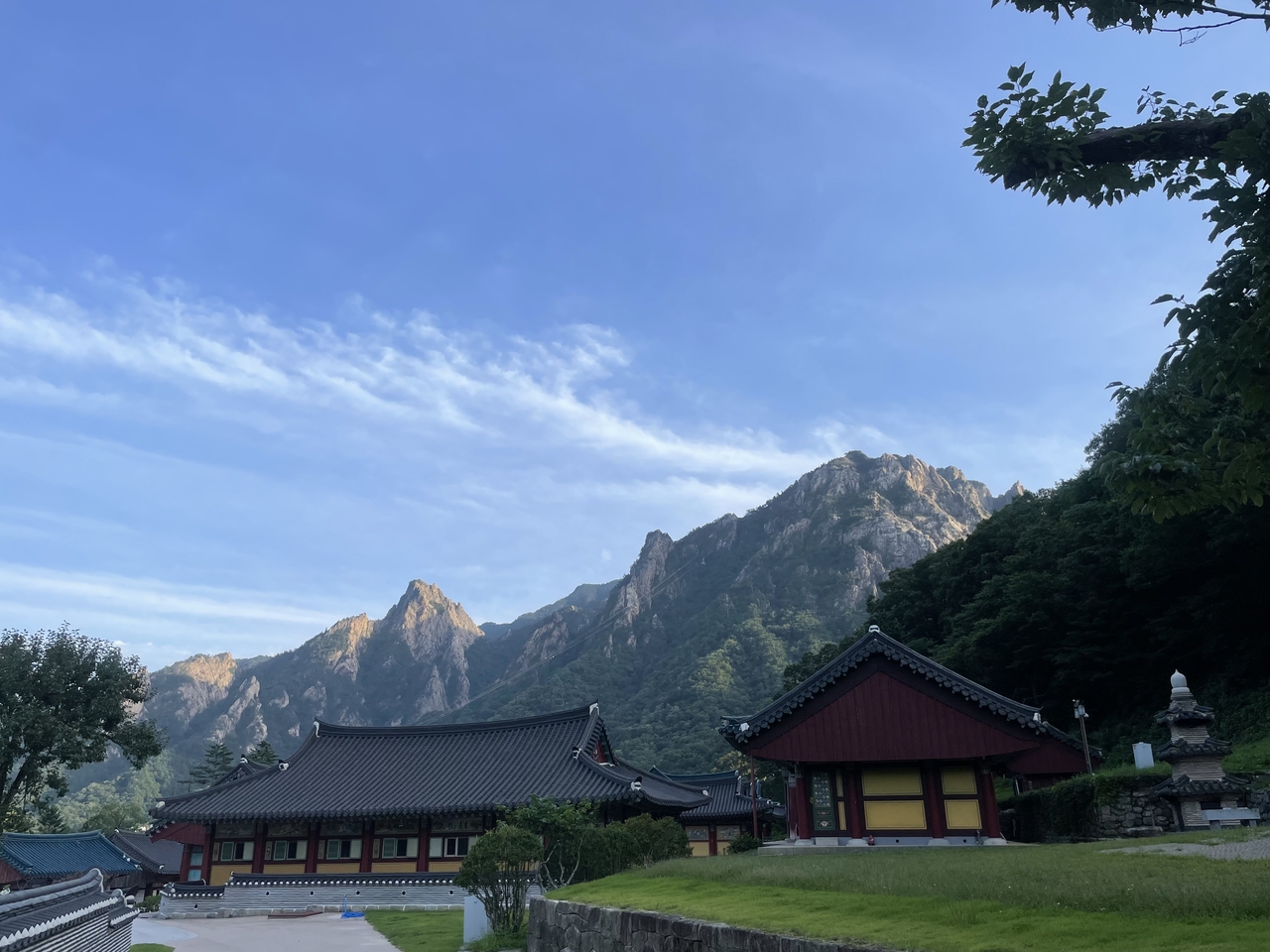
SOKCHO, Gangwon Province -- As cool breezes whisper through the trees and the sun casts a golden glow over still-green mountainsides, now is the perfect time to visit Seoraksan — South Korea’s beloved national park in northeast Gangwon Province.
Though the area bursts into vivid shades of red and orange by late October, those who arrive a little earlier are rewarded with peaceful trails, quieter temples and panoramic views unmarred by large crowds. The forest remains lush, the air is crisp and the highlands are often wrapped in a soft blanket of mist, offering a different kind of beauty — serene, atmospheric and dreamlike.
Designated as South Korea’s fifth national park in 1970 and a UNESCO Biosphere Reserve since 1982, Seoraksan stretches across the municipalities of Inje, Goseong, Yangyang and Sokcho. The park’s terrain is divided into three regions: Naeseorak (inner Seorak), Namseorak (southern Seorak) and Oeseorak (outer Seorak). Towering peaks such as Daecheongbong, the park’s highest at 1,708 meters, loom over hikers and visitors, while Buddhist temples like Sinheungsa nestle in the folds of the mountain.
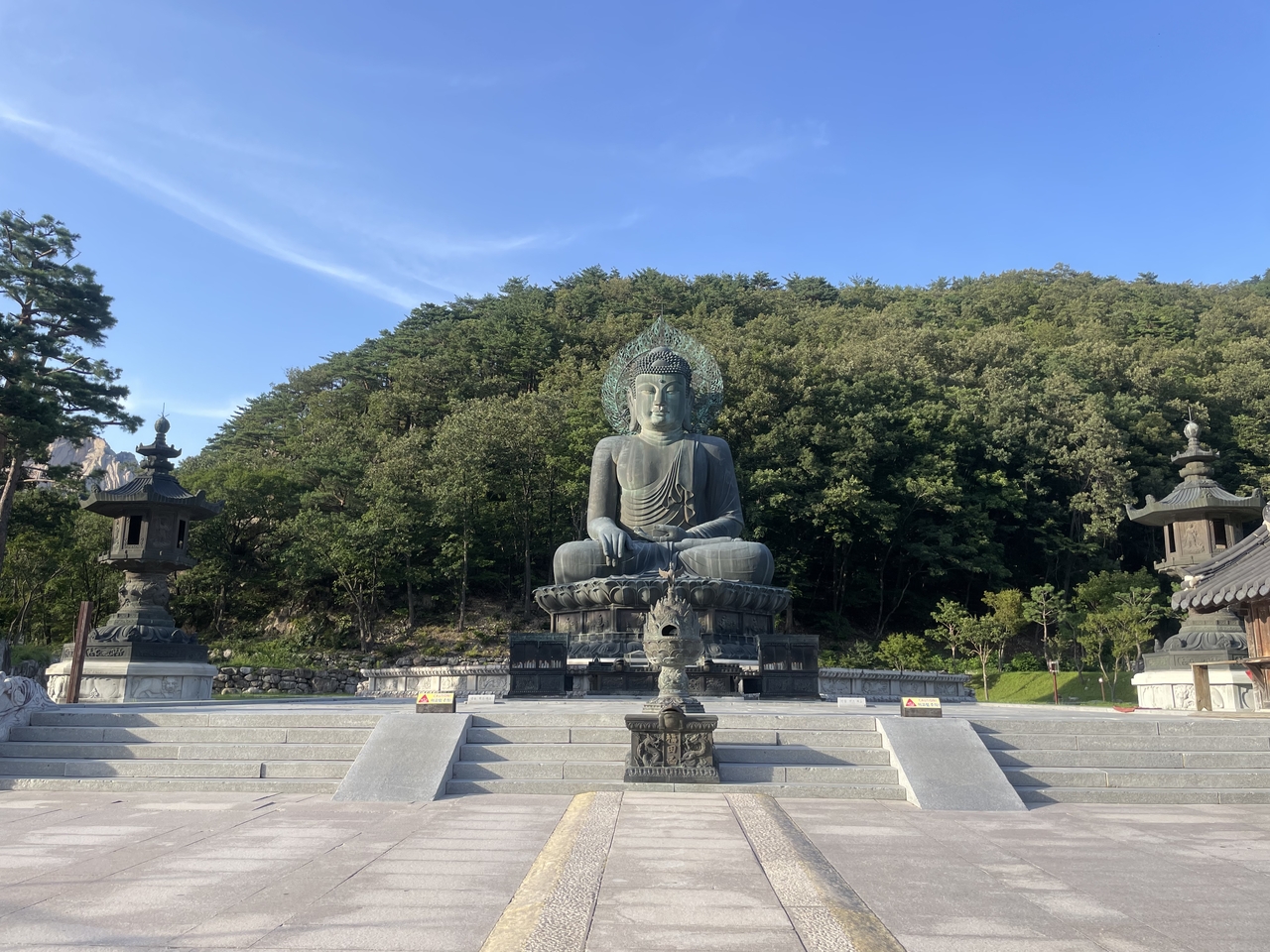
Sinheungsa blends spirituality with scenic beauty
Sinheungsa, a Buddhist temple located 600 meters above sea level and a 10-minute walk from the park’s main entrance, is a must-see. Shrouded in morning mist, the temple grounds offer a mystical atmosphere, particularly when the bronze Unification Great Buddha comes into view. At 14.6 meters tall and weighing 108 metric tons, this seated Buddha is among the largest in Asia.
Visitors looking for an easier way to enjoy the park’s heights can take the Seorak Cable Car. Operating over a 1.1-kilometer route, the cable car brings passengers to the base of Gwongeumseong Fortress in about five minutes. Though the final climb to Bonghwadae Peak is currently restricted, a short walk still leads to sweeping views of Seoraksan’s jagged peaks, including Ulsanbawi and the rocky Manmulsang formations. On clear days, both inner and outer Seorak reveal themselves in full grandeur.
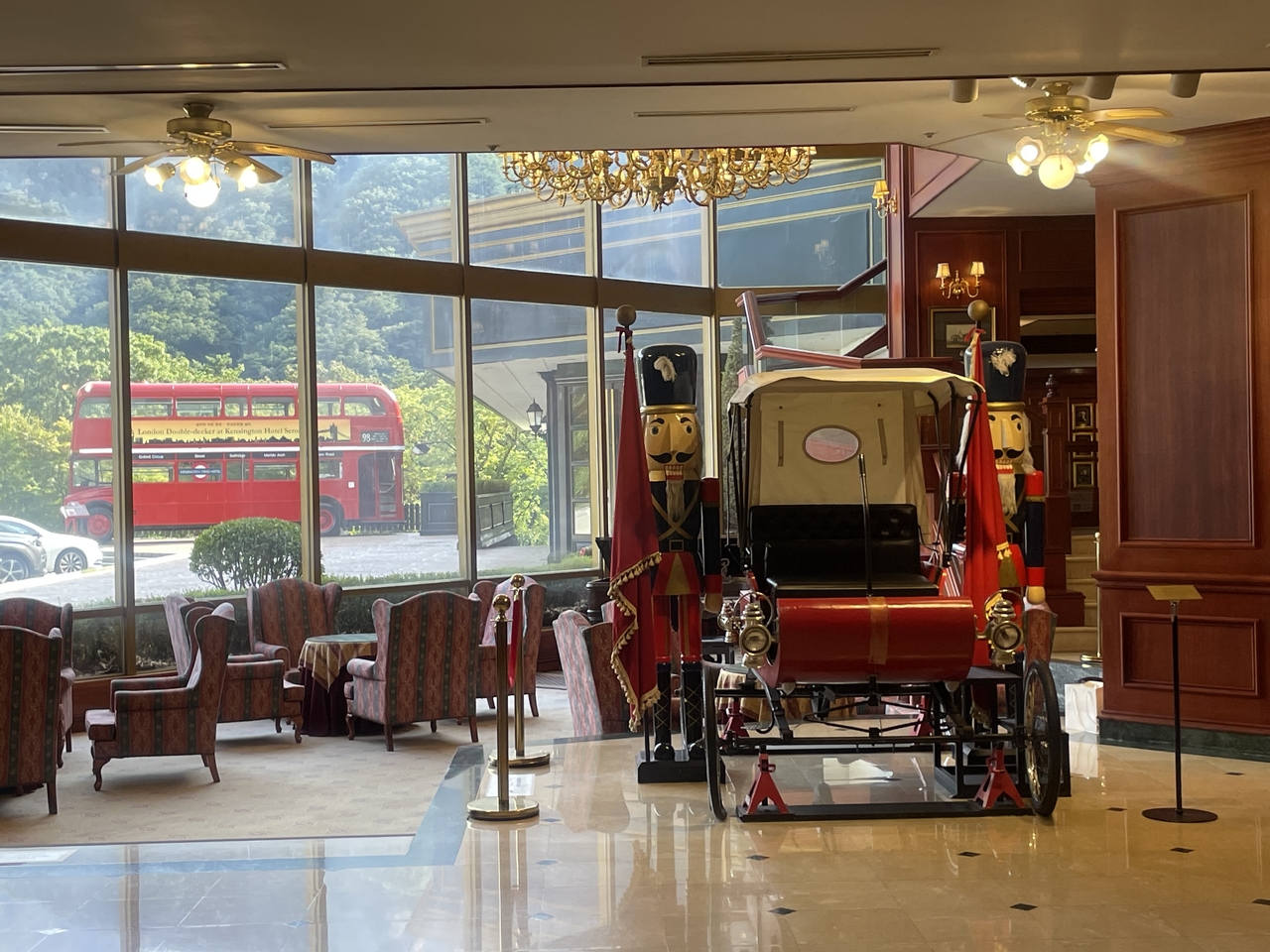
Kensington Hotel offers comfortable base near park entrance
But Seoraksan’s magic doesn’t end at the trailhead. For those seeking a relaxing stay with views of the mountain, Kensington Hotel Seorak stands just a five-minute walk from the park entrance.
Opened in 1996 and now nearing its 30th anniversary, Kensington Hotel Seorak is styled as a “museum hotel,” blending British royal themes with curated collections from global celebrities and dignitaries. At the entrance, guests are greeted by a vintage red double-decker bus and a royal guard mannequin that brings a slice of London to Sokcho.
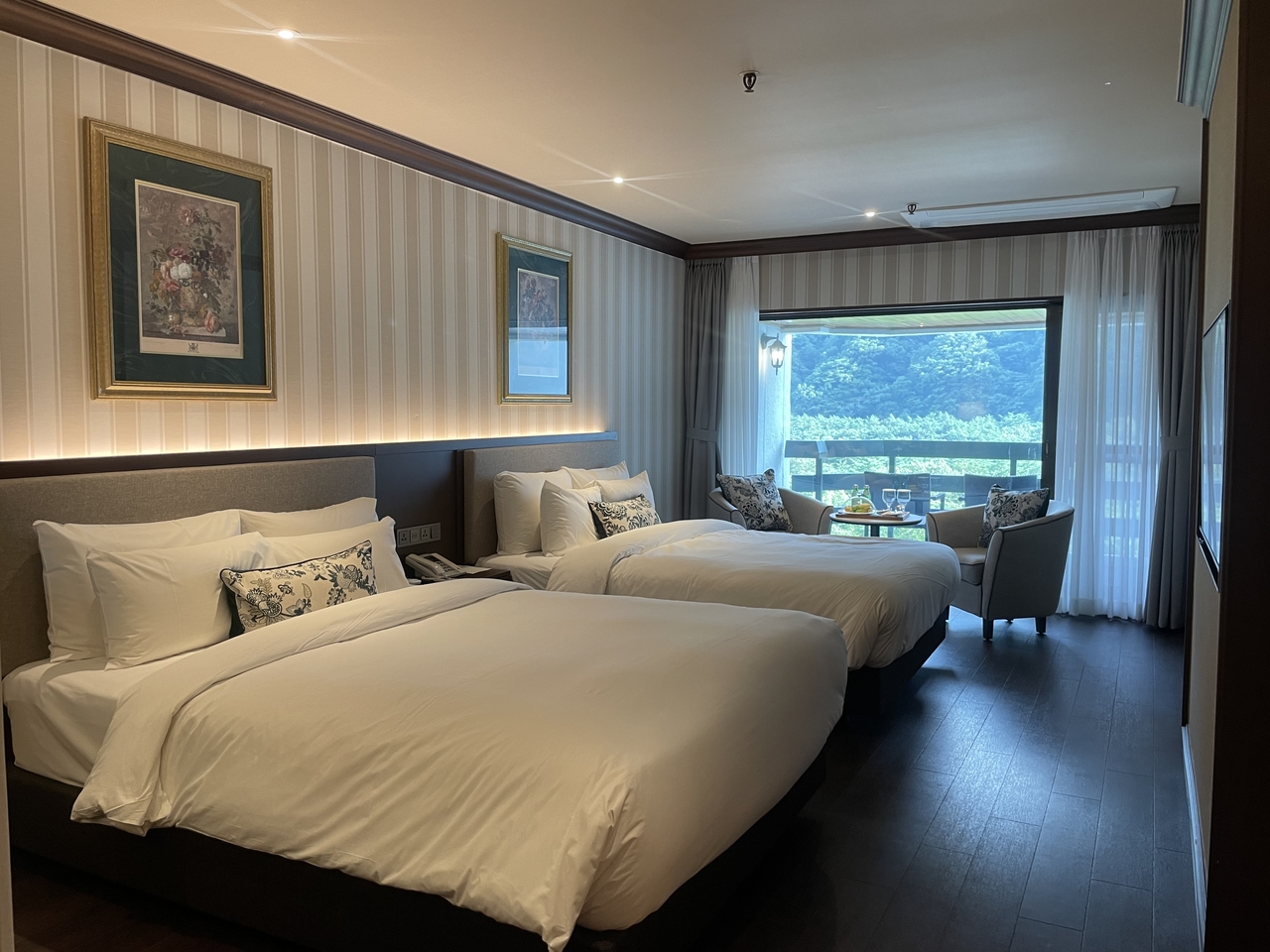
The hotel recently unveiled its fully renovated executive rooms furnished under the theme of "British Modern Classic." These 32 rooms — including Family Twin and Twin types — pair antique accents with modern comfort. Many of the rooms offer sweeping views of Gwongeum Fortress, allowing guests to wake up to the splendor of Seorak’s craggy ridgelines.
During autumn, guests can also enjoy a self-serve outdoor barbecue on the terrace, available at 59,900 won per person (for two or more guests). With the sounds of mountain streams and birdsong in the background, the setting makes for a memorable evening under the stars.
Rooms range from approximately 150,000 to 300,000 won per night, depending on the season. As the hotel is the only one of its kind in the immediate vicinity, reservations for stays during the peak foliage season and major holidays like Chuseok are often required months in advance.
Staff fluent in English and other foreign languages are available, making the hotel a convenient base for international travelers exploring one of Korea’s most iconic hiking destinations.
End your trip with ocean air
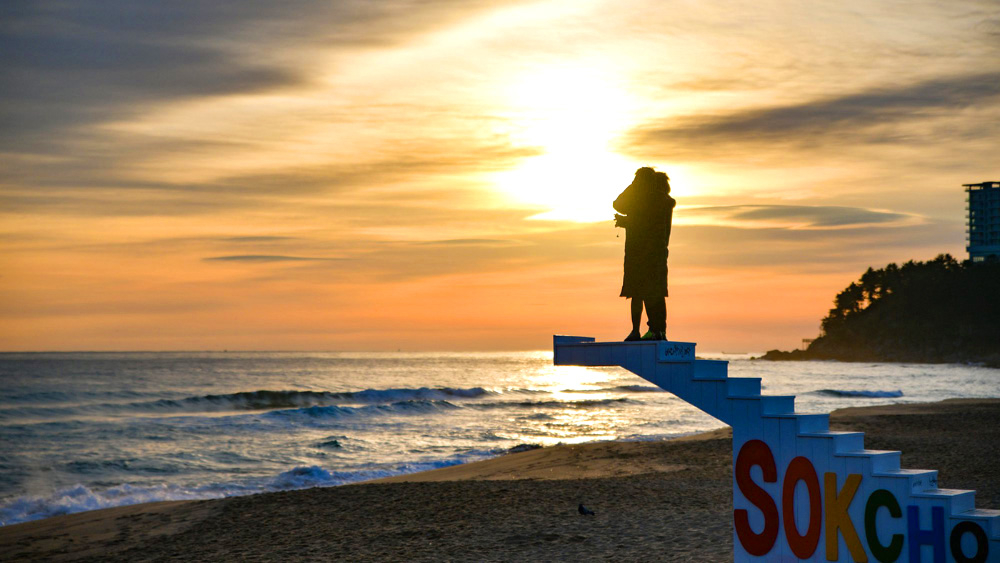
Those with extra time should consider a short 20-minute drive to Sokcho Beach, where clear waters and soft sands await. While the summer season sees large crowds, the beach remains a quiet, scenic spot into the fall, dotted with pine groves, walking trails and photogenic sculptures — including a towering compass and the popular “Heaven’s Stairway” installation.
Whether you're there for hiking or simply to enjoy the changing of the seasons, Seoraksan offers a peaceful retreat — especially for those who beat the crowds and catch autumn just as it begins.
yoohong@heraldcorp.com