From ‘Humanise Wall’ to Kassena traditions, the 5th Seoul Biennale of Architecture and Urbanism gathers global voices to rethink how we can build better cities
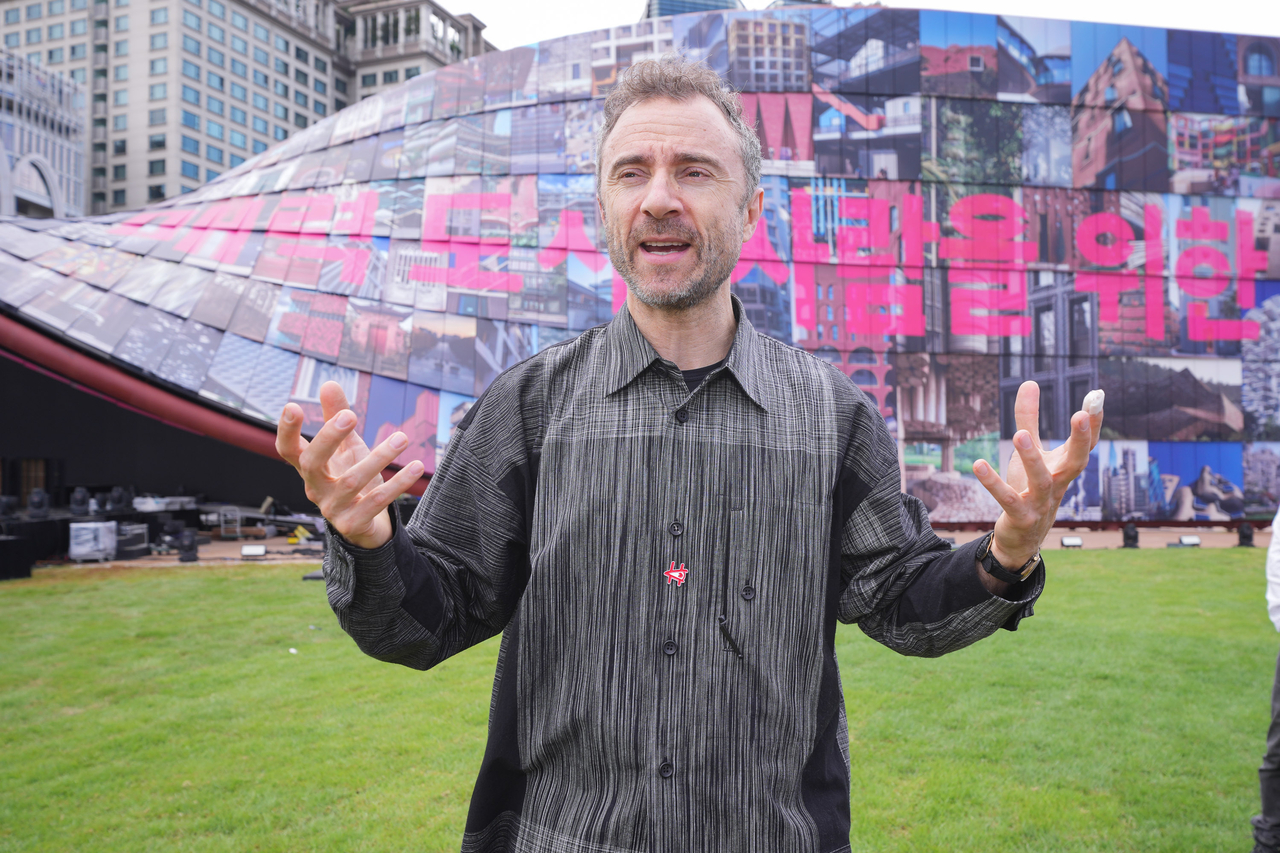
How can a city like Seoul, which developed dramatically over just a few decades, become more human-centered? This question lies at the core of the 5th Seoul Biennale of Architecture and Urbanism that kicks off Friday.
English architect Thomas Heatherwick stood before the press at Songhyeon Green Plaza in Seoul, pointing to the “Humanise Wall.” The installation presents diverse voices that challenge the ways buildings are typically built and what they look like.
“It is a manifesto for the change that needs to happen in cities, which is (asking), 'How do we make the buildings around us radically more human and more engaging for us?” Heatherwick said.

The wall was created by nine creative communities comprising artists, academics, activists and architects. A total of 82 entries were submitted in response to an open call. He likened the blend of ideas to bibimbap, a traditional Korean dish of vegetables, meat and rice that are mixed together before eating.
“Our Hagwon,” part of the "Humanise Wall," reflects on how Korea’s private education culture has transformed urban commercial architecture into homogenized, placeless spaces.
The project reflects on hagwon, private educational institutions that are usually housed alongside other businesses in buildings that are built quickly in sacrifice of identity and community. The exteriors of the buildings are typically covered densely with advertisements, with the interior blocked off by opaque films, disconnecting them from the city.
Another project, titled “Soft Edges: Weaving the Colors of Fields and Home,” reimagines the development of Seoul's outskirts by blending traditional values with contemporary living and moving away from the typical look of apartments that can be found all around the country.
“This may look like a giant magazine — extraordinarily designed to capture people’s eyeballs and make them wonder ‘what is that?" Heatherwick said of the "Humanise Wall."
"How would anybody know if the show was just in the Architecture Urbanism Hall in a busy city?” he said.
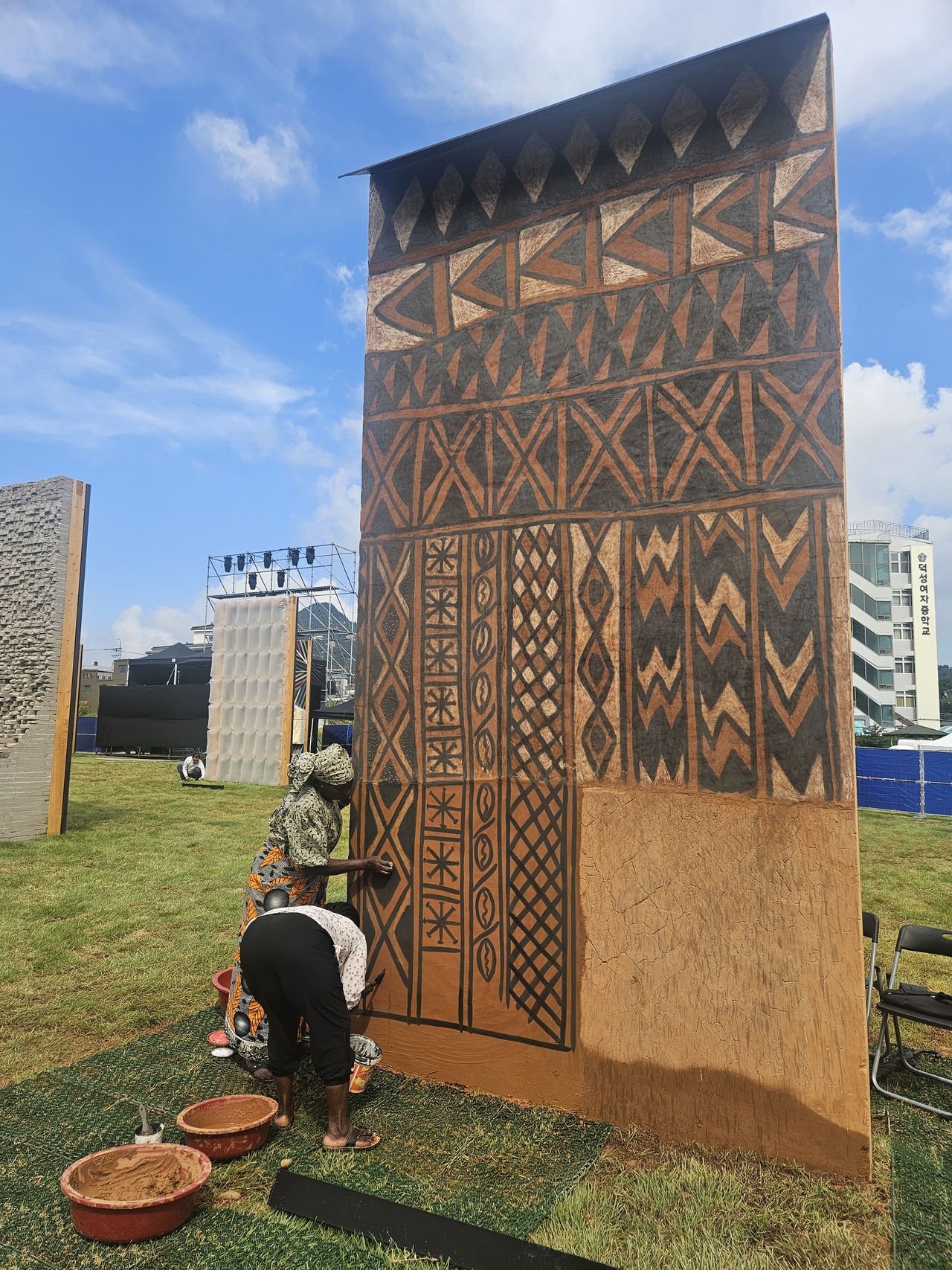
The thematic exhibition continues with “Walls of Public Life,” an area offering different perspectives on urban issues. Twenty-four teams of architects, designers and artisans participated in creating the pavilion.
During the press tour, work was ongoing on one of the walls, named “Handspeak,” by Burkinabe artisans Bapossan Alempoua and Asseta Idogo. The Kassena people from Tiebele, a small town in Burkina Faso, were working with their hands, using clay, to create it.
The wall draws from the Kassena practice of painting and sculpting earthen facades, transforming homes into living canvases that embody memory, identity and collective expression. The walls are redecorated every year after the rainy season.
"My dream is that every one of the designers of these walls is commissioned to do a building in Seoul in the next five years. That would be real success," Heatherwick said.
Along with the thematic exhibition, the biennale includes three satellite exhibitions: "City’s Face: Human Beings Need Human Buildings," "From a Bird’s Eye to the Human Eye" and "Emotionally Yours, Seoul" across Songhyeon Green Plaza and Seoul Hall of Urbanism and Architecture in Seoul.
The fifth edition of Seoul Biennale of Architecture and Urbanism, organized by the Seoul city government with the theme of “Radically More Human," runs until Nov. 18.
yunapark@heraldcorp.com