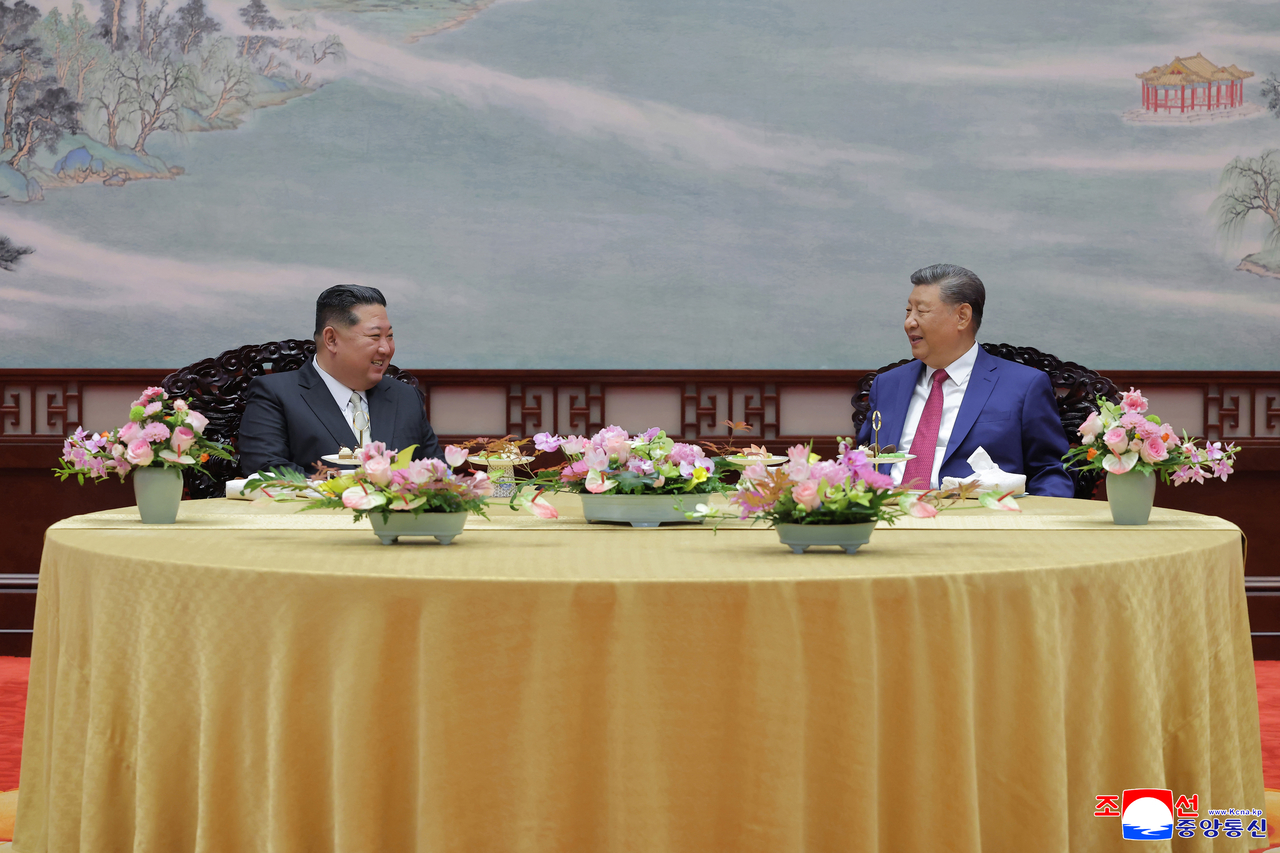
In diplomacy, what is left unsaid can speak louder than what is declared. On Sept. 4, Chinese President Xi Jinping hosted North Korean leader Kim Jong-un in Beijing for their first summit in six years, a spectacle at once familiar and revealing: Warm words of friendship, pledges of economic cooperation and paeans to a shared destiny that concealed a more consequential omission.
외교에서는 말하지 않은 것이 때로는 선언보다 더 큰 울림을 낸다. 지난 9월 4일, 시진핑 중국 국가주석은 6년 만에 김정은 북한 국무위원장을 베이징에서 맞이했다. 우정의 언사, 경제 협력 약속, 공동 운명의 찬가가 이어진 이 정상회담은 익숙하면서도 드러내는 바가 많았다. 그러나 그 화려한 수사 속에는 더 중대한 공백이 숨어 있었다.
What was missing was the phrase that had anchored China’s Korean Peninsula policy for three decades: “denuclearization.” It was a calculated signal that Beijing is recalibrating its stance, tacitly accepting North Korea’s nuclear status in the service of its broader contest with the United States.
빠져 있었던 단어는 중국의 한반도 정책을 30년간 지탱해온 표현, 바로 “비핵화”였다. 이는 베이징이 입장을 조정하고 있음을 보여주는 의도적 신호였다. 더 넓은 대미 경쟁 구도 속에서 북한의 핵 보유를 사실상 용인하겠다는 암시였다.
For years, Chinese leaders from Jiang Zemin to Xi himself insisted that denuclearization was non-negotiable. Even at the height of tensions during North Korea’s nuclear tests, Beijing dutifully repeated the formula: peace, stability and denuclearization. This time Xi settled for “peace and stability.”
장쩌민에서 시진핑에 이르기까지 중국 지도자들은 오랫동안 비핵화는 협상의 대상이 될 수 없다고 못 박아왔다. 북한이 핵실험으로 긴장을 고조시켰을 때조차 베이징은 “평화, 안정, 비핵화”라는 공식 문구를 빠짐없이 반복했다. 그러나 이번에는 시 주석의 입에서 “평화와 안정”만이 언급됐다.
The omission matters. By discarding the language of denuclearization, China has all but admitted that its priority is no longer curbing Pyongyang’s weapons, but harnessing them.
이 누락은 중대한 의미를 지닌다. 중국은 비핵화라는 표현을 버림으로써 더 이상 북한의 무기 억제를 우선시하지 않고, 오히려 그것을 전략적으로 활용하려 한다는 점을 사실상 인정한 것이다.
The logic is brutal. To Beijing, the utility of a nuclear-armed North Korea as a strategic buffer now outweighs the long-term risks. As US alliances with South Korea and Japan deepen, China has concluded that bolstering its flank is worth the price of proliferation. The timing underscored the point. The summit came a day after Kim stood alongside Xi and Vladimir Putin at a military parade on Tiananmen Square. The tableau was designed to recall 1950s camaraderie and to broadcast a new alignment.
논리는 냉혹하다. 베이징에겐 장기적 위험보다 핵을 보유한 북한이 전략적 완충지대로서 가지는 효용이 더 크다. 한·미·일 동맹이 강화되는 상황에서 중국은 핵 확산이라는 대가를 치르더라도 측면을 보강하는 것이 필요하다고 결론지은 것이다. 시점 또한 이를 뒷받침한다. 정상회담은 김 위원장이 시진핑, 블라디미르 푸틴과 함께 천안문 광장의 열병식에 모습을 드러낸 바로 다음 날 열렸다. 1950년대의 동맹을 환기하고 새로운 진영을 과시하려는 장면 연출이었다.
The implications are alarming. North Korea can now claim validation as a nuclear power, emboldened to continue missile tests, satellite launches and cross-border provocations under the protective cover of its patrons. The omission of denuclearization from the joint statements is not mere semantics; it is a green light. For Pyongyang, this is vindication of its mantra that nuclear weapons are the “prestige and honor” of the state, never to be abandoned. For Washington, Seoul and Tokyo, it marks the hardening of opposing blocs, deepening a new Cold War in Northeast Asia.
그 파장은 심각하다. 북한은 이제 스스로를 핵보유국으로 공인받았다고 주장할 수 있으며, 후원국의 보호 아래 미사일 시험, 위성 발사, 국지 도발을 더욱 대담하게 이어갈 수 있다. 공동성명에서 비핵화가 빠진 것은 단순한 문구의 문제가 아니다. 이는 사실상 ‘청신호’다. 북한에겐 핵무기가 국가의 “위신과 명예”라는 기존 주장의 정당화이고, 미국·한국·일본에는 진영의 대립이 굳어지며 동북아의 신냉전이 심화되고 있음을 의미한다.
diplomacy: 외교
familiar: 익숙한
friendship: 우정
destiny: 운명
conceal: 숨기다
denuclearization: 비핵화
stance: 입장
tension: 긴장
stability: 안정
peace: 평화
omission: 누락
admit: 인정하다
weapon: 무기
logic: 논리
proliferation: 확산
claim: 주장하다
patron: 후원자
prestige: 위신
khnews@heraldcorp.com