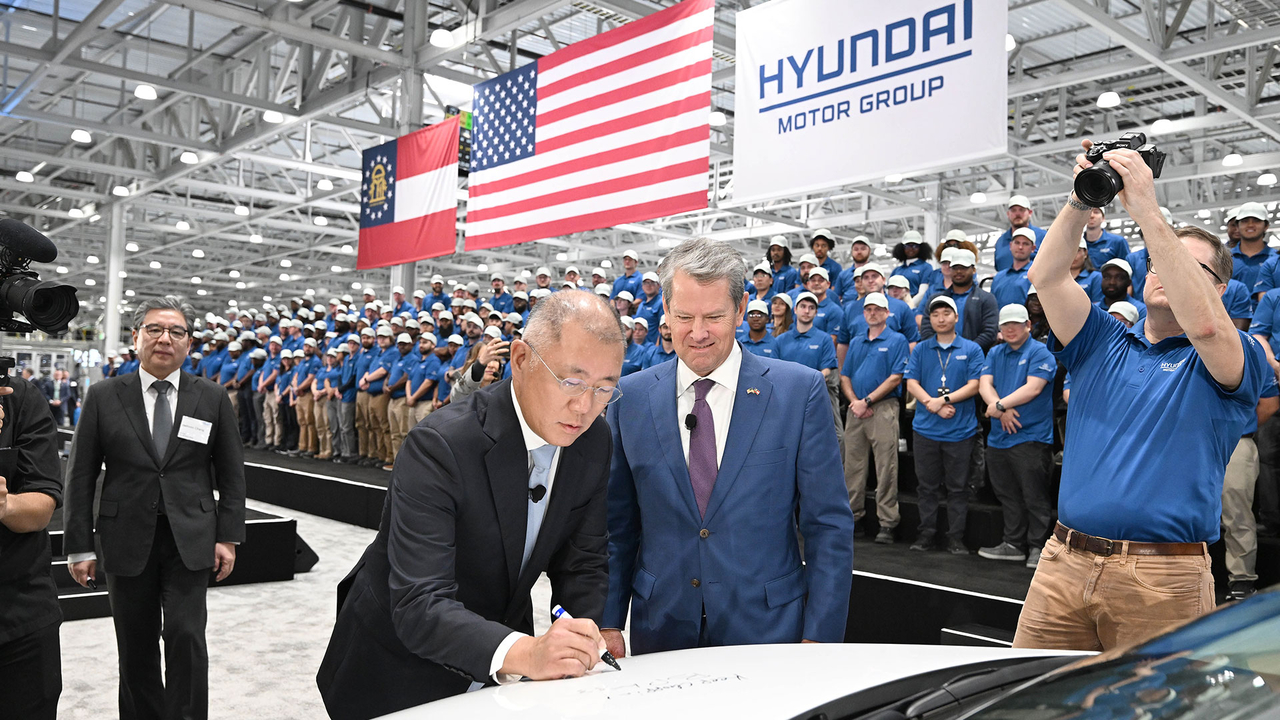
Georgia Gov. Brian Kemp is seeking a meeting with Hyundai Motor executives in Seoul following a US immigration raid that detained more than 300 Korean workers at the company’s joint battery plant in Georgia.
According to the Atlanta Journal-Constitution and other news outlets, Kemp’s office sent emails on Sept. 8 — just four days after the unprecedented immigration raid — stating that he wishes to meet Hyundai officials during an upcoming trip to Korea and underscoring Hyundai’s importance as a key investor and partner for Georgia. The visit will be Kemp’s third to Korea.
The governor’s office noted that his planned visit to Korea had been under discussion prior to the high-profile raid and was not a direct response to the detentions.
Though details remain undisclosed, Kemp is slated to attend a Southern governors’ conference in Japan on Oct. 28-29, prompting speculation his Korea visit may take place around then.
The Georgia delegation also reportedly includes Trip Tollison, president and CEO of the Savannah Economic Development Authority, who had highlighted the detained workers’ timely return to Korea.
In an interview with the Savannah Morning News on Wednesday, Tollison said, “The frustration, and I feel it too, is that there's no other entity in the world that has this proprietary technology that has to be installed by certain individuals. We are relying on South Korea.”
On Tuesday, Gov. Kemp framed the visa issue as extending beyond Hyundai and sought to play down the raid’s impact, noting, “We’ve had good conversations with companies that are here. … They also understand the visa issue. So at the end of the day, I don’t think that’s going to affect us.”
Although the governor minimized the aftermath of the incident, industry insiders say the Georgia state government has a lot at stake during his upcoming visit.
“Gov. Kemp will likely underscore Georgia’s support for Hyundai’s investments in local communities,” said Kim Pil-su, a car engineering professor at Daelim University. “As the visa issue at the Georgia plant is still unresolved, there should also be discussions on state-level measures to prevent similar incidents from happening again.”
Hyundai Motor Group’s Seoul headquarters declined to comment on whether the company executives planned to meet with the governor, citing confidentiality.
At Hyundai Motor Company’s CEO Investor Day in New York on Thursday — the first time the event was held overseas — President and CEO Jose Munoz stressed that foreign specialists, such as those detained during the production line setup phase, should be granted a special visa allowing them to move in and out of the US.
Munoz had previously warned that the raid could delay the battery plant’s opening by up to three months, but at the event, he reaffirmed Hyundai’s $2.7 billion phase-two investment in Georgia, pledging 3,000 jobs.
On Sept. 4, the US Immigration and Customs Enforcement and other agencies conducted a large-scale raid at the construction site of a Hyundai-LG joint battery plant, detaining 475 workers, including 317 Koreans employed by LG Energy Solution and the joint venture company’s partner firms and subcontractors. This was the first known immigration raid at a foreign-run factory site.
A week later, 316 Korean nationals returned home on a chartered flight, while one individual reportedly stayed in the US to pursue legal action.
hyejin2@heraldcorp.com