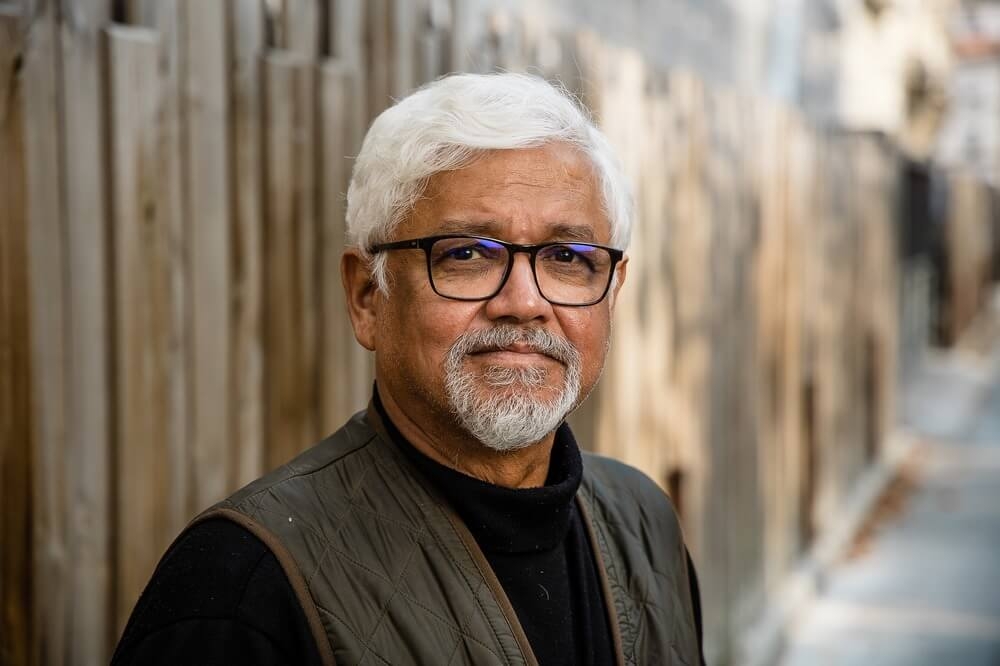
Amitav Ghosh, an acclaimed Indian novelist known for his explorations of colonialism, ecological themes and global histories, is the winner of the 14th Park Kyongni Award.
The award committee said it recognized Ghosh for “broadening the horizons of postcolonial and ecological literature, and for amplifying the voices of marginalized subjects, including nature itself, with seriousness and depth.”
Born in Kolkata, India, in 1956, Ghosh made his literary debut in 1986 with the Prix Medicis-winning "The Circle of Reason."
His writing spans from sweeping historical novels to essays that probe urgent global issues. His works include "The Shadow Lines" (1988), "The Calcutta Chromosome" (1996), "The Glass Palace (2000)" and the Ibis Trilogy — the Booker-shortlisted "Sea of Poppies," "River of Smoke" and "Flood of Fire" — set against the backdrop of the 1830s Opium Wars.
In 2018, he received the Jnanpith Award, India’s oldest and highest literary honor.
He is also the author of "The Great Derangement," a nonfiction work addressing climate change.
The selection process for this year's Park Kyongni Award began with 113 novelists. After four rounds of preliminary review, 29 candidates were nominated, later narrowed to three finalists: Egyptian writer Salwa Bakr, Irish author John Banville and Ghosh.
The Park Kyongni Award was established in 2011 to honor the literary legacy of novelist Pak Kyong-ni (1926-2008), renowned for her epic saga “Toji (The Land).” The 16-volume series tells the story of five generations of a wealthy Korean family from South Gyeongsang Province, from the end of the Joseon era (1392-1910) to Japanese occupation and Korean independence. Pak wrote the story from 1969 to 1994.
The literary award aims to "recognize novelists worldwide who have significantly influenced the course of literature while preserving its intrinsic value," according to the Toji Cultural Foundation.
The award ceremony will take place on Oct. 23. Ghosh will receive a certificate of merit, a plaque and a prize of 100 million won.
Events surrounding the award will include a talk with the laureate in Wonju, Gangwon Province, where Pak spent the last decade of her life, on Oct. 25; a lecture at Seoul National University on Oct. 27 and a conversation hosted by the Daesan Foundation at the Gwanghwamun Kyobo Building on Oct. 28.
hwangdh@heraldcorp.com