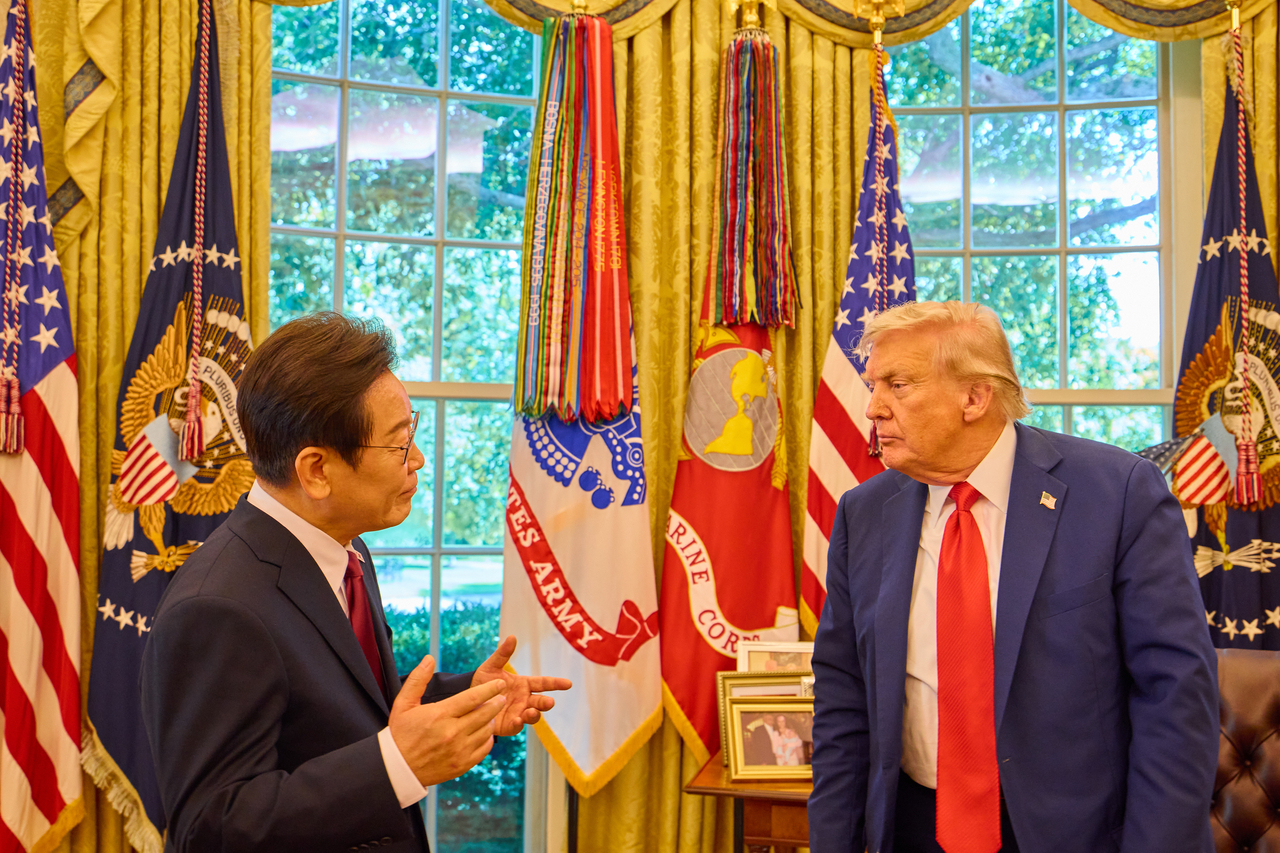
Only hours after South Korea and the United States wrapped up what looked like a smooth summit on Monday, US President Donald Trump delivered a jolt reverberating through Seoul’s policy circles.
월요일 한·미 정상회담을 순조롭게 마친 지 불과 몇 시간 만에, 도널드 트럼프 미국 대통령이 던진 발언은 서울 정책권을 뒤흔들었다.
On his social media platform, Trump threatened “substantial” tariffs and export restrictions against any country that dares to regulate American technology giants. He did not list targets, but the implication was clear: Europe first, and possibly South Korea next.
트럼프 대통령은 자신의 소셜미디어 플랫폼에서 미국 빅테크 기업을 규제하려는 어떤 국가든 ‘대폭적인’ 관세와 수출 제한에 직면할 것이라고 위협했다. 특정 국가를 지목하지는 않았지만, 메시지는 분명했다. 첫 번째는 유럽, 그리고 그다음은 한국일 수 있다는 뜻이었다.
At first glance, it may seem to be another bout of Trumpian brinkmanship. But the stakes are no longer just trade balances. The axis of the global economy is tilting toward artificial intelligence and digital platforms. Whoever sets the rules for Big Tech, from content moderation to data governance, will not only command market power, but also wield political leverage. In this arena, Trump is signaling that regulation itself may be treated as a trade offense.
언뜻 보기에는 또 하나의 ‘트럼프식 벼랑끝 전술’처럼 보일 수 있다. 그러나 이번 쟁점은 단순히 무역수지 문제가 아니다. 세계 경제의 축은 인공지능과 디지털 플랫폼으로 기울고 있다. 콘텐츠 규제에서 데이터 거버넌스에 이르는 빅테크의 규칙을 정하는 쪽이 시장 지배력뿐 아니라 정치적 영향력도 손에 쥔다. 트럼프 대통령은 이 영역에서 규제 자체를 무역 위반 행위로 간주할 수 있음을 시사한 셈이다.
This is no idle warning. Europe has already enacted the Digital Markets Act and Digital Services Act, forcing companies such as Google, Apple and Meta to open their platforms, curb anticompetitive behavior and pay hefty fines if they fail to follow the rules. In April, Brussels imposed penalties on Meta and Apple. Britain has its Digital Markets, Competition and Consumers Act; Japan requires algorithm transparency. Across advanced economies, the consensus is that Big Tech’s dominance must be restrained.
이는 단순한 경고가 아니다. 유럽은 이미 디지털시장법(DMA)과 디지털서비스법(DSA)을 제정해 구글, 애플, 메타와 같은 기업들이 플랫폼을 개방하고 반경쟁적 행위를 억제하며 규정을 따르지 않을 경우 막대한 벌금을 물도록 하고 있다. 브뤼셀은 지난 4월 메타와 애플에 실제로 제재를 가했다. 영국은 ‘디지털시장·경쟁·소비자법’을 도입했고, 일본은 알고리즘 투명성을 요구한다. 주요 선진국 전반에서 빅테크의 지배력을 억제해야 한다는 공감대가 형성된 것이다.
South Korea is not immune from the same concerns. American platforms dominate search, app stores, social media and streaming, shaping Korean consumer habits while squeezing domestic challengers. That has spurred efforts to legislate an “online platform law,” impose network usage fees on heavy data services like YouTube and Netflix and restrict the export of high-resolution map data.
한국도 이러한 우려에서 자유롭지 않다. 검색, 앱스토어, 소셜미디어, 스트리밍 등 대부분의 분야에서 미국 플랫폼이 장악하며 한국 소비자의 생활 습관을 바꿔놓았고 국내 기업들은 압박받고 있다. 이에 따라 한국에서는 ‘온라인플랫폼법’ 제정, 유튜브·넷플릭스 같은 대용량 데이터 서비스에 대한 망 사용료 부과, 고해상도 지도 데이터의 해외 반출 제한 등의 움직임이 추진되고 있다.
Washington, however, sees these moves not as legitimate regulation, but as “nontariff digital barriers.” Earlier this year, the US Trade Representative flagged them in its national trade barriers report. Trump has now escalated that grievance into a threat of retaliation.
하지만 워싱턴은 이러한 조치를 정당한 규제가 아니라 ‘비관세 디지털 장벽’으로 본다. 미 무역대표부는 올해 초 발표한 국가별 무역장벽 보고서에서 이미 이를 문제 삼았다. 트럼프 대통령은 이번에 그 불만을 보복 위협으로 끌어올린 것이다.
wrap up: 마무리 짓다, 마치다
threaten: 위협하다
restriction: 제한
regulate: 규제하다
axis: 축
tilt: 기울다
rule: 규칙
hefty: 막대한
require: 요구하다
transparency: 투명성
dominance: 지배력
concern: 우려
search: 검색
habit: 습관
domestic: 국내의
legitimate: 정당한
barrier: 장벽
retaliation: 보복
khnews@heraldcorp.com