The Halk Maslakhaty (People’s Council) of Turkmenistan is the highest representative body of people’s power, created in line with the country’s historical tradition of resolving important national issues through broad public representation and national forums. It derives its status and powers from the Constitutional Law on the Halk Maslakhaty of Turkmenistan.
The People’s Council considers and approves proposals on the constitution and Constitutional Laws; sets the main directions of domestic and foreign policy; adopts programs and laws for political, economic, social, and cultural development; hears the President’s annual address; addresses issues of peace and security; and exercises legislative initiative.
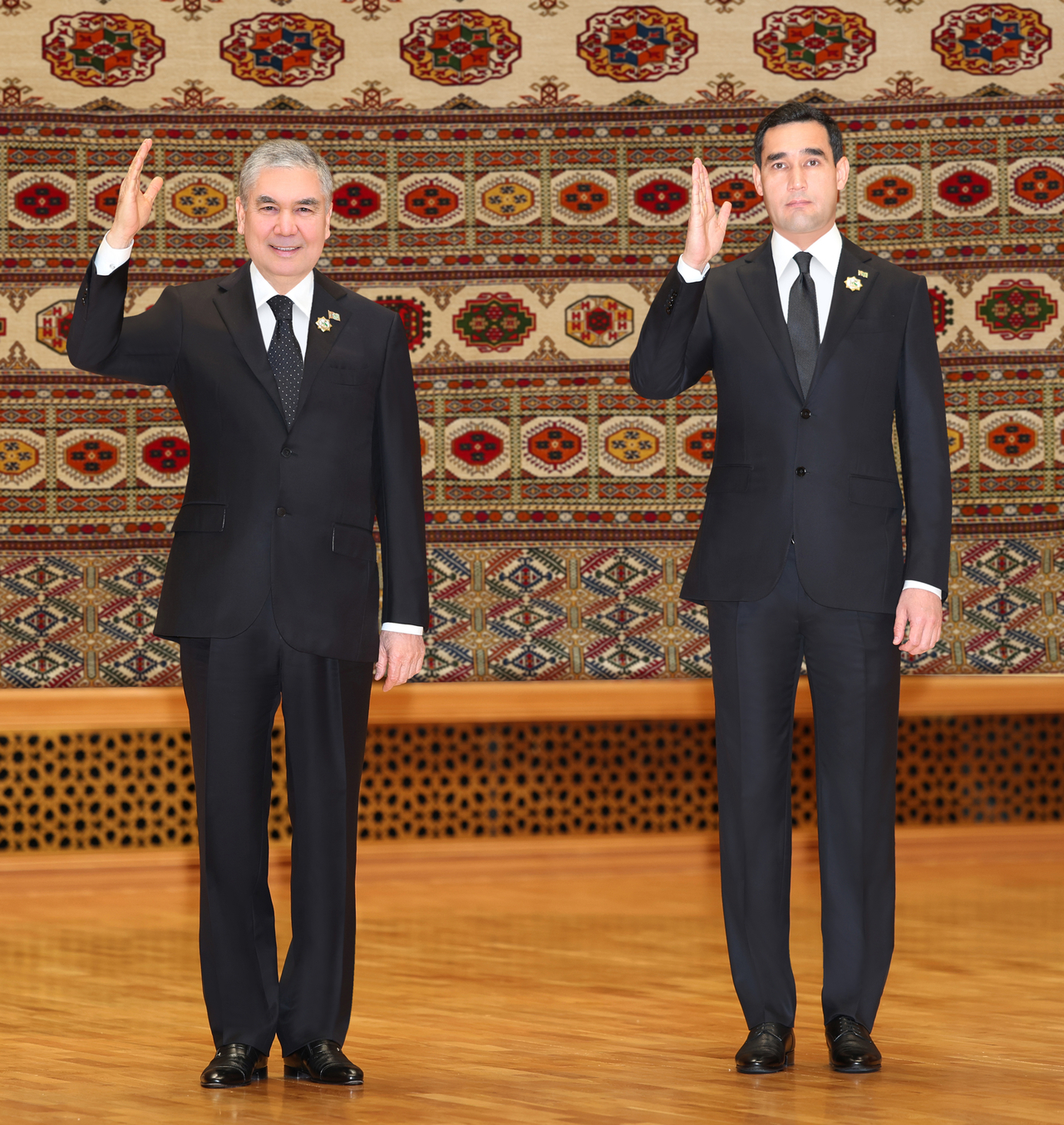
Under Article 3 of the Constitutional Law, the chairman is appointed by the president, and at present, the national leader of the Turkmen people, Gurbanguly Berdimuhamedov, serves in this position.
The council’s activity is rooted in the people-centered principle “Dowlet adam ucindir!” (The State is for the People!), as well as the national maxim frequently cited by the leadership: “The motherland is the motherland only with its people; the state is the state only with its people.”
A recent meeting of the Presidium of the People’s Council reaffirmed these principles. Under the chairmanship of Gurbanguly Berdimuhamedov, members of the presidium, along with the chairperson of the Mejlis (Parliament), deputy-chairmen of the cabinet of ministers, heads of political parties, public organizations, and representatives of the mass media, gathered to discuss key national goals. One of the central issues was preparation for the annual meeting of the People’s Council, scheduled for Sept. 19, which is expected to summarize achievements and milestones and set new tasks in line with the vision of the “Revival of the New Era of the Powerful State.”
The council reviewed measures to strengthen preventive diplomacy and sustainable development, as well as the need for active parliamentary diplomacy by the Mejlis (Parliament), working in coordination with ministries, political parties and public organizations to advance Turkmenistan’s peaceful and humane policies both at home and abroad.
Reports on economic and social policy noted that in the first half of 2025, Turkmenistan achieved gross domestic product growth of 6.3 percent, supported by steady investment expansion, particularly in the industrial sector, which drives diversification and innovative development. Wages and salaries continue to increase annually by 10 percent, reflecting improvements in living standards and earning positive assessments from international financial institutions and rating agencies.
The Council discussed ongoing modernization in the agrarian sector — including grain and cotton production — as well as the development of animal husbandry, sericulture, horticulture and viticulture, creation of several new administrative territories under the Program of the President of Turkmenistan for Socio-Economic Development 2022–2028 and the National Program for Transforming Social Conditions in Rural Areas until 2028.
The meeting highlighted the rapid construction of new cities and villages, including the second stage of Arkadag City, which demonstrates the country’s economic, financial and investment potential. Preparations for the 34th anniversary of Independence and the 30th anniversary of Neutrality were also reviewed, including housing upgrades, utilities modernization, urban greening and beautification, and readiness to host national festivities and international guests.
Gurbanguly Berdimuhamedov set out cross-cutting priorities: to safeguard macroeconomic stability and the financial system; prioritize investment in new manufacturing, digital systems and high technologies; strengthen the private sector; generate sector-specific proposals across ICT, education, health care, sports, industry and agriculture; and maintain a people-centered approach to improving daily living conditions and ensuring a comfortable environment for every citizen.
The Presidium underscored how Turkmenistan’s national planning aligns with its international initiatives to foster peace and trust. As the chairman stressed, “The neutrality of Turkmenistan is not only the heritage of our people, but also an asset of the entire world community.” The leadership reiterated its commitment to the policy of “open doors,” constructive engagement, and initiatives aligned with Sustainable Development Goals and preventive diplomacy. In this context, preparations for the Global Forum of Peace and Trust on Dec. 12 were discussed, with directives for high-quality hospitality and comprehensive media support.
By combining historical democratic traditions with modern legal frameworks, the meeting formalized the road map for the September session, strengthened the legal architecture of neutrality, peace and trust, and directed coordinated action to deliver tangible improvements in governance, infrastructure, agriculture, urban development and social welfare.
Closing the meeting, Chairman Gurbanguly Berdimuhamedov wished participants success and reaffirmed the guiding slogan of Turkmenistan’s statecraft, “Motherland is the motherland only with its people; the state is the state only with its people.”
Begench Durdyyev is the ambassador of Turkmenistan to the Republic of Korea. The views expressed are the writer’s own. — Ed.
sanjaykumar@heraldcorp.com