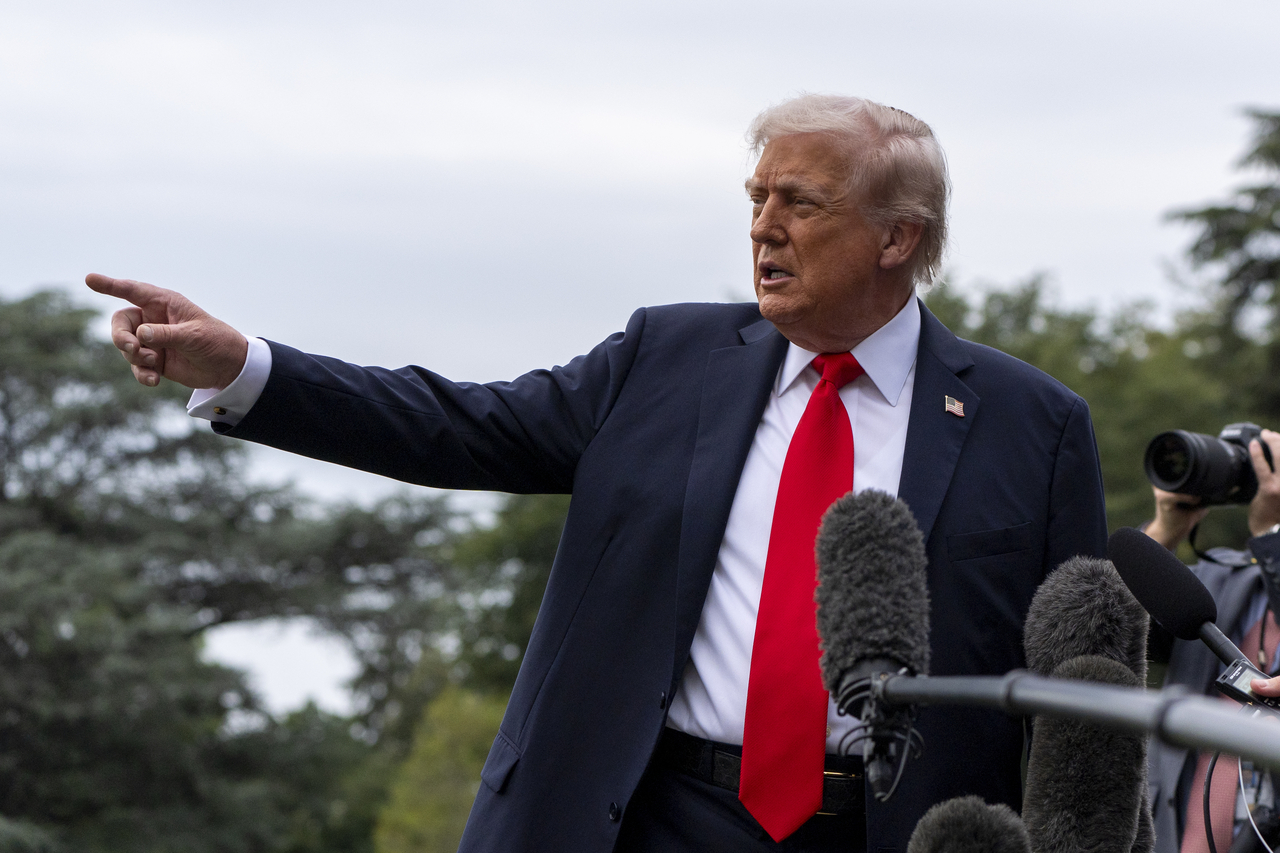
US President Donald Trump said Tuesday that his administration could impose higher tariffs on semiconductors and pharmaceuticals than the 25 percent duty on automobile imports, noting that there is a "bigger margin" that chipmaking and pharmaceutical firms receive.
Trump made the remarks during a press availability, responding to a reporter's question about concerns that his administration's "compromise" to lower auto tariffs on South Korea, Japan and the European Union to 15 percent could have an impact on American automakers.
"Well, I haven't compromised anything. Where did I compromise?," Trump said.
"They paid nothing. Now, they are paying 15 percent, and some things can pay more. Like ... chips could pay more. Pharmaceuticals could pay more. There is a bigger margin," he added.
Last month, the president said that his administration will impose a tariff of approximately 100 percent on semiconductors, and that it will put "small" tariffs on pharmaceutical imports initially, and then raise them to 150 percent in a year and to 250 percent later.
Trump has been seeking to impose sectoral tariffs on semiconductors and pharmaceuticals under Section 232 of the Trade Expansion Act of 1962 -- a law that gives the president authority to adjust imports into the US when he determines they threaten to impair national security.
Noting the pending Supreme Court case on the fate of his administration's global tariffs, Trump reiterated the importance of tariffs.
"If we win the Supreme Court case, which is the finalization of tariffs, we will be by far the richest country anywhere in the world, and we will be able to help our people more and we'll be able to help other countries when we want to," he said.
Trump has been using tariffs as his key policy tool to increase federal revenue, bring in foreign investments, reduce America's trade deficits and bolster domestic manufacturing. (Yonhap)










