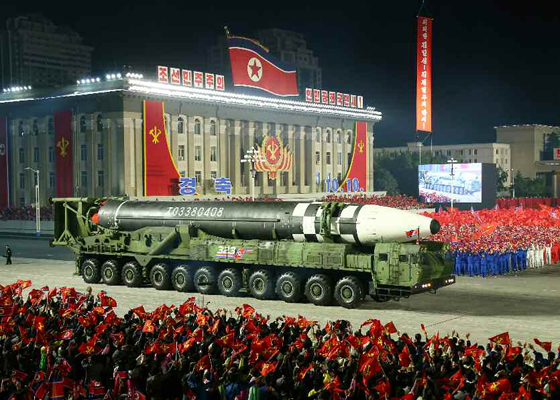
The International Atomic Energy Agency’s latest report this week leaves little room for comfort. It points to continuing construction and activity at Yongbyon, suggesting that North Korea is not only maintaining but possibly expanding its capacity to produce fissile material.
국제원자력기구(IAEA)가 이번 주 발표한 최신 보고서는 안심할 여지를 거의 남기지 않았다. 이 보고서는 영변에서 계속되는 건설과 활동을 지적하며, 북한이 핵분열성 물질 생산 능력을 유지할 뿐 아니라 확대하고 있을 가능성을 시사했다.
Inspectors have been barred for more than a decade, yet satellite imagery and seismic readings reveal a disquieting truth. Even without declared tests, facilities are active, shafts at Punggye-ri are preserved and reprocessing remains a credible option. The implication is unavoidable: Pyongyang is committed to enlarging its nuclear arsenal, regardless of outside pressure or inducement.
사찰단의 접근은 10년 넘게 차단되어 왔지만, 위성 영상과 지진파 자료는 불편한 진실을 드러냈다. 공식 핵실험이 없더라도 시설은 가동 중이며, 풍계리 갱도는 보존되어 있고, 재처리 역시 여전히 실행 가능한 선택지로 남아 있다. 결론은 명확하다. 북한은 외부 압박이나 유인책에도 아랑곳하지 않고 핵무기 증강에 매달리고 있다는 것이다.
While Pyongyang has raised the stakes, Seoul has lowered the volume. President Lee Jae Myung has silenced the loudspeakers along the Demilitarized Zone and repeated his belief that dialogue must not be abandoned. The policy carries echoes of past engagement strategies — restraint today in hopes of reciprocity tomorrow. Yet the IAEA’s findings cast doubt on whether such patience will be rewarded, leaving Seoul to play the straight man in Pyongyang’s nuclear theater.
북한이 위협 수위를 높이는 동안, 서울은 목소리를 낮추고 있다. 이재명 대통령은 비무장지대의 대북 확성기를 꺼버렸고, 대화의 끈을 놓아서는 안 된다고 거듭 강조했다. 과거의 대북 포용 전략을 연상시키는 접근이다. 오늘의 자제를 내일의 호응으로 돌려받겠다는 기대다. 그러나 IAEA의 보고서는 이런 인내가 결실을 맺을 수 있을지에 의문을 던지며, 결국 서울이 북한의 핵무기 연극에서 ‘순진한 상대역’을 맡고 있음을 드러낸다.
The skepticism has only deepened with North Korea’s own rhetoric. During his on-site inspection of a naval destroyer test, Kim Jong-un blasted ongoing US-South Korea drills as a deliberate bid to “ignite a war,” according to Pyongyang’s state media Tuesday.
회의론은 북한 스스로의 언행으로 더 깊어졌다. 화요일 북한 관영매체에 따르면, 김정은 국무위원장은 이지스 구축함 시험 현장을 시찰하며, 한·미 연합훈련을 “전쟁을 일으키려는 고의적 책동”이라고 강하게 비난했다.
His sister, Kim Yo-jong, went further. In a statement Wednesday, she dismissed Lee’s gestures as “a fancy and a pipe dream,” adding that Seoul “cannot be a diplomatic partner” of the North.
여기에 김정은의 여동생 김여정 노동당 부부장은 한 발 더 나아갔다. 그는 수요일 담화에서 이 대통령의 제스처를 “허황된 망상”이라 치부하며, 남측은 “외교적 협상 파트너가 될 수 없다”고 덧붙였다.
In response, the presidential office expressed “regret,” insisting its moves are aimed at stability for both Koreas. So far, the exchange is a dialogue of the deaf — one side speaking the language of de-escalation, the other of disdain.
이에 대해 대통령실은 “유감”을 표하며, 정부의 조치는 남북 모두의 안정을 위한 것이라고 강조했다. 그러나 지금까지의 공방은 일방적 독백에 가깝다. 한쪽은 긴장 완화의 언어를 말하고, 다른 쪽은 경멸의 언어를 내뱉고 있다.
Kim Yo-jong’s choice of words deserves attention. For Pyongyang, ridiculing Seoul is not simply a rhetorical flourish; it signals confidence that the South is constrained by its own caution, and that unilateral moves will be pocketed rather than reciprocated. The regime thrives on asymmetry: one side makes conciliatory gestures, the other doubles down on threats. This imbalance has long been the essence of North Korea’s statecraft.
김여정의 발언은 주목할 만하다. 평양의 대남 조롱은 단순한 수사적 장식이 아니다. 그것은 남측이 스스로의 신중함에 묶여 있으며, 일방적 양보가 호응이 아니라 기정사실로 흡수될 것이라는 자신감을 드러낸다. 북한 정권은 비대칭성에서 힘을 얻는다. 한쪽이 유화 제스처를 취하면, 다른 쪽은 위협을 배가한다. 이런 불균형은 오래전부터 북한 외교술의 본질이었다.
construction: 건설
maintain: 유지하다
expand: 확대하다
produce: 생산하다
option: 선택지
pressure: 압박
dialogue: 대화
restraint: 자제
patience: 인내
rhetoric: 언행
deliberate: 고의적인
diplomatic: 외교적인
regret: 유감, 후회
stability: 안정성
disdain: 경멸
asymmetry: 비대칭성
threat: 위협
imbalance: 불균형
khnews@heraldcorp.com