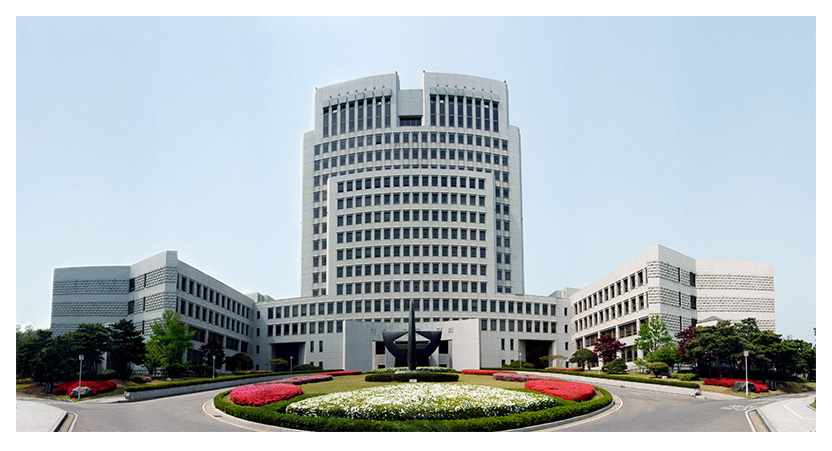
A national meeting of South Korean chief judges took place on Friday afternoon amid concerns over the judicial reform led by the government and the ruling Democratic Party of Korea.
Friday's, the first extraordinary session since one held in 2022 on COVID-19 measures, was to address the Democratic Party’s push for legislation on sweeping changes to the judicial system. The party aims to pass the motion in the National Assembly’s plenary session before the Chuseok holiday in early October.
The ruling party is looking to increase the number of Supreme Court justices, reform the Supreme Court’s nomination process, change the judicial evaluation system, expand public access to lower court rulings and introduce a procedure for scrutinizing search and seizure warrants in advance.
The chief judges will share the views of other judges from their respective courts and deliberate on possible responses. Given the sensitivity of each agenda item, the meeting is expected to continue late into the night.
The Democratic Party of Korea launched a special committee on judicial reform on Aug. 12.
Rep. Jung Chung-rae, chair of the ruling Democratic Party of Korea, said judicial changes were needed because, although the Constitution guarantees every citizen the right to a prompt trial and criminal defendants the right to be tried without undue delay, the constitutional order is not being upheld in people’s real lives.
The Supreme Court of Korea’s Chief Justice Cho Hee-de said, “It would be beneficial to have a thorough public discussion on the fundamental role of the judiciary, the current circumstances linked to judicial personnel and what would ultimately serve the best interests of the people.”
Cheon Dae-yeop, a Supreme Court justice and the chief of its Court Administration Office, reportedly expressed concern on the court's intranet over the party's push to overhaul the judicial system without involving judges.
Cheon said that the Democratic Party’s measures were made without an official opportunity for the judiciary to participate, describing the event as an extraordinary situation where unusual procedures continue despite efforts to correct them.
sj_lee@heraldcorp.com