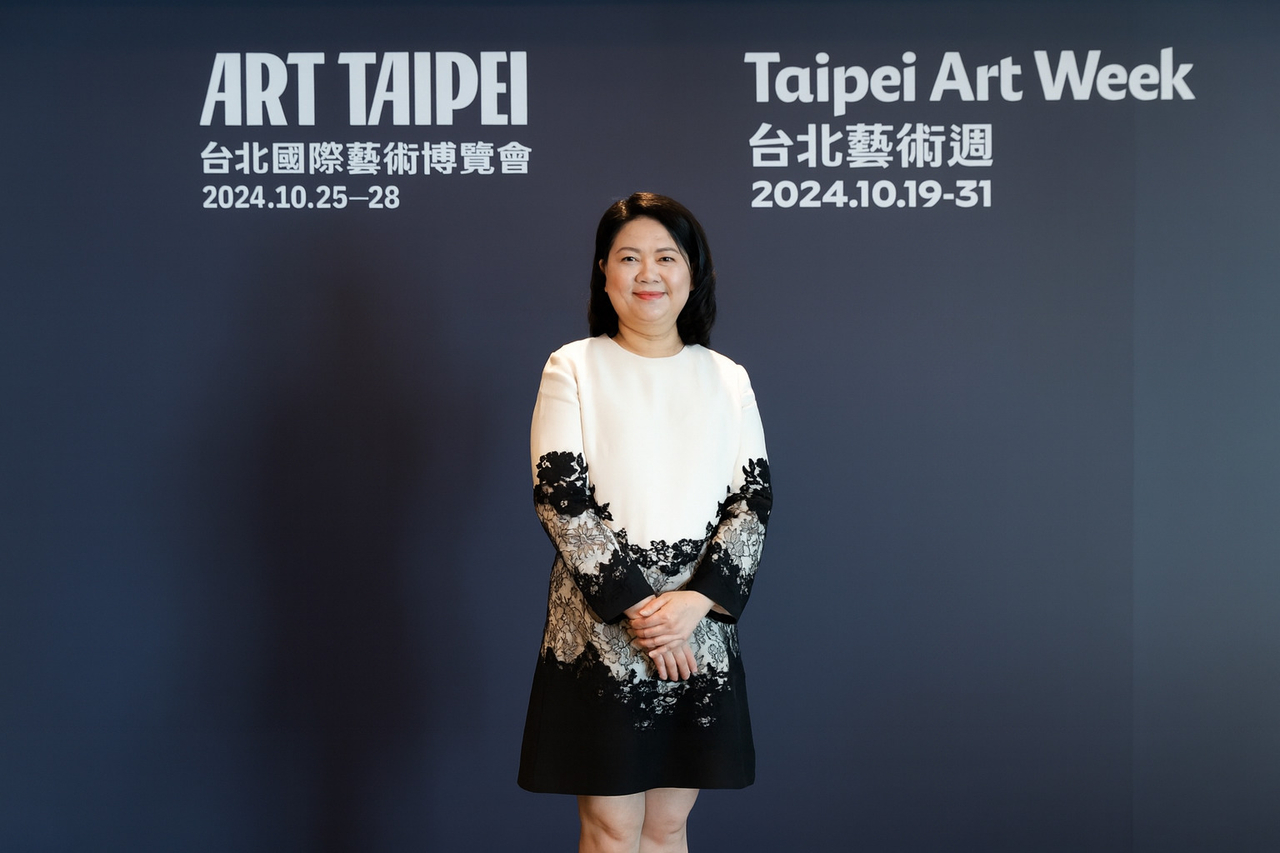
For Claudia Chen, co-founder of Liang Gallery in Taipei, Taiwan, Frieze Seoul 2025 was a chance to showcase Lee Chung-chung’s works, the Taiwanese artist exclusively represented by the gallery for over 10 years.
“I realized there is a lack of platforms showing women artists, so I really wanted to make use of this international platform (Frieze Seoul) to showcase the woman artist, and as a stage for her to connect with Korean and international collectors,” Chen told The Korea Herald on Sept. 4 at the gallery’s booth. It was her second time joining Frieze Seoul.
Born in 1942, Lee mainly creates ink paintings, practicing East-West cross-cultural artistic dialogue in a variety of ways and pursuing the pure essence of art through extreme formal simplification, according to the gallery.
“I want to come back to the fair next year and show younger artists for the next edition,” Chen said, noting that she had sold some of Lee's works at the fair and collectors she met here were mostly from Taiwan, Singapore and Hong Kong.
What she found impressive about the Korean art scene was the government's support she witnessed during Seoul Art Week, which takes place alongside Frieze Seoul and the country's first international art fair, Kiaf Seoul.
Regarding the collaboration between the two major art fairs, she noted that they seem to “have overlapped collectors."
As Chair of the Taiwan Art Gallery Association, she introduced the first-ever Taipei Art Week last year, which ran from Oct. 19 to 31. The move sought to make the Taiwanese art scene more international as another global art platform in Asia.
The art week coincides with Art Taipei, the oldest art fair in the country, which began in 1992.
“In Taiwan, we have a strong and solid base of collectors, and Taiwanese galleries are very receptive to international artists. I have been running a gallery in Taiwan for 30 years and the demographic of buyers today is pretty similar to that of 30 years ago,” she said.
“The Taiwanese art scene has a long history. It started quite early in Asia in the 1980s, which is why we have very stable collectors. But it really takes time to build all those relationships and trust with the local community.
"If you cultivate collectors in Taiwan, they stay very loyal — and that stability is something we can share with the region," Chen said.
yunapark@heraldcorp.com