With KBS’ MOU with Naver, Korean broadcasters continue to balance copyright protection and AI innovation
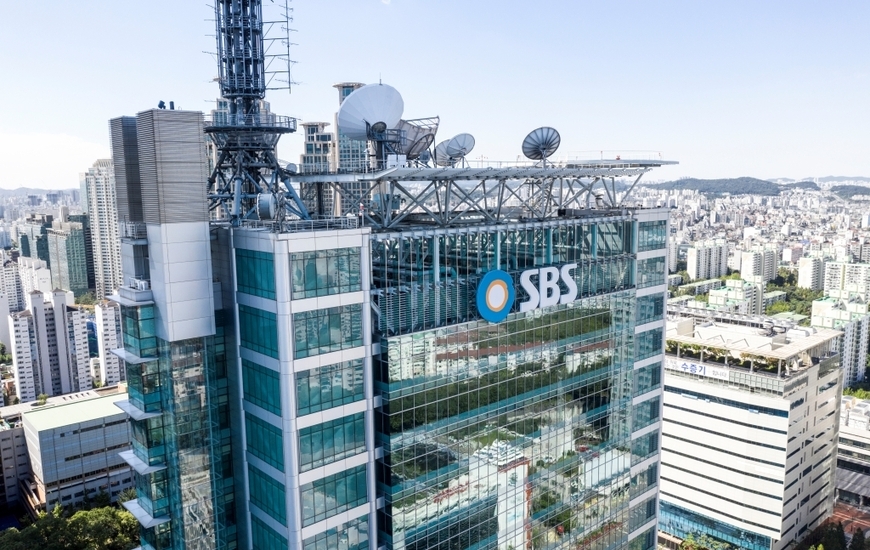
Seoul Broadcasting System has become the first national broadcaster in Korea to roll out a formal fee framework that licenses its news data for artificial intelligence training, amid intensifying copyright battles over such use.
“The fee structure was set by comprehensively considering factors such as the timeliness and volume of the news data, as well as the (AI) company’s size, revenue and net profit. However, we plan to apply a separate, lower rate for public research projects or small and venture (AI) businesses," said a SBS official via a statement.
The official added that AI companies will be able to choose from a variety of payment models, including a flat fee, pay-per-use or revenue-sharing scheme. AI companies wishing to use SBS news content can discuss the details with SBS’ AI Media Initiative Team.
“The fee framework was set by comprehensively considering the total cost of producing news and revenue from news distribution,” SBS further explained.
“The decision to apply a lower price for small and venture businesses reflects our intention to create a virtuous cycle ecosystem between AI companies and media content providers.”
On Sept. 1, SBS launched the AI Media Initiative Team under the direct supervision of the company president. SBS President Bang Moon-shin said in a statement, “This organizational restructuring is aimed at strengthening our future competitiveness as an AI-driven media and content company in response to the AI-centered trend of the times.”
Bang added, “Building AI partnerships is one of SBS’s key management priorities for the second half of the year. We will work closely with industry, academia and research networks to secure new growth drivers.”
The Korea Broadcasters Association echoed SBS' move via the press statement, stating, “News content is intellectual property created with broadcasters’ labor, money and effort, so systems must be established to ensure that copyright protection for news content goes hand in hand with the development of AI technology.”
In July, public broadcaster KBS clinched a partnership with Naver, with the two sides inking a memorandum of understanding. Under the MOU, the tech company will supply its AI technology solutions to KBS. The broadcaster will provide content and educational resources to develop next-gen media workflows powered by generative AI.
Specifically, KBS will use Naver’s MAIU (Media AI Understanding) video-analysis tool to mine archival programming and reimagine it with HyperClova X, Naver’s generative AI. The two companies will also form a joint working group to integrate AI across the content pipeline and explore applications such as AI-generated subtitles, descriptive audio and disaster-response tools.
SBS’ initiative and KBS’ partnership come as Korea’s major broadcasters struggle to find the balance between copyright protection and AI innovation.
In January, KBS, SBS and MBC jointly filed lawsuits against Naver, accusing the tech giant of scraping and using broadcast news footage without permission to train its AI models. The suit alleged violations of copyright and the Unfair Competition Prevention Act by Naver.
KBA, led by the legal and intellectual property teams of the three broadcasters, characterized the litigation as a crucial move to draw legal and ethical lines around AI’s use of journalistic content.
Meanwhile, industry observers note that the lawsuits are less about halting AI entirely and more about ensuring broadcasters have a stake in AI’s potential upside.
“The position of news copyright holders has fundamentally been that there needs to be a more legitimate framework for how their content is used (rather than opposing AI altogether),” said Lee Sung-min, an associate professor in the department of media arts and sciences at Korea National Open University, told The Korea Herald on Aug. 7. Lee also joined the 2024 AI-Era News Copyright Forum, where broadcasters discussed the joint lawsuit.
“SBS also sought a standalone agreement with Naver, but it was unsuccessful. I think the core issue is that the broadcasters are trying to reap benefits from AI's usage of news in its training,” said a source from one of the three major networks.
KBS and MBC have not yet confirmed whether they will follow SBS’ lead and prepare their own AI licensing frameworks for news content.
yoonseo.3348@heraldcorp.com