The Departments of Homeland Security and Commerce are working together to address visa rules and other issues concerning skilled foreign workers, a White House spokesperson said Tuesday, as hundreds of Korean workers have been detained in a recent US immigration crackdown.
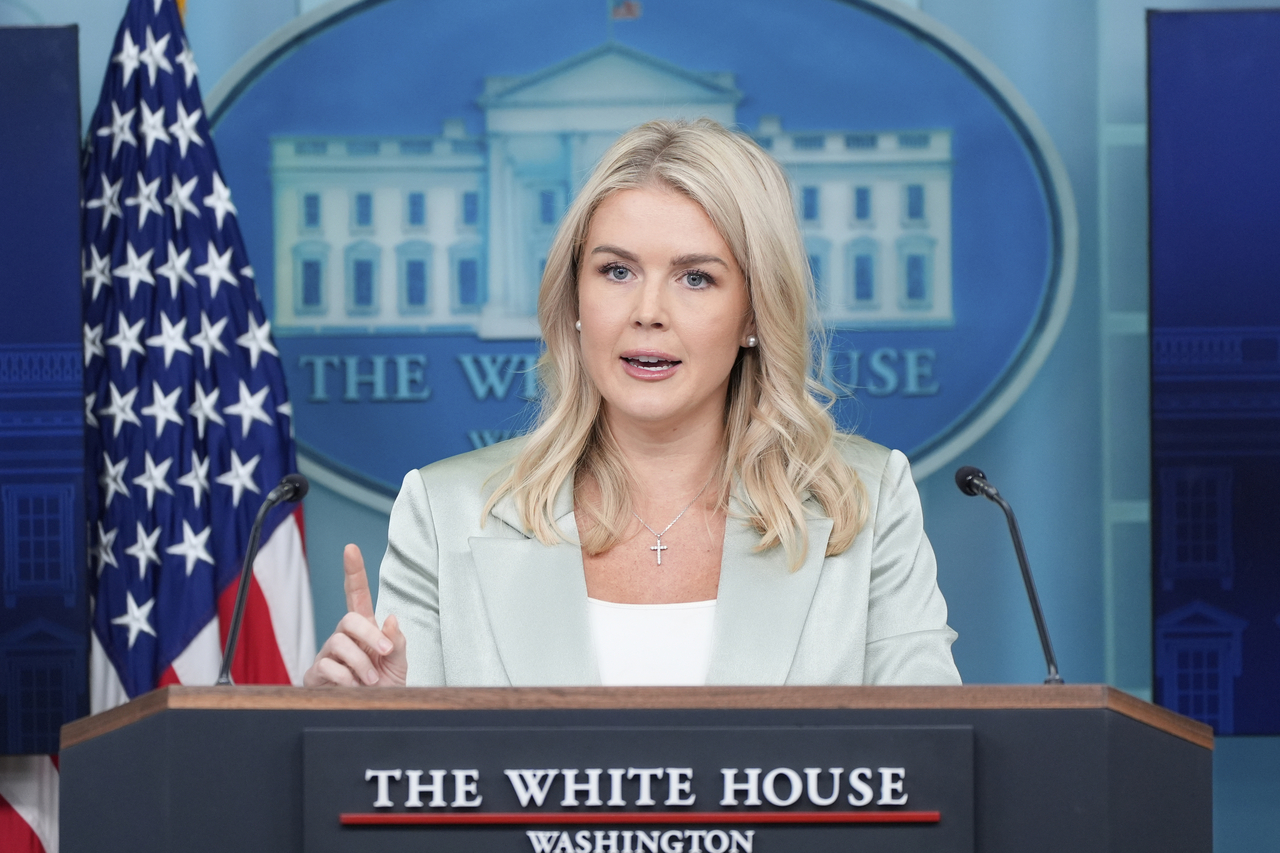
Karoline Leavitt made the remarks during a press briefing, responding to a question about US President Donald Trump's recent remarks that signaled his willingness to explore legal ways to help foreign companies bring their "smart" people with "great technical talent" into the US to hire and train American workers.
Last week's immigration raid at an electric vehicle battery plant construction site run by a joint venture of Hyundai Motor Group and LG Energy Solution in Bryan County near Savannah led to the arrest of 475 people, including some 300 Korean nationals.
"I know that the Department of Homeland Security and the Department of Commerce are working on this matter together," Leavitt said.
Citing Trump's recent statement on the raid at the Korean plant site, Leavitt noted that the president "understands" that foreign companies want to bring their highly skilled workers with them to the US, especially when they're creating very "niche products," including semiconductors and batteries.
"But the president also expects these foreign companies to hire American workers, and for these foreign workers and American workers to work together to train and to teach one another," the spokesperson said.
In a social media post on Sunday, Trump called on foreign firms investing in the US to respect US immigration laws and encouraged them to "legally" bring their skilled workers to build "world-class" products in American.
"And we will make it quickly and legally possible for you to do so. What we ask in return is that you hire and train American Workers," he wrote on Truth Social.
Some critics have said that the raid in the Korean businesses' site underscores the contradictory aspect of Trump's policy that has leveraged tariffs to attract foreign investments while employing a hard-line immigration policy stoking fears for foreign workers needed to drive those investment projects. (Yonhap)










