Foreign minister to raise visa system issues during Washington trip
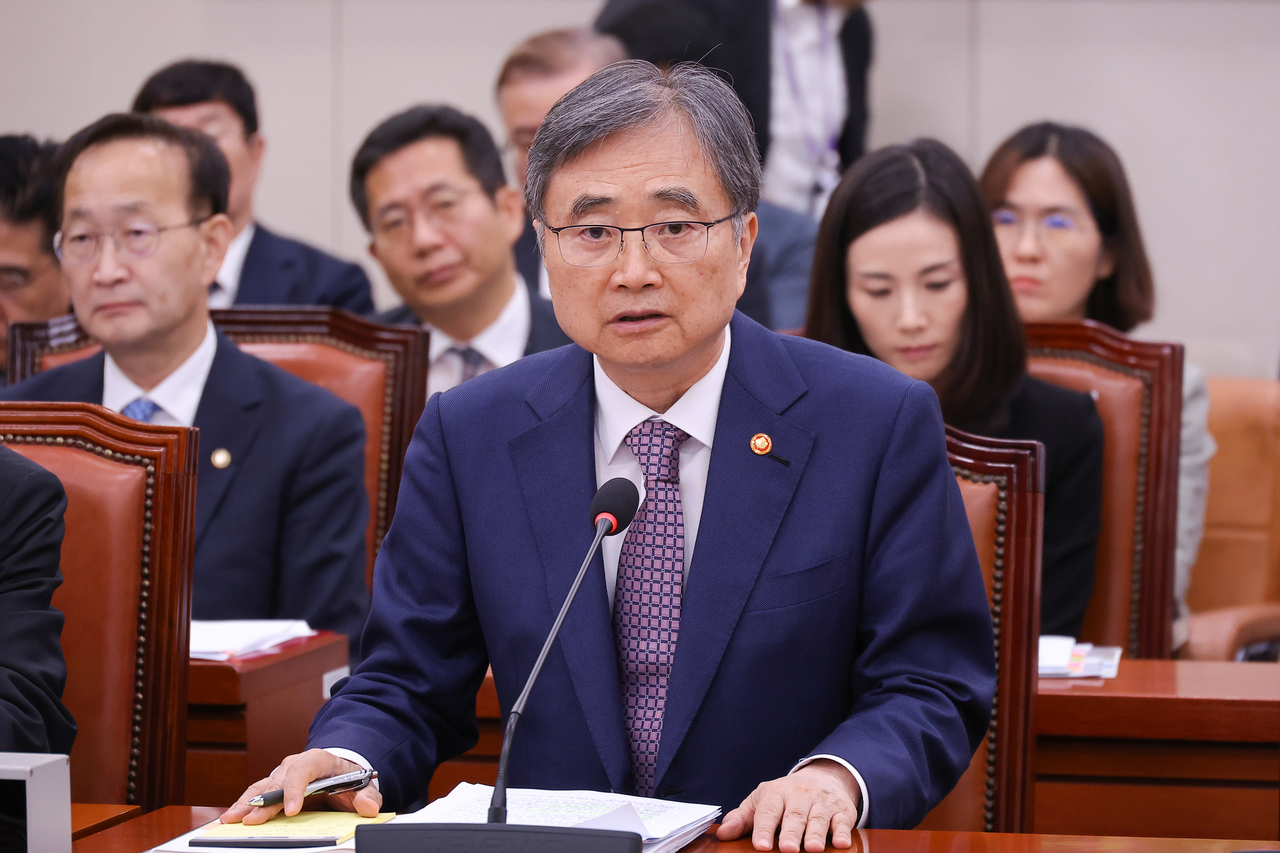
South Korea seeks to finalize the swift return of more than 300 nationals detained in a US immigration raid, while raising with Washington a fundamental issue: the shortage of work visas for Koreans despite Seoul’s vast US-bound investment, Seoul's top diplomat said Monday.
Foreign Minister Cho Hyun said his trip to Washington, set to embark Monday, was intended for that purpose, a day after the presidential office in Seoul announced it had concluded negotiations with the US on the matter.
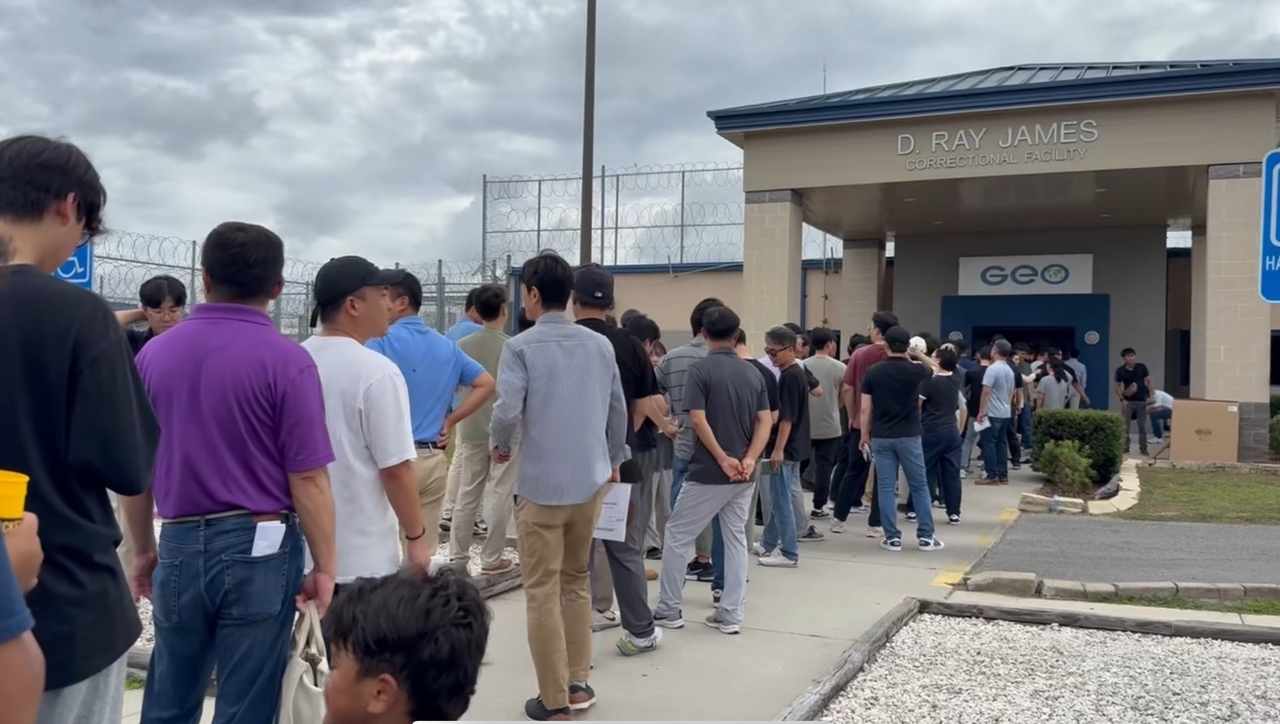
The unprecedented mass arrest took place Sept. 4. More than 300 Koreans were taken into custody during a US immigration enforcement operation at a battery plant under construction in Georgia by a joint venture between Hyundai Motor Group and LG Energy Solution.
“Consultations are now taking place between Korean companies and a local government in the US,” Cho said during an urgent session of the National Assembly’s Foreign Affairs and Unification Committee on Monday afternoon.
“For my part, I will engage the federal government in negotiations, addressing short-term issues while also beginning consultations on the need to resolve this matter in the longer term,” Cho added, disclosing his plan to meet US Secretary of State Marco Rubio.
Cho explained that the remaining administrative steps include determining "when and how the release will occur, how to arrange the chartered flight, and how to make sure the conditions of release do not cause any inconvenience or disadvantages to individuals."
When asked whether Seoul and Washington have agreed that the detainees would not face any additional problems when entering the US in the future, Cho replied, “We have reached a broad agreement, but we are still waiting for the final confirmation process.”
The Foreign Ministry in Seoul explained earlier that day that negotiations with Washington centered on two main points: bringing back the Koreans held at an immigration detention facility through “voluntary departure” and by chartered flight, to expedite legal proceedings amid ongoing US criminal investigations.
Cho notably gave an affirmative nod when asked if he might return to South Korea with the detained workers from Georgia on Wednesday via a chartered flight, saying, “I have taken the option into consideration.”
In response to lawmakers’ criticism of the Lee Jae Myung administration’s response to the US immigration raid, which was followed by the release of an official video showing Korean workers handcuffed and chained, Cho said he "will make sure to deliver a statement of protest to the US side" during his trip.
“We had no choice but to adjust the level (of criticism) to some extent, as the more urgent task was to swiftly secure the release of more than 300 nationals currently detained.”
Issue of visa shortages
More importantly, Cho said he will raise the issue of the lack of visas for South Korean workers seeking to work in the US — a mismatch with the massive investments South Korean companies have made there.
“We have been aware of the problem, and I intend to begin negotiations during my visit to the US, using this incident as a turning point,” Cho told lawmakers when asked about the visa issue.
Most of the detained Korean workers held nonimmigrant short-term business visas — either B-1 visas or Electronic System for Travel Authorization (ESTA) permits — which are typically used for brief business visits.
South Korean companies view such problems as a fundamental and major barrier to investment in the US — a concern that sharply contrasts with South Korea’s position as the largest foreign investor in the US in 2023, totaling $21.5 billion. In addition, South Korea has pledged $350 billion in investments in the US under a new trade framework.
Only about 2,000 South Koreans with specialty occupations obtain H-1B visas required to work in the US each year, out of the roughly 85,000 issued.
Cho pointed to the bill to expand the quota for Korean workers, which has stalled in Congress for more than a decade, as an example of the futility of Seoul’s efforts so far.
Since 2012, Seoul has been pushing the US Congress to pass the "Partner with Korea Act," which would create a new E-4 nonimmigrant visa quota for up to 15,000 skilled Korean professionals. In July 2025, the bill was once again introduced in the House.
"Because (the US) did not respond well, there was no progress in the negotiations. We will now engage in full-fledged consultations to secure this, taking this incident as an opportunity," Cho told lawmakers when asked about the bill.
"We will seek to negotiate in a positive direction — whether it be (creating) a new E-4 visa, (expanding) the H-1B visa quota, or pursuing both together,” Cho added.
At a critical juncture, US President Donald Trump on Sunday suggested his intent to fix the visa issue, noting that foreign firms should bring in experts to train Americans in complex industries such as battery and computer manufacturing.
“So we’re going to look at that whole situation,” Trump told reporters when asked about the US immigration raid.
dagyumji@heraldcorp.com