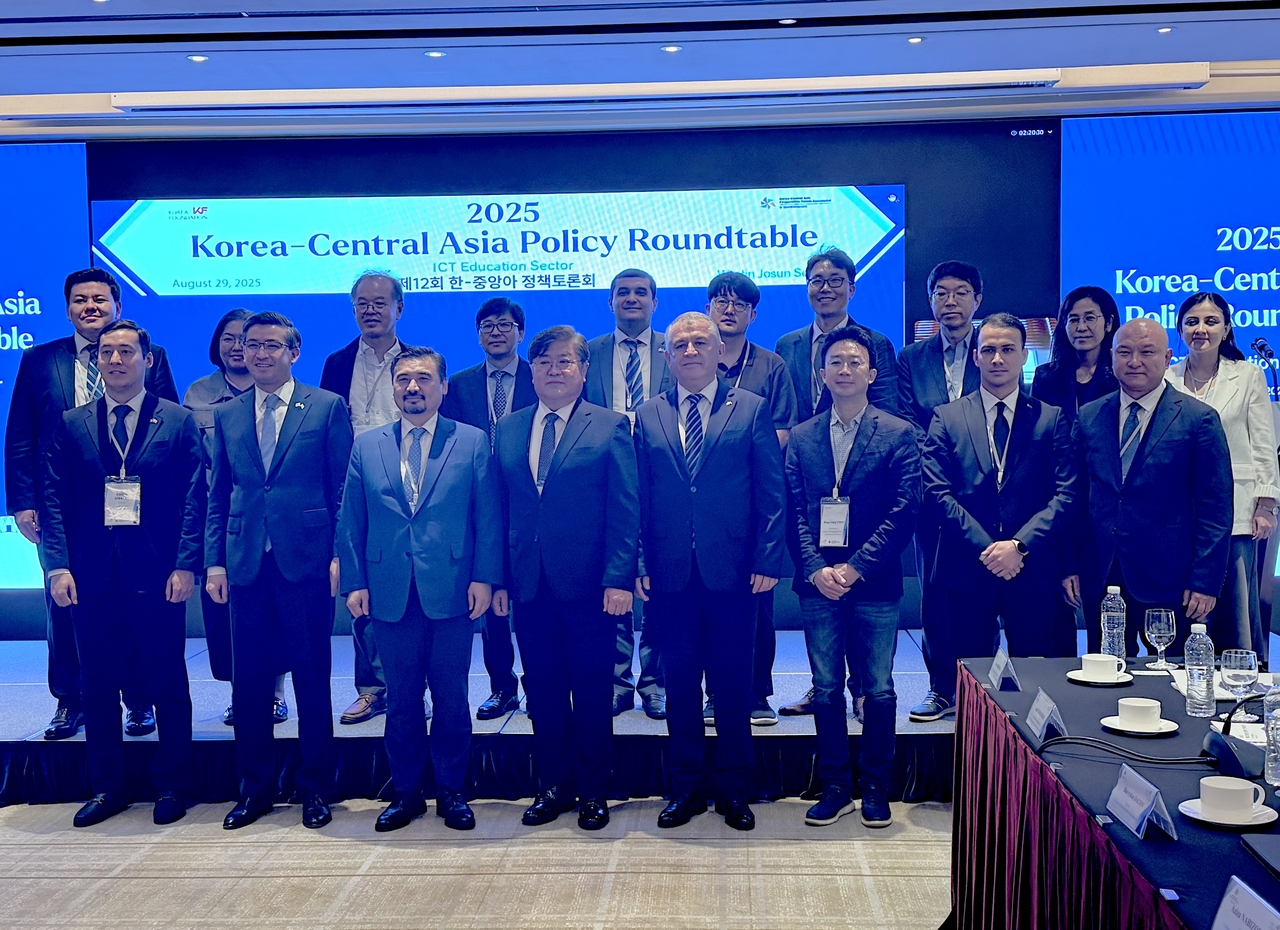
Korea and Central Asian nations explored ways to strengthen information and communications technology cooperation at the Korea-Central Asia Policy Roundtable on Friday.
Hosted by the secretariat of the Korea-Central Asia Cooperation Forum, the session focused on ICT education, current challenges and partnership opportunities.
“The field of ICT is extremely broad,” said Rhee Jong-kook, executive director of the forum’s secretariat, explaining the focus on ICT education, which is of particular interest to C5 countries and Korea.
The "C5" countries of Central Asia refer to Kazakhstan, Kyrgyzstan, Tajikistan, Turkmenistan and Uzbekistan.
Rhee hopes to expand the policy forum to cover ICT in agriculture, logistics, health care and other sectors on an annual basis. He also highlighted past initiatives, such as teacher training with Kazakhstan, UNESCO-backed ICT workshops, and a K-Lab in Uzbekistan.
“Clearly, demand for ICT cooperation continues to grow,” Rhee underlined.
Speaking at the roundtable, Kazakh Ambassador Nurgali Arystanov stressed regional cooperation and AI’s transformative potential.
“We have established an AI school at Korkyt Ata Kyzylorda University with support from Seoultech, and we are also creating a hub in Astana," said the ambassador.

He added that AI dominates global competition, with its implications spanning from military applications to business competitiveness and innovative thinking.
“ICT education is especially relevant," he added.
Tajik Ambassador Salohiddin Kirom highlighted his country’s digital initiatives, noting his President Emomali Rahmon's consistent support for digitalization in national development.
“Tajikistan has declared 2025–2030 the ‘Years of Digital Economy and Innovation Development’ and launched ICT programs in schools,” Kirom highlighted.
“With the support of partners like Korea, Tajikistan is expanding broadband connectivity to schools, developing digital learning programs and training teachers to lead the transformation," he said.
Meanwhile, Uzbek Ambassador Alisher Abdusalomov highlighted Korea’s influence on regional education, citing the example of Uzbekistan, which has adopted Korean best practices in preschool and school education.
“15,000 Uzbek students are studying in Korea,” said Abdusalomov, who himself holds a master’s in international trade from Kyung Hee University.
“ICT infrastructure is vital, and together with UNICEF, we are implementing programs like ‘UNICEF Giga,” he said, proposing joint ICT teacher training across Central Asia to boost knowledge-sharing.
The roundtable was attended by ambassadors, diplomats, experts, journalists and education officials from the C5 and concluded with a focus on digital innovation and AI, building on past forums and case studies in ICT education.
sanjaykumar@heraldcorp.com