Leaders stress combining Korea’s technology with Mongolia’s vast solar, wind resources for green growth
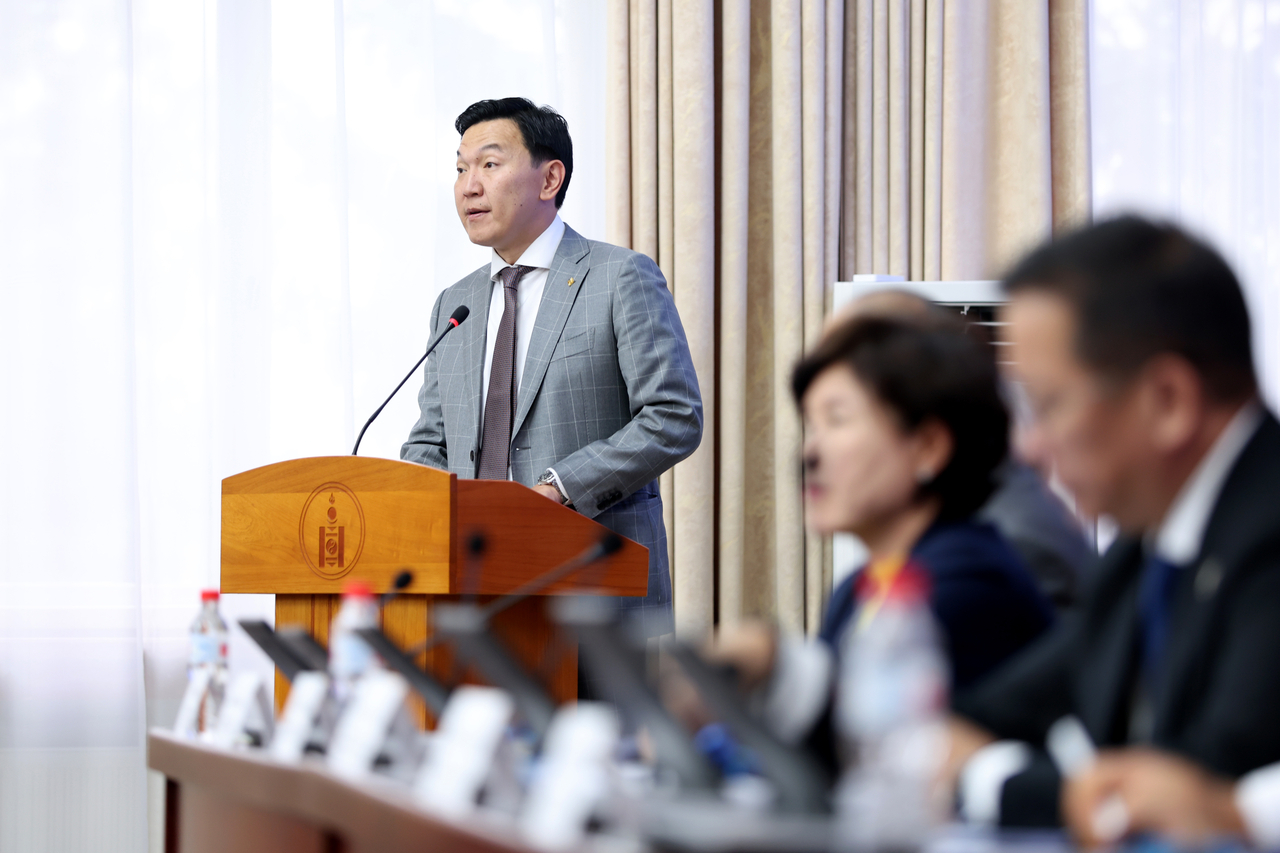
ULAANBAATAR, Mongolia -- "The forum will pave the way for new cooperation between the two countries. I am confident that the strengthening of the strategic partnership between Mongolia and Korea will lead to a healthier society in the future."
Mongolian First Deputy Prime Minister Nyam-Osor Uchral said in his opening speech at the 4th Republic of Korea-Mongolia Future Strategy Forum, held at the Government Palace in Ulaanbaatar on Aug. 20.
"Mongolia has the resources to develop renewable energy and is pursuing policies to link this with investment from Korea. It will play an important role not only in bilateral cooperation, but also in strengthening energy security across Northeast Asia," Uchral said.
"There are ways in which we can cooperate to supply renewable energy and electricity to Ulaanbaatar. It is important to combine Korea's economic know-how and capabilities with Mongolia's resources."
He also pointed out, "Energy supply in Ulaanbaatar is heavily dependent on coal, which has caused air pollution and harmed public health. Therefore, it is necessary to integrate renewable energy into Mongolia's energy policy for green growth."
"If Korea's heating systems and smart city expertise are introduced in Mongolia, they will not only help resolve Ulaanbaatar’s air pollution problem but also play a crucial role in improving citizens' health."
Uchral also raised concerns over desertification caused by climate change, which he said threatens Mongolia's livestock industry and water security.
He emphasized the importance of Korea's role in transferring technologies and know-how to Mongolia.
At the following session centered on Mongolia's renewable energy policy, Kyungpook National University professor Seol Youn said, "Mongolia's heating system relies on a thermal power plant completed in 2014. Coal transport costs reach 100,000 tugrik ($27.85) per ton, creating financial difficulties for mines and burdening local government budgets."
He also analyzed that it is a situation where the need for a transition to renewable energy is emerging, as it is causing a burden on local government budgets.
Munkh-Erdene Batkhishig, director at Mongolia's Ministry of Economy and Development, echoed the need for the energy transformation.
"Mongolia has abundant energy resources and aims to achieve energy self-sufficiency while becoming an energy-exporting nation in the future," he said.
"We will continue to provide various forms of support to curb inflation driven by electricity costs. Once our planned energy projects are implemented, we expect them to contribute to lowering electricity bills."
Ganzorig Shagdarsuren, director at the nation's Ministry of Energy, added that the government plans to select wind power projects of around 100 megawatts and solar projects of 125 megawatts through competitive bidding by 2026.
"Mongolia has solar resources of approximately 2,200 gigawatts and the potential to install wind power plants of up to 1,100 gigawatts. It means that in the future, Mongolia will be able to produce 8 gigawatts of electricity per hour," he said.
By Park Sang-hyun (pooh@heraldcorp.com)
Ha Neul-bit (andreahaneu@heraldcorp.com)
pooh@heraldcorp.com
andreahaneu@heraldcorp.com