Festival to screen 143 documentaries from 50 countries Sept. 11-17

Sundance Film Festival winner "Mr. Nobody Against Putin" by David Borenstein and Pavel Talankin will raise the curtain on the 17th DMZ International Documentary Film Festival (DMZ Docs), taking place Sept. 11-17.
"We've prepared this festival with a resolve to take one more step forward and confront the issues of violence and hatred that global society has yet to overcome," festival director Chang Hae-rang said at a press conference held in CGV Cinelibrary in Myeong-dong, Seoul, Tuesday. Held under the theme "A Day We Wish to Live," Asia's major documentary festival will screen 143 films from 50 countries across Paju and Goyang in Gyeonggi Province.
Festival opener "Mr. Nobody Against Putin" was created from the footage Talankin secretly captured while teaching at a school in Karabash, Russia, during Russia's invasion of Ukraine, documenting the government's propaganda campaign targeting young students.

In prerecorded remarks, Borenstein framed their work as a meditation on maintaining idealism "in a society that's changing all around you." He expressed hope that the film would help audiences "reflect on what we do in this situation."
Talankin, now in exile, addressed the Korean context directly in his recorded video. "The story shows what's happening in Russian schools and how propaganda works," he explained. "It's also about choice — and what happens when someone says no." Drawing parallels with Korea's division, he noted how North Korea employs "the same tools — fear, lies and total control."
Current global conflicts feature predominantly across the three competition categories: International Competition featuring 10 films, Frontier Competition with eight experimental works and Korean Competition presenting 21 productions.
The festival this year will introduce several new programs. The Critics Choice section allows local critics to spotlight standout works from the past year, while an AI-themed program examines the role of technology in documentary production, featuring works created with AI assistance. Acclaimed American documentarian Frederick Wiseman receives his largest retrospective in Korea with 45 films touring nationwide through July 2026.
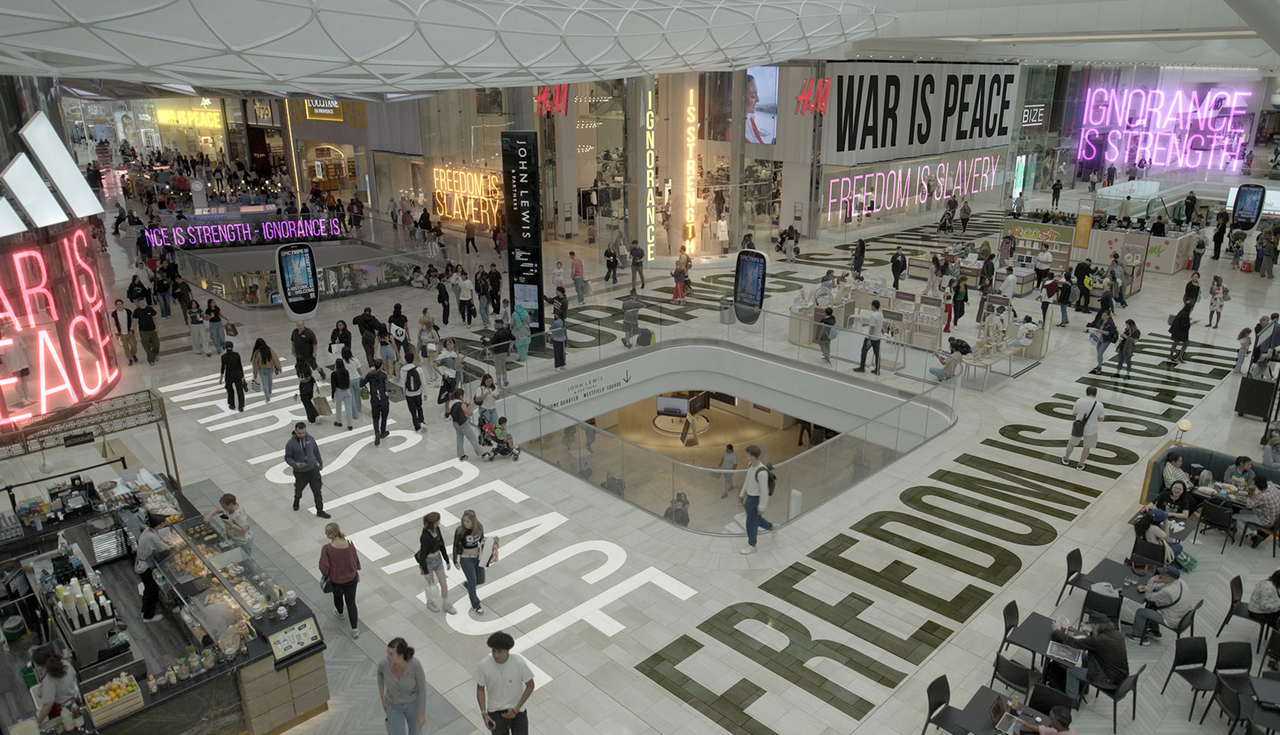
Closing film "Orwell: 2+2=5" by Raoul Peck will bring things full circle. The documentary, which premiered at Cannes in May, draws on Orwell's writings to explore how contemporary authoritarian leaders distort truth and weaponize democratic freedoms against themselves.
The organizers noted that the festival's accessibility has improved with new transportation options. Chang highlighted how the GTX-A high-speed rail's newly expanded line, which opened last December, connecting Seoul Station to Unjeong Central Station in Paju, now links the capital to festival venues in under 20 minutes. "Before, it felt too far and was a burden," he noted. "We expect the GTX-A to make the festival much more accessible for visitors."
DMZ Docs has evolved since 2009 from a regional event to one of Asia's key documentary platforms. The festival uses its location near the demilitarized zone to frame discussions about peace, climate change and human rights. This year's industry program allocates 425 million won ($304,800) in production support across 42 Asian documentary projects. Foreign partnerships with the Dutch Embassy and international distributors expand the market's reach.
moonkihoon@heraldcorp.com