Director and cast discuss 'No Other Choice,' Park's adaptation of Donald Westlake's novel, at a Seoul press event
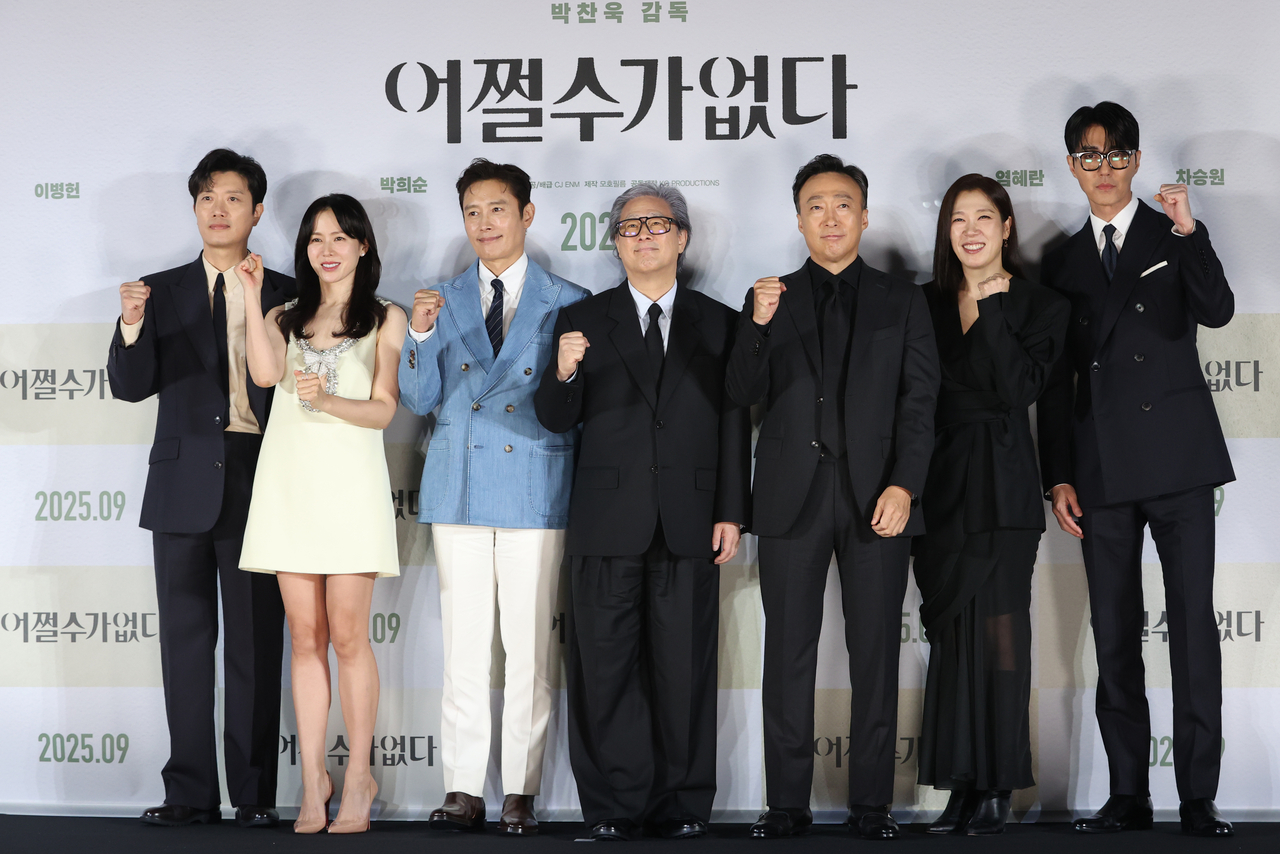
In a packed screening room at CGV Yongsan on Tuesday, Park Chan-wook and his cast appeared bemused by the turnout. Nearly 300 reporters had gathered for Park's first Korean feature in three years — a project that, he revealed, had been percolating since he first encountered Donald Westlake's 1997 novel "The Ax" two decades ago.
"The day has finally come," Park said, with the particular mixture of formality and wit that characterizes his public appearances. The film, retitled "No Other Choice," will premiere at Venice next month — the first Korean entry in competition since 2012 — before traveling to Toronto, New York, and opening the Busan International Film Festival's 30th edition on Sept. 17.
What drew Park to Westlake's novel wasn't its mystery, but its inexorable logic. "Most mysteries are whodunits. Once you know, you're done," he explained. "But this starts with someone determined to kill. It shows how society's machinery pushes an ordinary person to that point. His victims are all versions of himself."
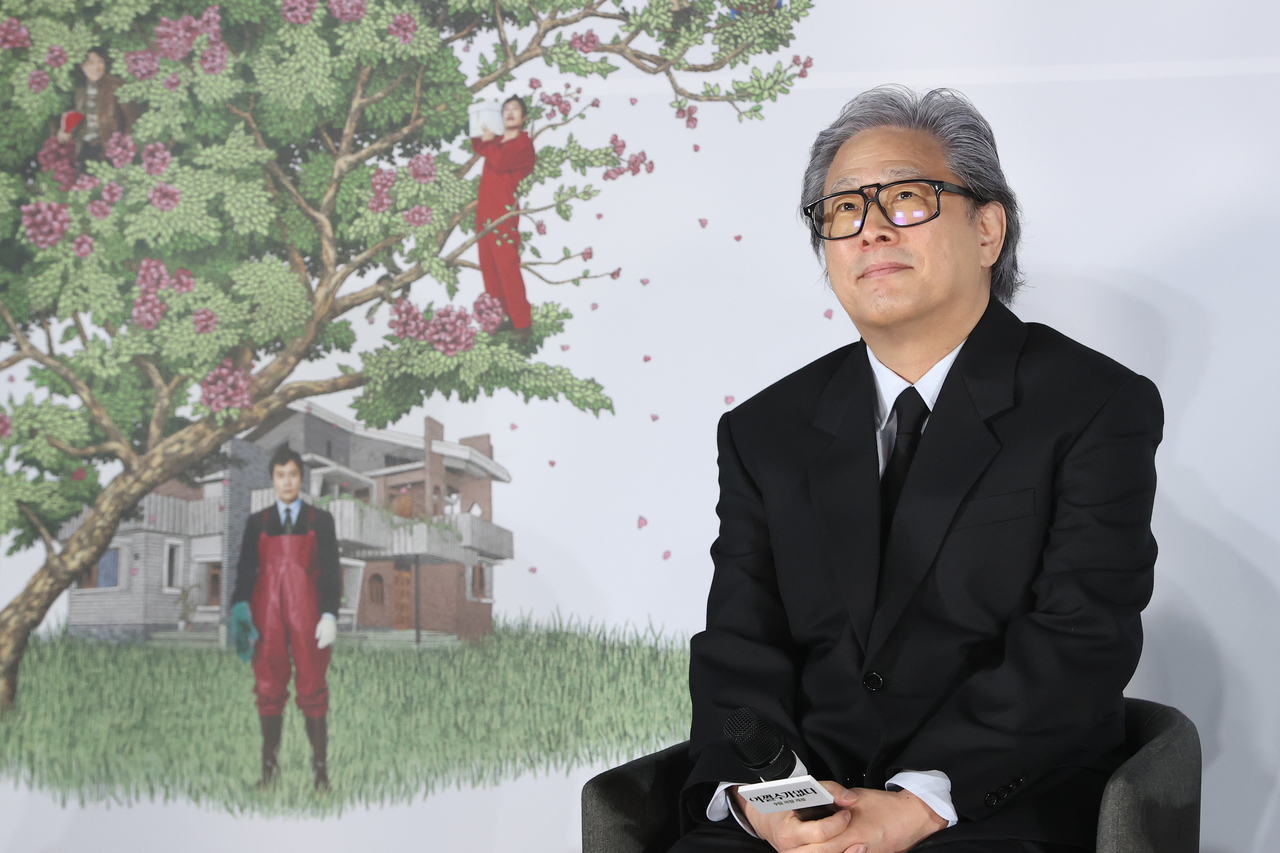
Park revealed he'd initially considered naming the film "Mogaji," Korean slang for getting axed, before settling on the current title. "The original title was 'The Ax,' but in Korean we'd say 'getting the neck' — our version of getting axed," Park explained.
"It felt too violent. The new title carries this sense of rationalization, making excuses. It applies to everyone -- even those doing the firing. Everyone's trapped, claiming they literally had no choice."
The trailer screened for the press suggests Park has tapped into the absurdist vein that runs through his filmography. Lee Byung-hun, playing a laid-off manager at a paper manufacturing company, appears in one shot performing what might be a bizarre self-help ritual, tapping his temple with disturbing intensity. In another sequence, he raises an enormous ceramic planter above his head — presumably to brain someone — while water streams comically down his face.
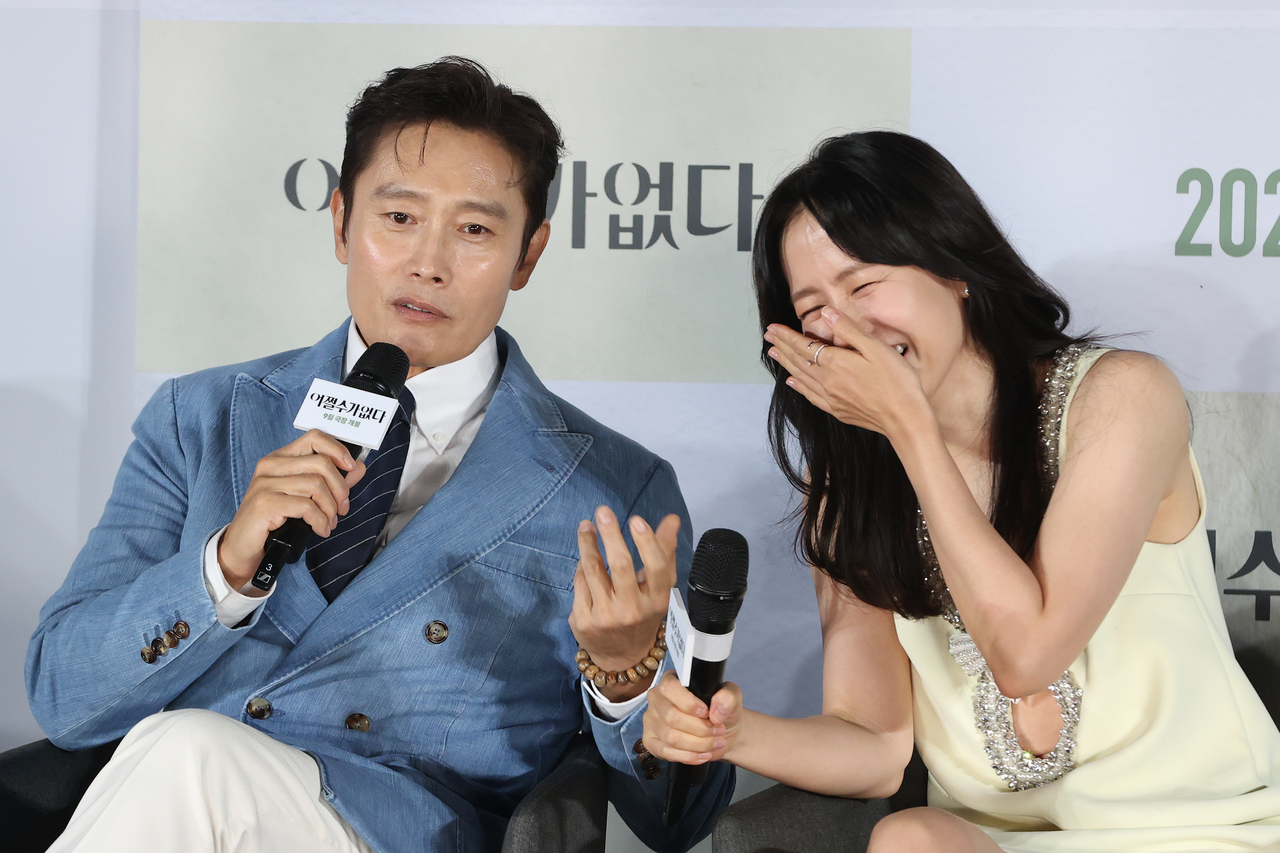
"I asked Park if I could play it funny," Lee recalled of his first script reading. "There were so many darkly comic moments, I wondered if I was misreading the tone. He said, 'The funnier, the better.'"
The cast hardly needed convincing when Park came calling.
"I didn't even know what role I'd play," Lee Sung-min said. "It was Park Chan-wook. Of course I'd do it." Son Ye-jin agreed: "Working with Park, starring opposite Lee Byung-hun — I'd have regretted passing this up."
The production's obsessiveness emerged as a leitmotif during the press conference. Park and his team constructed an entire house, which he described as a "bastardized European-Korean hybrid from the '70s," selecting each plant in the garden with taxonomic precision. They splurged to record the score with London's Contemporary Orchestra. ("We saved on everything else," Park quipped, "including what we paid the actors.")
Lee Byung-hun, who hadn't worked with Park on a feature since "JSA" 24 years ago, seemed genuinely awed by the director's process. "During post-production, watching him discover details on the big screen that he'd missed in editing — tiny expressions, color gradations — I understood what it takes to be a master. Also, why I'll never direct."
Then came the inevitable streaming-era question: Why theaters over streaming? Park stood firm.
"Call me an originalist, but cinema means the big screen. Every sound we placed, every color we calibrated in the frame's corner — it requires that scale, those speakers, that captive darkness. Otherwise, why bother?"
"No Other Choice" opens in Korean theaters in September.
moonkihoon@heraldcorp.com