Hanwha, DL vow to inject extra fund to keep joint venture afloat, yet business outlook remains bleak
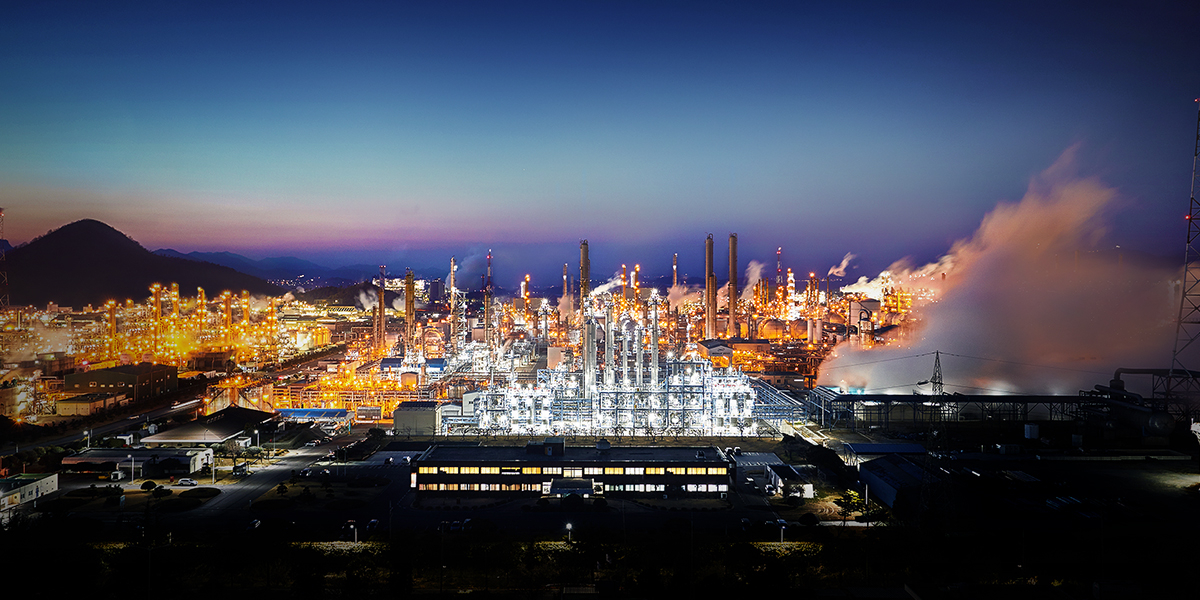
Korea’s petrochemical industry stands at a crossroads, as Yeochun NCC, a major ethylene producer, found itself on the brink of bankruptcy amid a prolonged downturn and oversupply issues due to expansion by Chinese competitors.
Yeochun NCC — a 50:50 joint venture formed in 1999 by Hanwha Solutions and DL Chemical when they combined their naphtha cracking centers at the Yeosu National Industrial Complex — halted operations at Plant 3 on Friday.
According to industry sources, the company needed to secure more than 300 billion won ($216 million) by Aug. 21 to avoid a default.
Hanwha Solutions’ board of directors approved a 150 billion won loan at the end of last month to save Yeochun NCC. DL Chemical's board of directors on Monday agreed to raise 200 billion won through a rights offering to secure capital for the joint venture.
However, this was not the first time that both major stakeholders of Yeochun NCC have had to inject extra capital to keep their petrochemical company in business. As recently as March, the two firms raised W100b each to maintain cash flow at Yeochun NCC for the rest of the year.
With China’s rapid expansion of petrochemical plants causing oversupply problems, Yeochun NCC has been in the red for the past few years, posting net losses of 347.7 billion won in 2022, 240.2 billion won in 2023 and 236 billion won last year. Hanwha and DL each chipped in 100 billion won to help Yeochun NCC in March this year, but it was not enough to stop the bleeding.
Yeochun NCC is not the only ailing player in Korea’s petrochemical industry. LG Chem, the country’s biggest petrochemical company, has shut down the styrene monomer production lines at its plants in Yeosu and at the Daesan Petrochemical Industrial Complex in Seosan, South Chungcheong Province. Lotte Chemical also halted production lines for ethylene glycol and ethylene oxide adducts at its Plant 2 in Yeosu in December.
LG Chem’s petrochemical business logged a 90.4 billion won operating loss in the second quarter this year, while Lotte Chemical reported a loss of 244.9 billion won in the same period.
In a seminar last month at the National Assembly, Boston Consulting Group assessed that within three years, half of Korea’s petrochemical companies will see their survival at risk. BCG pointed out that if one or two companies enter court receivership in a petrochemical industrial complex, a cascade of bankruptcies could follow among their second- and third-tier partners.
To overcome the mounting losses, Korea’s petrochemical heavyweights have been taking a range of measures. LG Chem sold its water solution business for 1.4 trillion won and decided to sell its aesthetics business for 200 billion won. Lotte Chemical secured 1.7 trillion won in cash, mostly by selling off shares in its overseas subsidiaries.
Still, the private sector is calling on the government to come up with support packages to prevent a total collapse of the petrochemical industry and the surrounding regional economies.
“The petrochemical industry needs life support right now,” said an official at a local petrochemical company. “The first thing we are asking for is a reduction in the price of electricity. With the rise of China and the Middle East, we need new high-value-added growth engines, so financial support for R&D is what we need.”
The Korea Institute for Industrial Economics and Trade forecast in a report that China will account for 44 percent of the world’s new and expanded petrochemical production facilities through 2030.
“Amid the slow recovery of global demand for petrochemicals and the growth of China’s domestically produced (petrochemicals) leading to oversupply, (Korea’s) major petrochemical companies face unclear prospects for improved profitability,” said the KIET report.
“Because of the increased likelihood of a slowdown in the petrochemical industry, domestic petrochemical firms have only limited ability to make large-scale investments.”
The Korean government is expected to announce a set of support measures this month, including financial and tax benefits to restructure and strengthen the industry. Minister of Trade, Industry and Energy Kim Jung-kwan vowed to quickly take such steps during his confirmation hearing at the National Assembly last month.
hwkan@heraldcorp.com