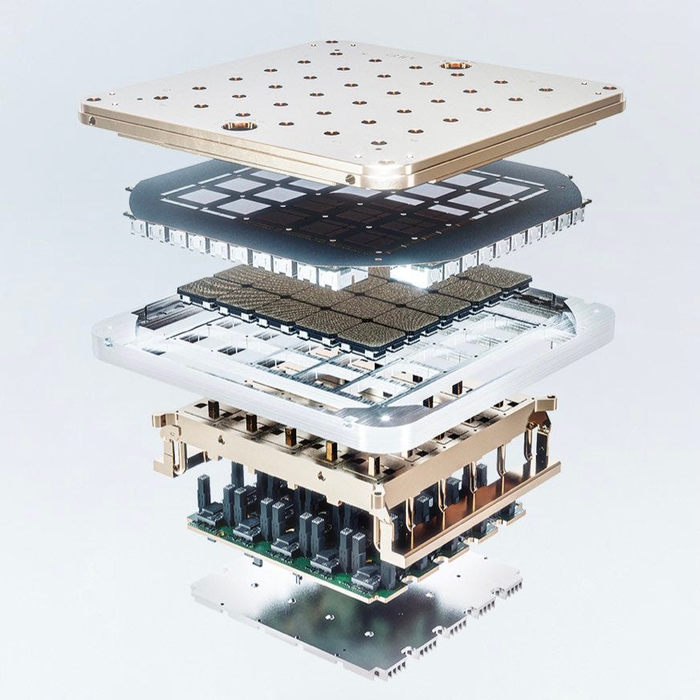
Samsung Electronics’ $16.5 billion contract to manufacture Tesla’s next-generation AI6 processors has taken on greater significance after the US electric vehicle-maker dismantled its Dojo supercomputing team, a move that signals a deeper reliance on external chip partners.
Additionally, Samsung Electronics Chair Lee Jae-yong is currently staying in the US, fueling speculation that he could meet with top Tesla executives to discuss expanding cooperation.
Tesla CEO Elon Musk said Friday that the company will focus on developing its AI5 and AI6 chips, custom processors designed to power Tesla’s self-driving technology and AI workloads, rather than “divide its resources” to pursue different AI chip designs. His comments back a recent Bloomberg report that Tesla is winding down the Dojo supercomputer project, which centered on in-house D1 chips.
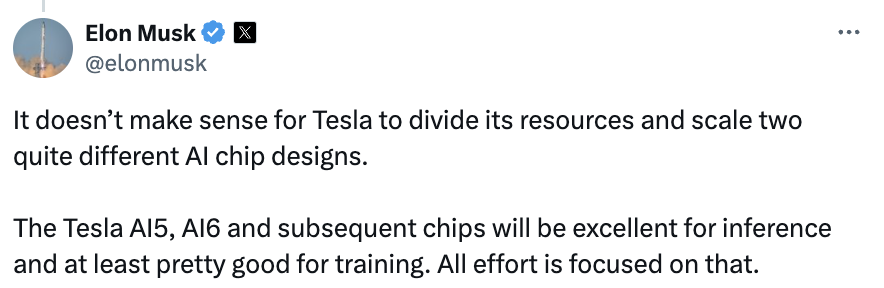
“It doesn’t make sense for Tesla to divide its sources and scale two quite different AI chip designs,” Musk said in a post on X.
“The Tesla AI5, AI6 and subsequent chips will be excellent for inference and at least pretty good for training. All effort is focused on that.”
Bloomberg reported that Musk ordered the Dojo team to shut down, and the engineers in the group have been reassigned to other initiatives, including data centers. The news outlet also said Tesla was planning to increase its reliance on external technology partners, including Nvidia and AMD for computer and Samsung Electronics for chip manufacturing, citing sources familiar with the matter.
Tesla first launched Dojo and unveiled the D1 chip in August 2021. The multi-billion-dollar project was aimed at building a custom supercomputer for training machine-learning models behind its Autopilot, Full Self-Driving systems and Optimus humanoid robot.
Against this backdrop, Samsung's role as a supplier to Tesla's key AI chips is expected to grow. Last month, Samsung announced a record $16.5 billion deal to produce Tesla’s next-generation AI6 chips for Full Self-Driving technology at its plant in Taylor, Texas, through 2033.
Musk described the disclosed amount as "just the bare minimum," suggesting the actual value of the deal could be even higher. He added that he had held a video call with Samsung's Lee "to go over what a real partnership would be like."
Meanwhile, Lee has remained in the US since traveling to Washington on July 29, continuing meetings with major business leaders. Speculations are growing that he may also meet with Tesla’s top executives during his stay.
“While Tesla will be designing its own AI chips, Samsung is likely to expand its role as foundries do more than just manufacturing, working closely with customers’ design teams to jointly develop products,” an industry official said.
“In the past, foundries only shared processes and manufacturing, but they are now evolving to also share design. Samsung has long-standing capabilities in design, so there are many areas where it could collaborate with Tesla.”
Musk also hinted at a strategic pivot during Tesla’s most recent quarterly earnings call on July 23, suggesting future iterations of the company’s in-house technology could converge with that of its partners.
“Thinking about Dojo 3 and the AI6 inference chip, it seems like intuitively, we want to try to find convergence there, where it’s basically the same chip,” Musk said during the earnings call.
herim@heraldcorp.com