Kim Jung-kwan calls for bold industrial policy to match US, China as tech rivalry intensifies
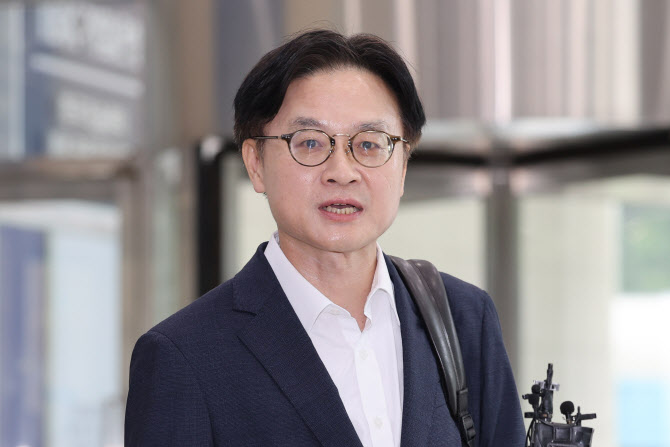
Kim Jung-kwan, the Lee Jae Myung's nominee for industry minister, has pledged to introduce a production-linked tax incentive system for key industries such as semiconductors and batteries, modeled after the US Inflation Reduction Act.
In a written response submitted to the National Assembly ahead of his confirmation hearing this week, Kim emphasized the need for aggressive government support that matches policies implemented by competing nations.
“It is time for strategic and proactive government-led industrial policies, including incentives that do not fall behind those of competing nations, in order to minimize trade risks,” Kim stated.
He noted that while semiconductors remained a core pillar of Korea’s industrial and economic security, the country’s leadership in memory chips is being challenged by Chinese and US firms, and its capabilities in logic chips remain relatively weak.
“We need bold semiconductor policies to strengthen our global leadership and stabilize our domestic manufacturing base,” Kim said, adding that tax and fiscal support for the sector will be expanded.
Addressing the battery sector, Kim acknowledged current difficulties stemming from a temporary slowdown in electric vehicle demand and the rapid rise of Chinese competitors. He said the government would consider introducing production tax credits for key minerals and materials to expand incentives for domestic manufacturing and strengthen the battery supply chain.
Kim’s vision for production tax credits involves a system that offers tax deductions based on production volume, effectively functioning as subsidies linked to output. The US has implemented similar “Advanced Manufacturing Production Credits” under the IRA to support strategic industries such as batteries, solar panels and clean fuels.
In Korea, companies operating in sectors designated as national strategic technologies, such as semiconductors and batteries, are currently eligible for one-time tax credits of up to 25 percent for facility and research and development investments. Unlike these investment-based incentives, Kim’s proposed scheme would serve as a more direct benefit by offering tax credits on a portion of production costs.
If implemented, leading chipmakers Samsung Electronics and SK hynix are projected to receive annual tax reductions of between 4 trillion won and 5 trillion won ($2.9 billion and $3.6 billion).
President Lee had also pledged during his campaign to push for production tax credits of up to 10 percent for semiconductors. After taking office, he reportedly expanded the plan to include the battery sector, initiating internal reviews.
In his statement, Kim also vowed to expand the government budget for renewable energy.
“Expanding renewable energy is an urgent task for achieving carbon neutrality, enhancing energy security and creating new growth drivers,” he said, pledging to improve the overall environment for renewable energy deployment including identifying new project sites, securing grid connectivity and increasing public acceptance.
At the same time, Kim expressed support for nuclear energy, stressing the importance of a balanced energy mix of carbon-free sources to ensure a stable power supply and meet South Korea’s greenhouse gas reduction targets under the Nationally Determined Contribution framework.
He also pledged to boost Korea’s long-term technological competitiveness by developing Korean-style small modular reactors and next-generation nuclear fuels, while expanding exports of nuclear equipment and supporting small and mid-sized exporters in the sector.
On the issue of extended tariff negotiations with the US, set to conclude by Aug. 1, Kim said he would work toward a mutually beneficial outcome and use the talks as an opportunity to develop a bilateral manufacturing cooperation road map.
“In the face of US tariff measures and global supply chain shifts, I will do my utmost as Korea’s ‘export frontrunner’ to strengthen our export competitiveness in key industries and open up new markets,” he said.
Kim, a former official at the Ministry of Economy and Finance, most recently served as head of marketing at Doosan Enerbility, a major power equipment builder. Since his nomination, he has divested all holdings in companies that could present potential conflicts of interest, including shares in Doosan.
herim@heraldcorp.com