Special counsel team chooses to reschedule Yoon’s questioning for Tuesday afternoon
The special counsel’s first attempt to forcibly summon former President Yoon Suk Yeol for questioning over insurrection allegations linked to his declaration of martial law failed Monday, prompting the team to issue a renewed request for his appearance.
The special counsel team — investigating Yoon’s alleged insurrection and treason and led by Cho Eun-suk — announced Monday that it had sent another official request to the Seoul Detention Center, asking correctional authorities to bring Yoon to the special counsel’s office for questioning by 2 p.m. Tuesday.
The decision was made after the Seoul Detention Center notified the special counsel team that it was unable to carry out the forcible summons and bring Yoon in for Monday's questioning as previously requested by the special counsel.
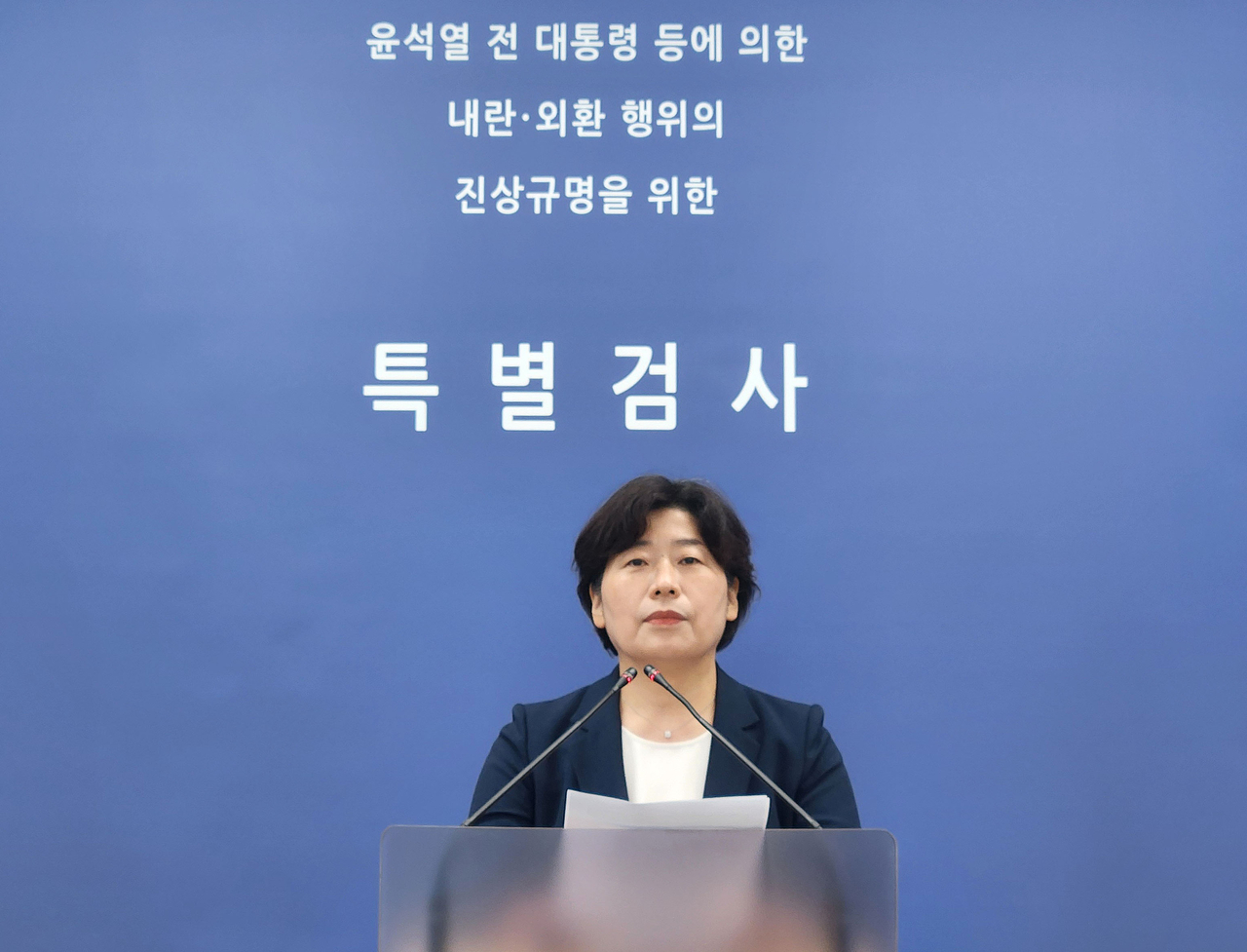
“The correctional authorities tried their best, but the former president decided not to cooperate and refused to leave his cell,” Assistant Special Counsel Park Ji-young said during a press briefing on Monday. "Given Yoon’s status as a former president, it was difficult for the Seoul Detention Center personnel to use physical force."
The assistant special counsel added that the special counsel team had not anticipated Yoon’s refusal to comply, as the former president previously served as a prosecutor for many years and understands investigative procedures better than anyone.
In response to the special counsel team's decision to postpone the original schedule, Park expressed her hopes that Yoon’s questioning could take place on Tuesday.
The special counsel team initially requested that Yoon appear at the special counsel’s office for questioning on July 11. However, the former president snubbed the summons after submitting a written statement saying his absence was health-related.
Though the special counsel team changed the investigation schedule on Monday afternoon, insisting that no health issues had been identified or confirmed, Yoon’s legal representatives reportedly declined to comply again.
Yoon’s attorneys explained that they had already submitted a formal notice for Yoon's absence on July 11, and that there has been no change in regards to Yoon’s health.
The special counsel requested the correctional authorities to bring Yoon in for his questioning by 3:30 p.m. Monday. However, the former president refused to cooperate once again.
Yoon’s legal representatives argued that Yoon suffered from both diabetes and eye diseases, and that the poor conditions at the detention center, including extreme heat and restrictions on outdoor exercise, had led to the deterioration of his health.
The Justice Ministry disputed the claims of mistreatment, explaining that Yoon’s workout time and room temperature were no different from those of ordinary inmates.
According to the special counsel team, it asked the detained former president to appear for questioning as no specific health issues were identified by correctional authorities during Yoon’s initial medical examination upon admission and throughout his five-day detention period.
Yoon had also refused to appear for the Corruption Investigation Office for High-ranking Officials’ investigation during his first detention period from mid-January to early March, arguing that the agency did not have jurisdiction to interrogate him.
The former president’s unwillingness to cooperate with the CIO's questioning led the prosecutor to indict him without questioning in late January.
Meanwhile, the special counsel summoned Park Jong-joon, former head of the Presidential Security Service, and the PSS’ head of security and safety Lee Jin-ha, to look into allegations that Yoon instructed the PSS to block police and the CIO from executing a warrant in January, and ordered the deletion of records from secure phones used by three military commanders who were key personnel involved in imposing martial law.
sj_lee@heraldcorp.com